
Viral Content & AI Workflows: Automate Success
Here’s the truth about viral content and AI workflows: most creators are doing it backwards. They’re throwing prompts at ChatGPT like darts at a board, hoping something sticks. Meanwhile, the top 1% have built systematic AI content workflows that pump out high-performing content while they sleep. The gap isn’t talent—it’s architecture.
I’ve spent the last three years reverse-engineering viral content systems for creators pulling 10M+ monthly views. The pattern is always the same: they treat AI like infrastructure, not magic. They’ve built repeatable workflows that turn ideas into published content in hours, not weeks. And they’re scaling faster than anyone thought possible.
This isn’t theory. This is the exact blueprint.
Table of Contents
- Why Most Creators Fail at Viral Content (And Why Workflows Fix It)
- The Anatomy of a Viral Content System
- Building Your AI Content Workflow Stack
- Phase 1: The Ideation Engine
- Phase 2: The Production Pipeline
- Phase 3: Distribution & Amplification
- Phase 4: The Optimization Loop
- Common Pitfalls (And How to Avoid Them)
- Frequently Asked Questions
- Final Thoughts
Why Most Creators Fail at Viral Content (And Why Workflows Fix It)
A viral content workflow is a systematic, repeatable process that combines human creativity with AI automation to consistently produce high-performing content at scale. It transforms content creation from an art into an engineered system with predictable inputs and measurable outputs.
The problem isn’t that creators lack ideas. It’s that they lack systems.
Every week, I watch talented creators burn out trying to manually research, write, edit, design, and distribute content across five platforms. They’re playing a volume game with artisan tools. You can’t scale craftsmanship. You need assembly lines.
Fast forward to 2026, and the creators winning aren’t the most creative—they’re the most systematic. They’ve identified every repeatable task in their content pipeline and automated it. Research? AI scrapes trending topics and competitor analysis. First drafts? AI generates three variations in minutes. Thumbnail concepts? AI produces 20 options before breakfast.
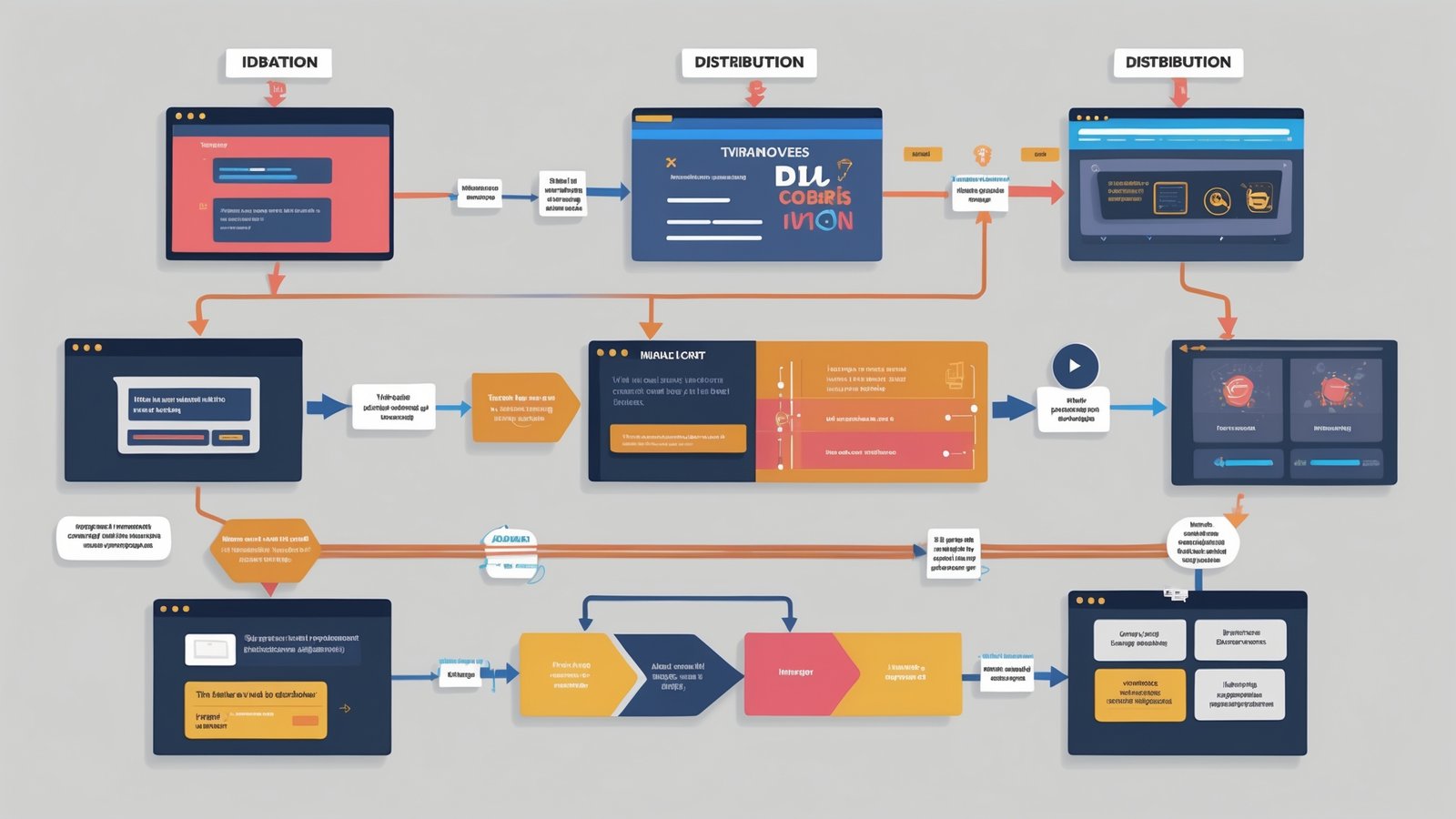
According to a Pew Research study, 73% of content creators report burnout from manual content production. The solution isn’t working harder—it’s building smarter systems.
Here’s what separates amateurs from professionals:
- Amateurs use AI as a writing assistant. They ask for “a blog post about X” and edit the slop.
- Professionals use AI as infrastructure. They’ve built multi-stage workflows where AI handles research, ideation, drafting, optimization, and analytics—while humans control strategy and final creative decisions.
The difference in output? Amateurs publish 2-3 pieces per week. Professionals publish 20-30. Same quality. Ten times the volume.
Bottom line: if you’re still creating content linearly (idea → research → write → edit → publish), you’re competing with one hand tied behind your back. The modern content system for creators is parallel, automated, and ruthlessly efficient.
The Anatomy of a Viral Content System
Every high-performing AI content workflow has four core phases:
- Ideation Engine – Systematic discovery of high-potential topics
- Production Pipeline – Rapid content creation with quality controls
- Distribution Amplification – Multi-platform publishing with optimization
- Optimization Loop – Data-driven iteration and improvement
Most creators obsess over Phase 2 (production) and ignore the other three. That’s why their content doesn’t scale. Viral content isn’t about making one great piece—it’s about making 100 good pieces and letting the algorithm pick winners.
Think of it like venture capital. VCs don’t bet everything on one startup. They build a portfolio knowing 90% will fail, but the 10% that succeed will 10x the entire fund. Your content strategy should work the same way.
The system architecture looks like this:
- Input Layer: Trend monitoring, competitor analysis, audience signals
- Processing Layer: AI models for research, writing, editing, design
- Quality Layer: Human review gates at critical decision points
- Output Layer: Automated publishing, cross-posting, analytics tracking
- Feedback Layer: Performance data feeding back into ideation
The magic happens in the feedback layer. Most creators publish and move on. Winners publish, measure, and feed performance data back into their ideation engine. Your best content teaches you what to make next.
Building Your AI Content Workflow Stack
Here’s the uncomfortable truth: you need multiple AI tools. The “one AI to rule them all” approach is amateur hour.
Different AI models have different strengths. GPT-4 is conversational and creative. Claude excels at analysis and long-form content. Gemini crushes research and data synthesis. Midjourney owns visual ideation. The pros use all of them.
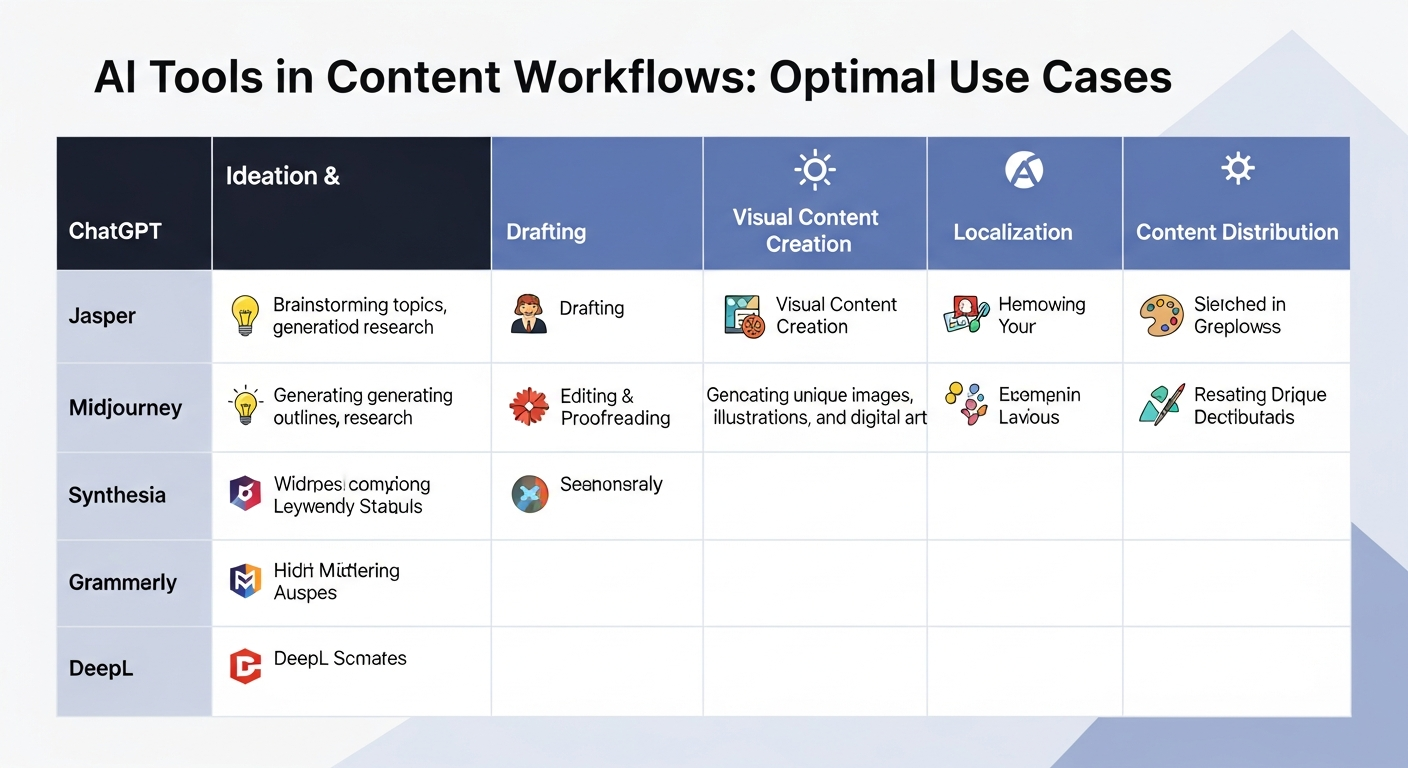
Your minimum viable stack:
- Language Model: GPT-4, Claude, or Gemini (pick one, master it)
- Automation Platform: Make.com or Zapier for connecting tools
- Content Database: Notion or Airtable for managing your pipeline
- Analytics Tool: Native platform analytics plus a dashboard (Databox, Supermetrics)
- Image Generation: Midjourney, DALL-E, or Stable Diffusion
The advanced stack adds:
- Research AI: Perplexity or Claude for deep research
- Video AI: Descript or Runway for video editing automation
- SEO Tools: Surfer SEO or Clearscope for optimization
- Social Listening: Brand24 or Mention for trend monitoring
Cost breakdown: Basic stack runs $50-100/month. Advanced stack is $300-500/month. But here’s the math that matters: if your workflow saves 20 hours per week, that’s 80 hours per month. At even $50/hour, you’re saving $4,000 in time. The tools pay for themselves in week one.
Check AI Tool Guides on Amazon
The mistake most creators make? They buy all the tools but don’t connect them. Your workflow stack is only as strong as your automation layer. If you’re manually copying and pasting between tools, you’re doing it wrong.
Phase 1: The Ideation Engine
Viral content starts with viral ideas. But here’s what nobody tells you: viral ideas aren’t creative—they’re statistical.
The best content creators aren’t sitting around waiting for inspiration. They’re running systematic research processes that identify high-probability topics before they peak. They’re looking at:
- Google Trends data for rising search queries
- Reddit threads with high engagement but low content saturation
- YouTube videos with high view-to-subscriber ratios (indicates topic strength)
- Twitter conversations with exponential reply growth
- Competitor content with unusual performance spikes
Here’s the workflow I use:
Step 1: Automated Trend Monitoring
Set up a Make.com scenario that runs daily:
- Scrapes Google Trends API for rising queries in your niche
- Pulls top Reddit posts from relevant subreddits (last 24 hours)
- Monitors competitor YouTube channels for new uploads
- Tracks Twitter hashtags and trending topics
- Compiles everything into a Notion database
Step 2: AI-Powered Analysis
Feed your trend data into Claude or GPT-4 with this prompt structure:
“Analyze these trending topics: [DATA]. Identify the top 10 with the highest viral potential based on: 1) Rising search volume, 2) Low content saturation, 3) Emotional resonance, 4) Shareability factors. For each topic, provide: headline angle, target audience, content format recommendation, and estimated competition level.”
The AI will rank your opportunities. This is where amateurs stop and pros keep going.
Step 3: Validation Layer
Before committing to production, validate your ideas:
- Search the topic on your target platform—what’s the engagement on existing content?
- Check keyword difficulty if it’s SEO content (aim for KD under 40 for new sites)
- Run the headline through an AI analyzer for emotional impact scores
- Test the concept with a poll in your community or email list
This validation step is what separates 10% hit rates from 40% hit rates. You’re not guessing—you’re testing hypotheses with data.

Phase 2: The Production Pipeline
This is where most creators think AI shines. They’re half right.
AI is incredible at first drafts. It’s terrible at final drafts. The winning formula is using AI for speed, humans for quality. Here’s the production workflow that actually works:
Research Phase (AI-Heavy)
Use Claude or Perplexity to compile research in minutes:
- Feed your topic into the AI with specific research questions
- Request citations and sources (critical for credibility)
- Ask for contrarian viewpoints and common objections
- Generate a structured outline with key points and data
Time saved: 2-3 hours of manual research compressed into 10 minutes.
First Draft Phase (AI-Generated)
Here’s where most people screw up. They ask AI to “write a blog post about X” and get generic garbage. Instead, use this framework:
“Write a 2,000-word article on [TOPIC] for [AUDIENCE]. Tone: [SPECIFIC TONE]. Structure: [OUTLINE]. Include: 3 personal anecdotes (placeholder), 2 contrarian opinions, 5 actionable takeaways, and 1 memorable closing line. Avoid these phrases: [BANNED WORDS]. Use these phrases: [BRAND VOICE EXAMPLES].”
The more specific your prompt, the better your output. Garbage in, garbage out isn’t just a saying—it’s the law of AI content.
Editing Phase (Human-Critical)
This is where you earn your money. AI gives you 70% quality. You need to push it to 95%. Focus on:
- Voice injection: Add personality, humor, and edge that AI can’t replicate
- Fact-checking: Verify every claim and statistic (AI hallucinates constantly)
- Story insertion: Replace AI’s placeholder anecdotes with real examples
- Flow optimization: Cut the fluff, tighten transitions, add punch
- SEO polish: Optimize for target keywords without sounding robotic
Time investment: 30-45 minutes of editing per 2,000-word piece. That’s the difference between content that converts and content that bounces.
Visual Production (AI-Assisted)
Don’t sleep on visual workflows. Use AI for:
- Thumbnail concepts (Midjourney generates 20 options in 5 minutes)
- Social media graphics (Canva’s AI tools are underrated)
- Video scripts and B-roll suggestions (ChatGPT excels here)
- Infographic data visualization (Claude + Datawrapper combo)
The pros batch this work. They generate 50 thumbnails on Monday and use them all month. They’re not creating assets on-demand—they’re building libraries.
Phase 3: Distribution & Amplification
You’ve built great content. Now comes the part where most creators fail: getting it seen.
The distribution workflow is where AI automation really flexes. Here’s the system:
Multi-Platform Publishing (Automated)
Use Zapier or Make.com to auto-publish from your content hub:
- Publish to WordPress (or your CMS)
- Auto-post to Medium with canonical tags
- Cross-post to LinkedIn Articles
- Generate Twitter thread from key points
- Create Instagram carousel from main takeaways
- Post YouTube Community update with link
- Send email newsletter to subscribers
All of this happens automatically when you hit “publish” on your main platform. One click, seven distribution channels. That’s leverage.
AI-Powered Repurposing
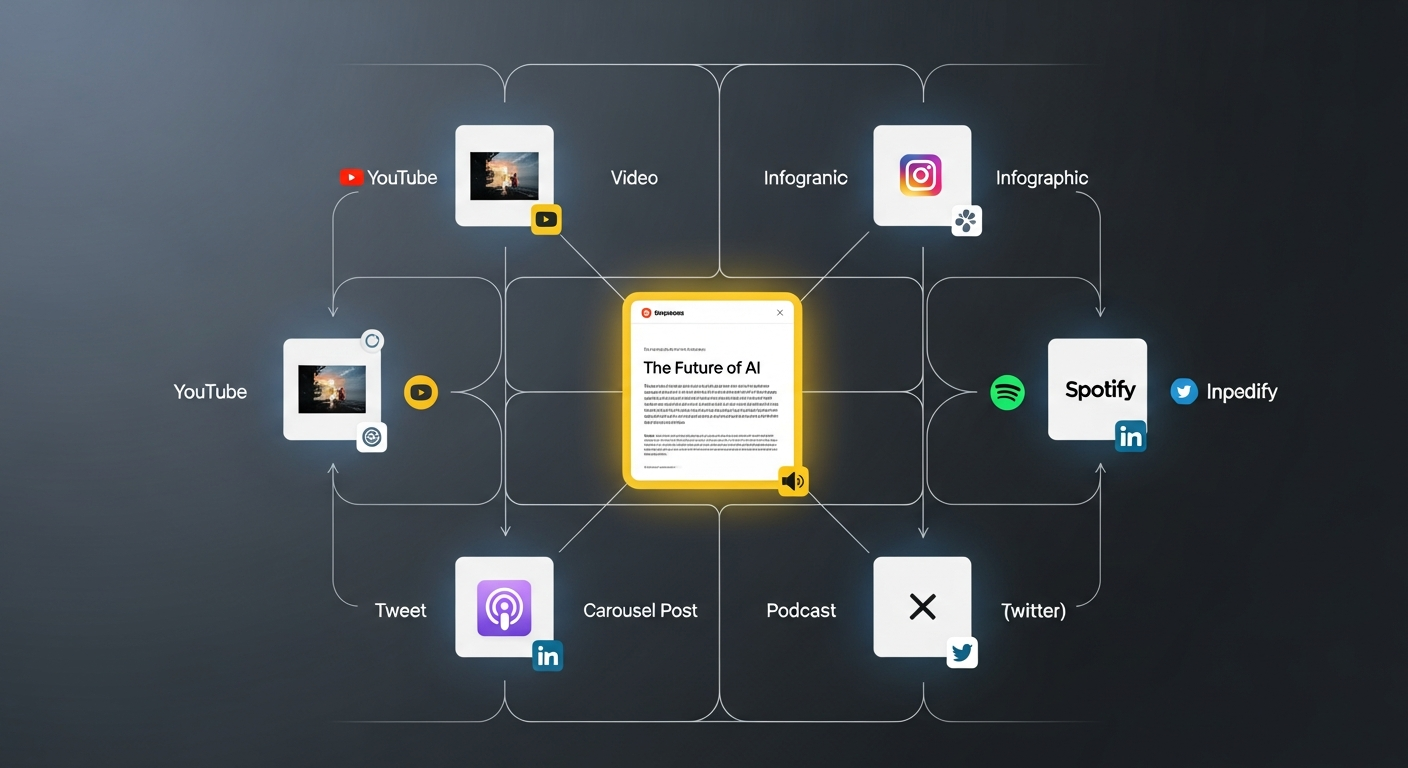
This is where the magic compounds. Every long-form piece becomes:
- 10 Twitter threads (AI extracts key points)
- 5 LinkedIn posts (AI reformats for professional tone)
- 3 YouTube scripts (AI converts to video format)
- 20 Instagram quotes (AI pulls quotable moments)
- 1 podcast outline (AI structures for audio)
You’re not creating 40 pieces of content. You’re creating one piece and letting AI multiply it across formats and platforms. This is how you go from 3 posts per week to 30.
Engagement Automation (Use Carefully)
AI can help with engagement, but don’t be a robot. Use it for:
- Comment response templates (AI drafts, you personalize)
- DM follow-up sequences (AI suggests, you approve)
- Community question monitoring (AI flags, you respond)
Never fully automate engagement. People can smell bots from a mile away. Use AI to scale your attention, not replace it.
For more advanced distribution strategies, check out these social media marketing techniques that complement your AI workflow.
Phase 4: The Optimization Loop
Here’s where amateurs and professionals diverge completely.
Amateurs publish and pray. Professionals publish, measure, and iterate. The optimization loop is what turns good content systems into great ones.
Data Collection (Automated)
Set up automated analytics dashboards that track:
- Views, engagement rate, and watch time per piece
- Traffic sources and referral patterns
- Conversion metrics (email signups, product clicks, etc.)
- Audience retention curves (where people drop off)
- Social shares and comment sentiment
Use tools like Databox or Google Data Studio to aggregate everything into one dashboard. If you’re checking five different analytics platforms daily, you’re wasting time.
AI-Powered Analysis
Feed your performance data into Claude or GPT-4 weekly:
“Analyze this content performance data: [DATA]. Identify: 1) Top 10% performing content and common patterns, 2) Bottom 10% and failure factors, 3) Unexpected winners and why they worked, 4) Audience behavior trends, 5) Recommended content adjustments for next week.”
The AI will spot patterns you’d miss. Maybe your audience loves listicles but hates how-to guides. Maybe video content crushes on LinkedIn but flops on Twitter. Data tells you what works. AI tells you why.
Iterative Improvement
Use insights to refine your workflow:
- Double down on high-performing topics and formats
- Kill underperforming content types (be ruthless)
- A/B test headlines, thumbnails, and hooks
- Adjust your ideation filters based on what actually performs
- Update your AI prompts with winning patterns
The best creators I know review their data every Friday and adjust their content calendar for the following week. They’re not locked into a 90-day plan—they’re adapting in real-time based on what the audience is telling them.
According to Wikipedia’s content marketing overview, iterative optimization based on performance data is the single biggest predictor of long-term content success. The creators who measure and adapt win. Everyone else is guessing.
Common Pitfalls (And How to Avoid Them)
Pitfall #1: Over-Automation
The biggest mistake? Automating everything and removing human judgment. I’ve seen creators build fully automated content machines that pump out 100 posts per week—all of them mediocre.
The fix: Automate the repetitive, not the creative. Use AI for research, first drafts, and distribution. Keep humans in the loop for strategy, editing, and final decisions.
Pitfall #2: Prompt Laziness
Most people use AI like a search engine. They type “write about X” and expect brilliance. That’s not how this works.
The fix: Build a prompt library. Save your best prompts. Refine them over time. Treat prompt engineering like a skill worth mastering, because it is.
Pitfall #3: Ignoring Platform Nuances
Cross-posting the same content everywhere is lazy and ineffective. Twitter wants punchy threads. LinkedIn wants professional insights. Instagram wants visual storytelling.
The fix: Use AI to adapt content for each platform, not just duplicate it. Your repurposing workflow should transform content, not copy-paste it.
Pitfall #4: No Quality Gates
Speed without quality is just noise. I’ve seen creators publish AI-generated content with factual errors, broken logic, and zero personality.
The fix: Build review checkpoints into your workflow. Every piece should pass through at least one human quality gate before publishing. Non-negotiable.
Pitfall #5: Chasing Every Trend
Your AI ideation engine will surface hundreds of trending topics. You can’t chase them all.
The fix: Filter trends through your brand lens. Just because something is trending doesn’t mean it’s right for your audience. Stay focused on your niche and expertise.
Explore Workflow Automation Resources
Frequently Asked Questions
Can AI really create viral content without human oversight?
No. AI excels at pattern recognition, data analysis, and rapid iteration, but viral content requires cultural intuition, timing, and emotional resonance that only humans possess. The winning formula is AI for speed and scale, humans for strategy and final creative decisions.
What’s the biggest mistake creators make when implementing AI workflows?
Treating AI as a replacement rather than an amplifier. Creators who dump everything into ChatGPT and expect magic get generic garbage. Winners use AI for specific, repeatable tasks while keeping creative control over strategy, voice, and final execution.
How much does it cost to build a functional AI content workflow?
You can start with $20-50/month for API access to GPT-4 or Claude, plus free tools like Make.com’s starter tier. A professional setup with automation, analytics, and multiple AI models runs $200-500/month. The ROI comes from time saved, not money spent.
Which AI model is best for content creation?
There’s no single winner. GPT-4 excels at conversational content and ideation. Claude handles long-form analysis and nuanced writing. Gemini is strong for research and data synthesis. The best workflow uses multiple models for different tasks based on their strengths.
How do I maintain brand voice when using AI?
Build a custom style guide with 10-15 examples of your best work, specific vocabulary lists, forbidden phrases, and tone descriptors. Feed this into your AI prompts as context. Use fine-tuning or RAG systems for advanced consistency. Always edit AI output to inject personality.

Final Thoughts
The creators dominating in 2026 aren’t the most talented. They’re the most systematic.
They’ve built AI content workflows that turn ideas into published content in hours. They’re using automation to scale their output 10x without sacrificing quality. And they’re iterating based on data, not gut feelings.
Here’s the insider takeaway: viral content isn’t about luck—it’s about volume and optimization. You need to publish enough to let the algorithm pick winners, and you need systems to learn from what works.
The workflow I’ve outlined isn’t theoretical. It’s the exact system used by creators pulling millions of views per month. The difference between you and them isn’t talent or budget—it’s architecture.
Build the system. Trust the process. Let AI handle the grunt work while you focus on strategy and creativity. That’s how you scale from zero to viral.
Now stop reading and start building. Your content empire won’t automate itself.
As an Amazon Associate, I earn from qualifying purchases.