Social Media Growth Hacks & Advanced Systems Secrets
Social media growth hacks a& advanced systems have become the obsession of every marketer, entrepreneur, and brand manager—yet 90% of them are spinning their wheels with tactics that stopped working two algorithm updates ago. I’ve spent 12 years watching smart people waste thousands of hours on growth strategies that look good in case studies but crumble under real-world pressure.
Here’s the truth: most social media advice is recycled garbage from 2019 dressed up with new screenshots.
The marketers actually scaling accounts to 100K+ followers? They’re not chasing hacks. They’re building systems. And there’s a massive difference between the two that separates the hobbyists from the professionals.
Table of Contents
- What Are Social Media Growth Systems (And Why Hacks Alone Fail)
- The Broken Fundamentals Most Marketers Ignore
- Algorithm Mechanics for 2026: What Actually Matters
- Advanced Content Systems That Compound
- Automation & Tools: The Tech Stack That Scales
- Paid Amplification Systems: When and How to Spend
- Analytics & Optimization: Measuring What Matters
- Cross-Platform Synergy: The Multiplier Effect
- Frequently Asked Questions
- The Insider Takeaway
What Are Social Media Growth Systems (And Why Hacks Alone Fail)
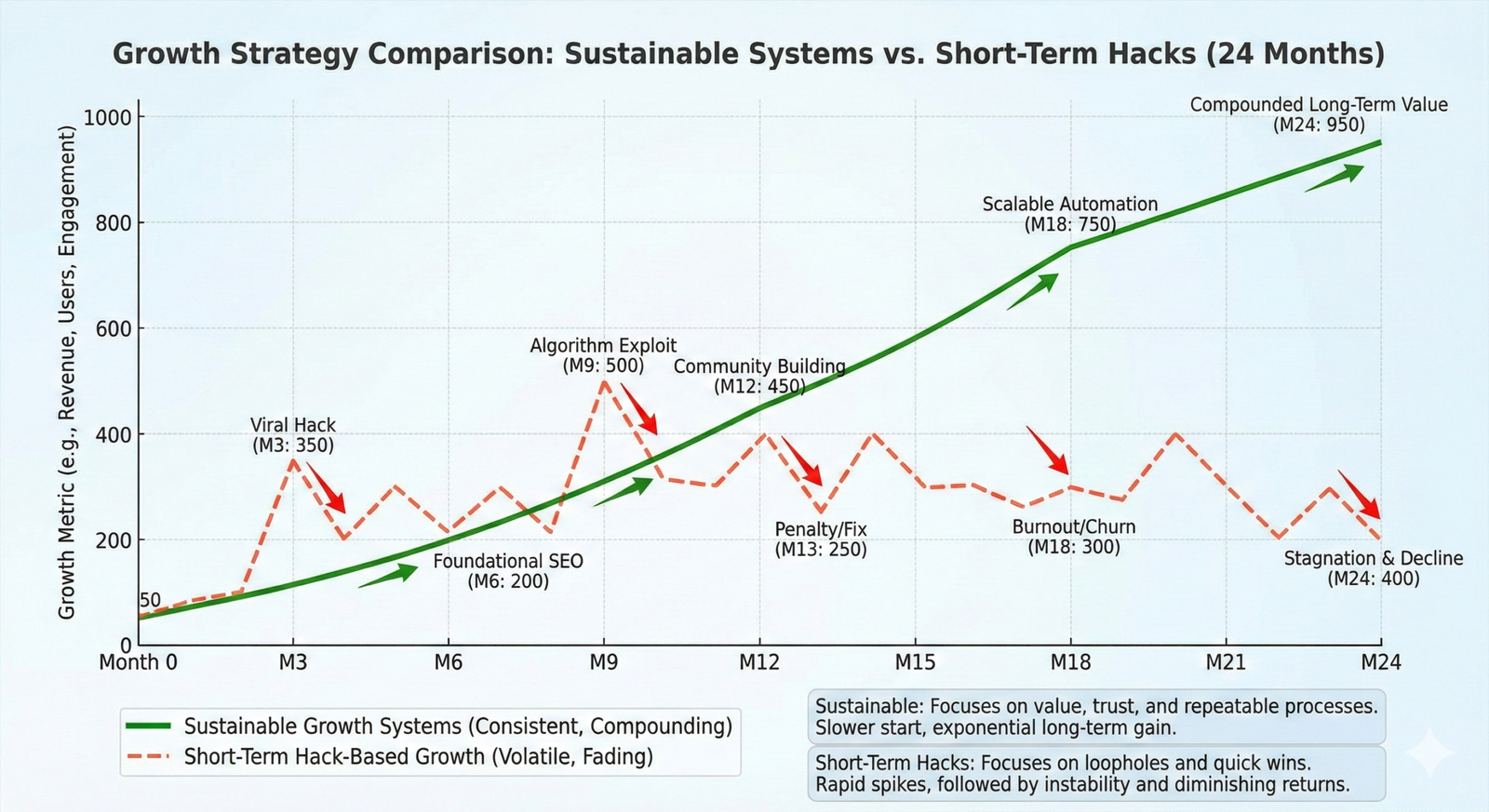
Social media growth systems are repeatable, scalable frameworks that combine content strategy, distribution mechanics, engagement protocols, and analytics feedback loops to generate predictable audience growth. Unlike one-off hacks that exploit temporary algorithmic quirks, systems are designed to withstand platform changes and compound over time—think infrastructure versus lottery tickets.
The problem with pure “hack” thinking is decay.
That viral hook format that crushed it in Q1? It’s saturated by Q3. The engagement pod strategy your competitor swears by? Platforms have gotten terrifyingly good at detecting artificial engagement patterns. According to research from the Pew Research Center, social media usage patterns shift dramatically year over year, and what worked yesterday often becomes invisible tomorrow.
Growth marketing systems, on the other hand, are built on principles that don’t expire. Content-market fit. Engagement velocity optimization. Distribution architecture. These fundamentals have remained consistent since the MySpace days—only the tactical execution changes.
I’ve audited accounts that gained 50,000 followers through hack-based growth only to watch their engagement rate crater to 0.3% because none of those followers actually cared about the content. Compare that to systematized accounts growing at half the speed but maintaining 6-8% engagement rates. Three years later, the systematic account is generating real revenue. The hacked account is a ghost town.
For a deeper dive into foundational strategies, the team at Social Media Marketing Techniques has extensive resources on building these frameworks from scratch.
The Broken Fundamentals Most Marketers Ignore
Before we get into advanced tactics, let’s address why your current approach probably isn’t working.
Fundamental #1: You’re creating content for yourself, not your audience.
I see this constantly. Brands and creators posting what they want to say rather than what their audience wants to hear. Your content strategy should be 80% audience-driven and 20% brand-driven. Not the other way around. The most successful social media marketing systems start with obsessive audience research—not brainstorming sessions about what the marketing team finds clever.
Fundamental #2: You’re optimizing for the wrong metrics.
Follower count is a vanity metric. I’ll say it again for the people in the back: follower count is a vanity metric. The metrics that actually predict revenue are:
- Engagement rate (comments + shares weighted higher than likes)
- Save rate (especially on Instagram and TikTok)
- Profile visit-to-follow ratio
- Link click-through rate
- Story reply rate
An account with 10,000 highly engaged followers will outperform an account with 100,000 passive followers every single time.
Fundamental #3: You’re posting without a distribution strategy.
Creating content is maybe 40% of the growth equation. The other 60%? Distribution. Most people hit “publish” and pray. Professional growth marketers have systematic approaches to ensure every piece of content gets maximum exposure through strategic engagement, cross-promotion, and paid amplification triggers.
Fundamental #4: You’re not treating this like a product.
Your social media presence is a product. It needs product-market fit. It needs iteration cycles. It needs user feedback integration. The most successful accounts I’ve worked with treat every content series like a product launch—with hypothesis testing, MVPs, and data-driven pivots.
Algorithm Mechanics for 2026: What Actually Matters
Let’s cut through the algorithmic mysticism.
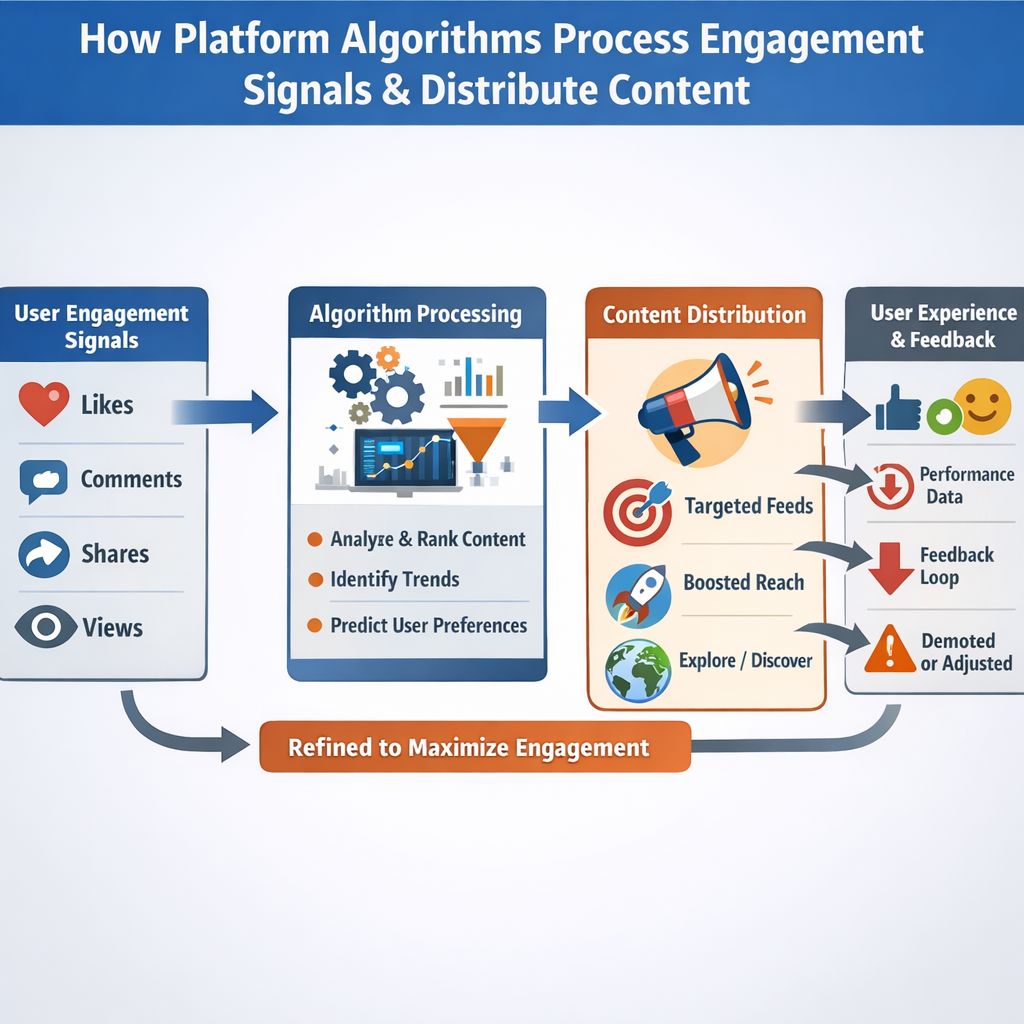
Every major platform algorithm optimizes for the same core objective: maximize user time on platform. That’s it. Everything else—engagement signals, content quality scoring, creator rewards—flows downstream from that single north star metric.
Fast forward to 2026, and we’re seeing three major shifts in how platforms interpret “quality content”:
Shift #1: Engagement Velocity Over Raw Engagement
It’s not just about getting 1,000 likes. It’s about how quickly those likes accumulate in the first 30-60 minutes after posting. Platforms use early engagement velocity as a primary signal for content quality. This is why posting time optimization and having an engaged “first responder” audience is critical.
The Social Media Examiner has documented this pattern extensively, showing that content receiving high engagement within the first hour sees 3-5x more distribution than equivalent content with slower engagement curves.
Shift #2: Content Depth Signals
Platforms have gotten sophisticated at measuring content consumption depth. They’re tracking:
- Video completion rates (not just views)
- Time spent on carousel slides
- Scroll-back behavior on long-form content
- Replay frequency
Surface-level content that people scroll past gets penalized. Content that makes people stop, rewatch, and engage gets amplified. This fundamentally changes how you should structure your content.
Shift #3: Creator Consistency Scoring
Platforms now factor in creator reliability. Accounts that post consistently, respond to comments, and maintain engagement are scored higher than sporadic posters. Think of it like a credit score for content creators. This is why social media growth systems emphasizing consistent output beat sporadic viral attempts.
If you’re looking to build a consistent content engine, check out the comprehensive guides at Social Media Marketing Techniques for workflow optimization strategies.
Advanced Content Systems That Compound
Here’s where we separate the amateurs from the professionals.
A social media growth hack might tell you to use a trending audio. A growth system tells you how to build a content architecture that generates consistent growth regardless of trends.
The Pillar-Cluster Content Model
Stop thinking about individual posts. Start thinking about content ecosystems.
Every successful account I’ve built uses some version of this architecture:
- Pillar Content (20%): Deep, comprehensive pieces that establish authority. These are your flagship videos, carousel breakdowns, or long-form threads.
- Cluster Content (60%): Shorter pieces that expand on specific aspects of your pillar content. These drive engagement and feed algorithmic consistency requirements.
- Responsive Content (20%): Trend-jacking and timely content that captures attention and funnels people back to your pillar content.
This model creates natural internal linking between your content pieces, increases watch time as viewers consume related content, and builds topical authority that algorithms reward.
The Content Multiplication System
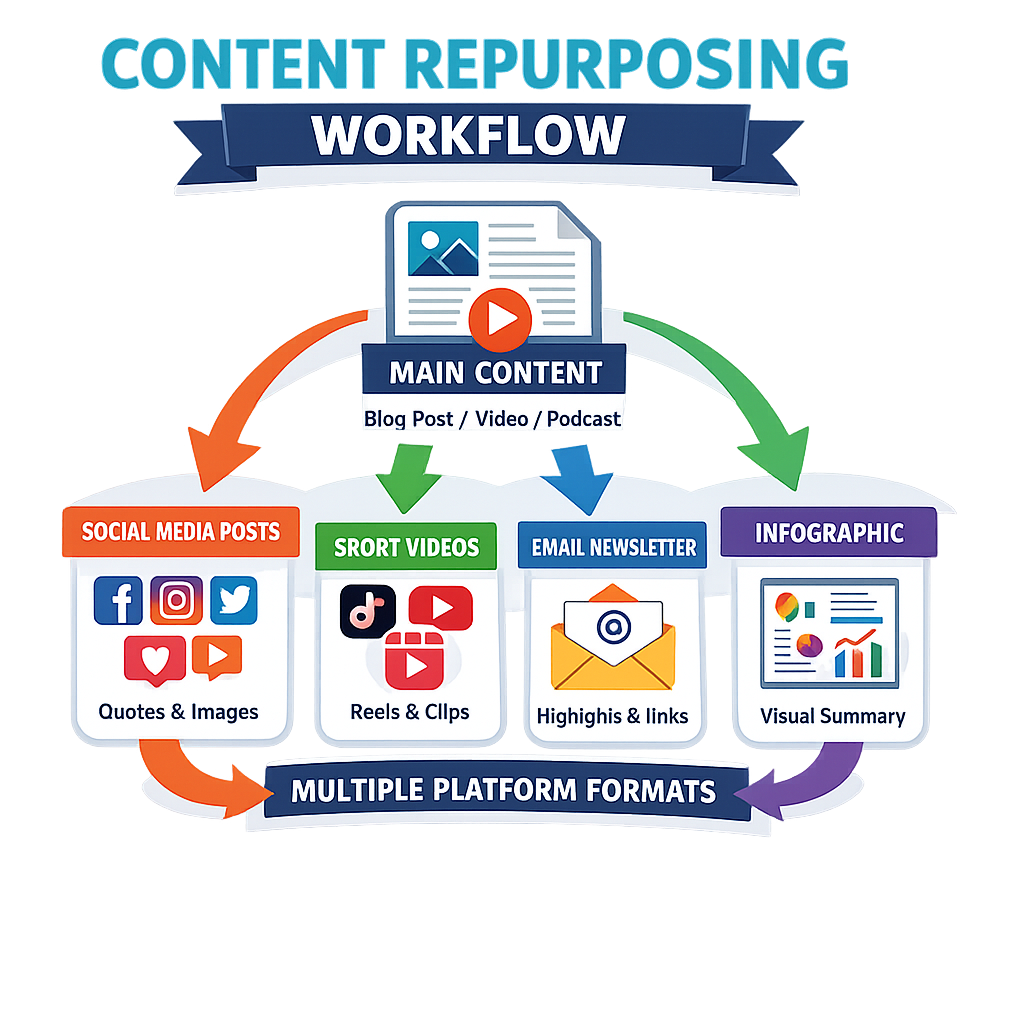
One piece of content should become 10-15 pieces across platforms and formats.
Here’s the multiplication framework I use with clients:
- Long-form video → Short clips (3-5) → Audio snippets → Quote graphics → Thread breakdown → Newsletter excerpt → Blog embed
- Each multiplication optimized for its specific platform’s algorithm preferences
- Staggered release schedule to maximize engagement windows
The best social media marketing systems treat content creation like manufacturing—with production lines, quality control, and distribution logistics.
The Hook Library System
Your first 3 seconds determine everything. Build a library of proven hook formats categorized by:
- Hook type (question, contradiction, statistic, story, shock)
- Performance data (engagement rate, completion rate)
- Content category fit
When creating new content, pull from your hook library rather than improvising. This removes guesswork and ensures consistent performance baselines.
Automation & Tools: The Tech Stack That Scales
Let me be blunt: if you’re manually posting to each platform in 2026, you’re leaving massive efficiency gains on the table.
But here’s the nuance that most “automation gurus” miss—automate the repetitive, humanize the relational.
Scheduling, cross-posting, basic analytics aggregation? Automate ruthlessly. Comment responses, DM conversations, community building? Stay human or die trying.
The Essential Tech Stack
For Scheduling & Cross-Posting: Tools like Metricool, Later, or Publer handle multi-platform scheduling without breaking the bank. The key feature to prioritize is platform-specific formatting—tools that auto-adapt aspect ratios and caption lengths save hours weekly.
For Analytics: Native platform analytics are surprisingly good now, but tools like Sprout Social or Iconosquare provide the cross-platform comparison views essential for growth marketing systems. Look for tools that track engagement velocity, not just totals.
A quality content planner can help you maintain the consistency algorithms reward. Physical planners still work surprisingly well for creative workflow:
For Content Creation: The Canva-CapCut-Descript stack handles 90% of content production needs for most creators. Don’t overcomplicate this. Production value matters less than message clarity and hook strength.
For AI-Assisted Writing: Use AI for first drafts, research synthesis, and repurposing—never for final output without heavy human editing. Audiences can smell AI-generated content instantly, and engagement tanks accordingly.
The Automation Trap to Avoid
I’ve watched accounts automate themselves into irrelevance.
They scheduled 6 months of content, set up auto-responders for DMs, and walked away. Within weeks, their engagement rates cratered. Why? Because social media rewards social behavior. The platforms can detect when accounts operate on autopilot versus active engagement.
The fix: Use automation to free up time for human engagement, not to replace it. Aim for a 60/40 split—60% of your social media time on direct community interaction, 40% on content creation and strategy. Automation handles the administrative middle layer.
For more tactical automation strategies, Social Media Marketing Techniques offers detailed walkthroughs on building efficient workflows without sacrificing authenticity.
Paid Amplification Systems: When and How to Spend
Organic reach is harder than ever. That’s just reality.
According to data from Statista’s social media research, organic reach on Facebook has declined to under 5% for most pages, and similar patterns are emerging across platforms. The solution isn’t to abandon organic—it’s to build hybrid systems that use paid amplification strategically.
The Proof-First Spending Model
Never boost content that hasn’t proven itself organically first.
Here’s the system:
- Publish content organically
- Wait 24-48 hours for initial performance data
- Identify content performing 2x+ above your baseline engagement rate
- Only amplify proven winners
This approach ensures you’re not throwing money at content the algorithm has already determined is weak. You’re using paid to accelerate content the platform already wants to show people.
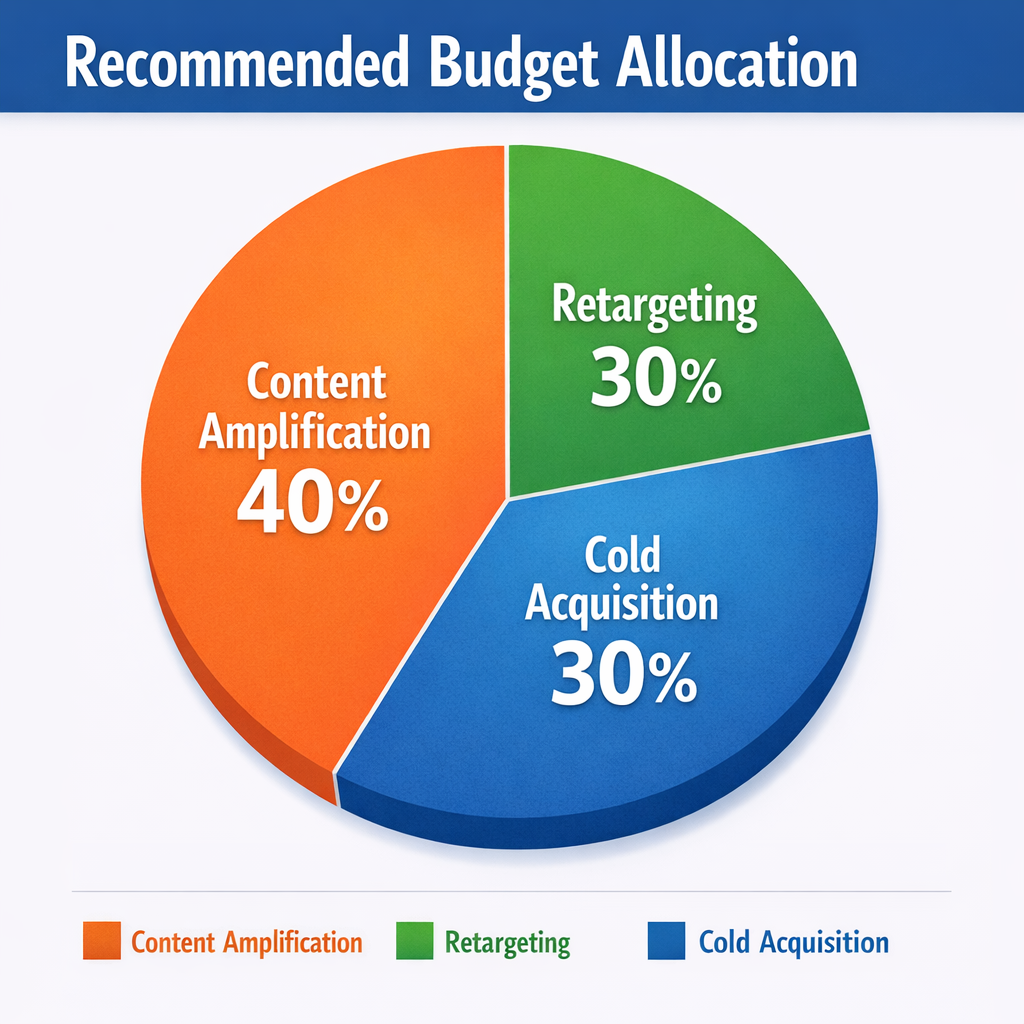
Budget Allocation Framework
For accounts serious about growth, here’s how I typically allocate paid spend:
- Content Amplification (60%): Boosting proven organic content to lookalike audiences
- Retargeting (25%): Hitting people who’ve engaged but haven’t followed or converted
- Cold Acquisition (15%): Testing new audience segments with top-performing content
The biggest mistake I see? Brands spending 90%+ on cold acquisition. Your warmest audiences—people who’ve already shown interest—convert at 5-10x the rate of cold traffic. Weight your spending accordingly.
Platform-Specific Paid Tactics
Meta (Facebook/Instagram): Advantage+ campaigns have gotten genuinely impressive at optimization. The creative is now the targeting—focus your energy on creative testing rather than audience micro-segmentation.
TikTok: Spark Ads (boosting organic content) dramatically outperform traditional ads. The platform rewards authentic content, and users can smell traditional advertising immediately.
LinkedIn: Expensive but effective for B2B. Document ads and thought leader ads typically outperform traditional sponsored content. The key is not looking like an ad.
Analytics & Optimization: Measuring What Matters
Data without action is just entertainment.
The difference between hobbyist and professional social media growth systems is the feedback loop. Professionals have systematic approaches to collecting data, interpreting it, and implementing changes. Hobbyists check their likes and feel good (or bad) without changing anything.
The Weekly Analytics Ritual
Every week, review:
- Top 3 performing posts (why did they work?)
- Bottom 3 performing posts (why did they fail?)
- Engagement rate trend (up, down, flat?)
- Follower growth rate (accelerating or decelerating?)
- Best performing content category
- Best performing post time
This takes 30 minutes maximum. The insights compound over time—patterns emerge that completely reshape your content strategy.
The Metrics Hierarchy
Not all metrics are created equal. Here’s how to prioritize:
Tier 1 (Revenue Indicators): Link clicks, website traffic, conversion events, DM inquiries
Tier 2 (Growth Indicators): Saves, shares, profile visits, follower growth rate
Tier 3 (Engagement Indicators): Comments, likes, video completion rate
Tier 4 (Vanity Metrics): Impressions, reach, follower count
Optimize from the top down. A post with low reach but high link clicks is more valuable than a viral post with zero conversions.
For tracking social media metrics effectively, a dedicated notebook or digital tracker makes a significant difference:
A/B Testing Framework
Stop guessing. Start testing.
Every month, run at least one structured test:
- Week 1-2: Variation A (e.g., question hooks)
- Week 3-4: Variation B (e.g., statistic hooks)
- Week 5: Analyze results, implement winner, design next test
Variables to test: hook formats, posting times, content length, caption styles, call-to-action placement, visual styles. One variable at a time, or your data becomes meaningless.
Cross-Platform Synergy: The Multiplier Effect
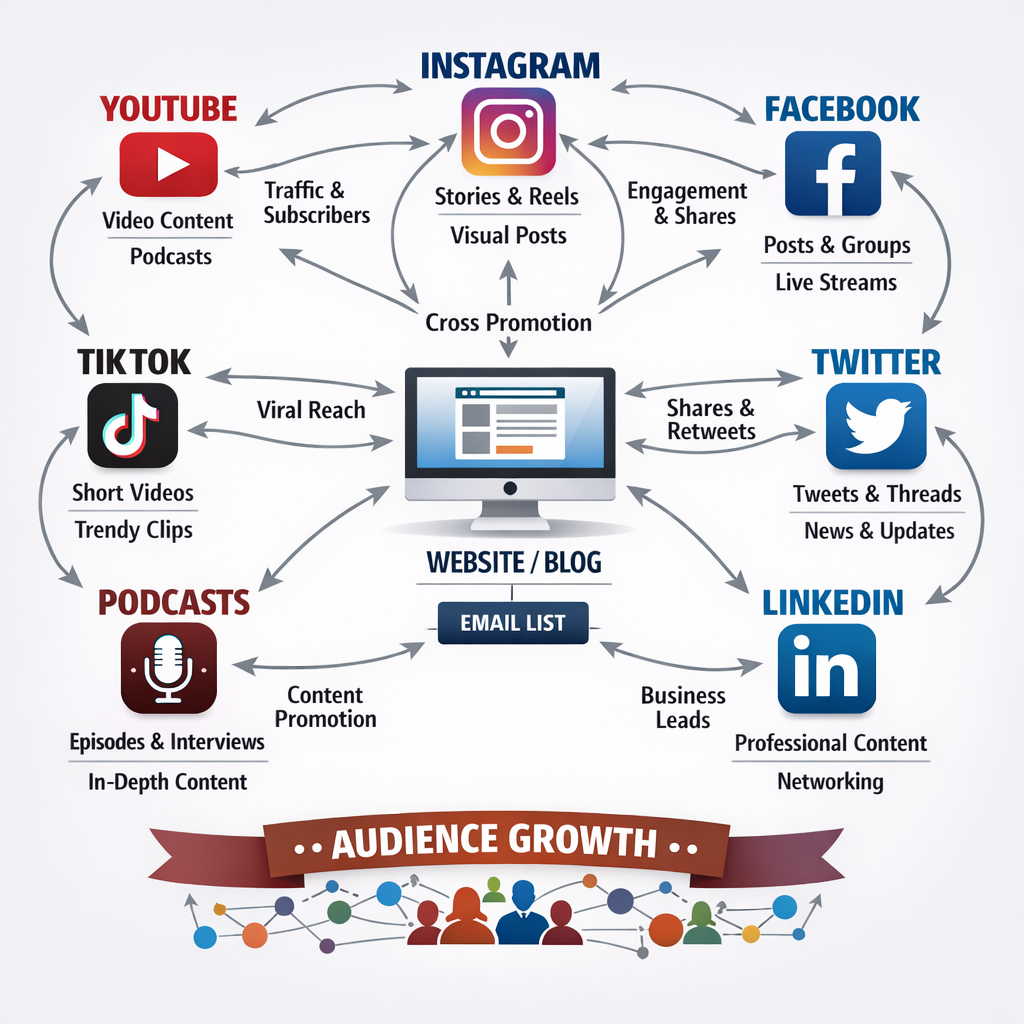
Here’s a social media growth hack that actually deserves the name: strategic cross-platform audience migration.
Each platform has different strengths:
- TikTok: Discovery and top-of-funnel reach
- Instagram: Community building and visual storytelling
- YouTube: Deep engagement and evergreen content
- Twitter/X: Real-time conversation and thought leadership
- LinkedIn: B2B authority and professional networking
- Email: Owned audience and direct monetization
The system: Use high-reach platforms (TikTok, Twitter) for discovery, migrate engaged audiences to owned platforms (email, YouTube), monetize through deep-relationship channels.
The Platform Migration Funnel
Every piece of content should have a migration CTA—subtle direction toward your next-level platform:
- TikTok video → “Full breakdown on my YouTube”
- Instagram carousel → “Join my newsletter for the template”
- Twitter thread → “I post deep dives on LinkedIn”
This isn’t about being pushy. It’s about offering your most engaged audience members a deeper relationship. The people who actually want more will migrate. Everyone else was never going to convert anyway.
For comprehensive strategies on building these cross-platform funnels, Social Media Marketing Techniques provides detailed implementation guides.
Content Format Translation
Don’t just cross-post. Translate.
A LinkedIn post should not read like a TikTok caption. Each platform has cultural norms:
- TikTok: Casual, trend-aware, entertainment-first
- LinkedIn: Professional insights, story-driven, business context
- Instagram: Aesthetic-conscious, community-focused, aspirational
- Twitter: Punchy, contrarian takes, conversation starters
The core message can stay the same. The packaging must adapt.
Frequently Asked Questions
How long does it take to see results from social media growth systems?
With properly implemented growth marketing systems, you should see measurable traction within 30-45 days. However, compound growth typically kicks in around the 90-day mark. Anyone promising overnight results is selling snake oil. The accounts I’ve built to 100K+ followers took 12-18 months of consistent execution. There are no shortcuts—only efficiencies.
Are social media growth hacks still effective in 2026 with algorithm changes?
Yes, but the definition of “hack” has evolved. Platform-specific exploits get patched quickly, but system-based approaches that align with platform incentives remain consistently effective. The best hacks in 2026 aren’t about gaming algorithms—they’re about deeply understanding what platforms want (engaged users staying longer) and giving it to them more efficiently than competitors.
What’s the minimum budget needed for effective social media growth marketing?
You can build significant organic traction with zero ad spend if you invest 15-20 hours weekly in content and community. For paid amplification, a minimum of $500-1,000 monthly per platform allows for meaningful testing and optimization. Below that threshold, you can’t generate enough data for reliable optimization insights. But remember: paid without organic foundation is just expensive audience rental.
Should I focus on one platform or multiple platforms simultaneously?
Start with one platform where your audience is most concentrated and master it before expanding. Platform mastery typically takes 6-12 months. Spreading thin across multiple platforms usually produces mediocre results everywhere. Once you’ve built systems that run efficiently on your primary platform, you can begin strategic expansion—using the skills and content assets you’ve already developed.
How do I know if my social media growth strategy is actually working?
Focus on leading indicators: engagement rate, save rate, share velocity, and profile visit-to-follow ratio. Vanity metrics like follower count are lagging indicators. If engagement rate exceeds 3-5% consistently, your strategy is working. If you’re growing followers but engagement rate is declining, you’re attracting the wrong audience or your content quality is slipping.
The Insider Takeaway
Bottom line: social media growth hacks and advanced systems aren’t opposing concepts—they’re complementary layers of the same growth architecture.
Hacks give you tactical advantages in the short term. Systems give you strategic advantages that compound over years. The marketers winning in 2026 have both: a systematic foundation that ensures consistent baseline performance, plus the agility to deploy tactical hacks when opportunities emerge.
Here’s what I want you to take away from this entire piece:
Stop chasing vanity metrics. Build systems that generate engaged audiences. Automate the repetitive. Humanize the relational. Test ruthlessly. Optimize based on revenue indicators, not applause metrics. And for the love of all things marketing—be patient.
The accounts that look like “overnight successes” are almost always the result of 18-24 months of consistent system execution that finally hit escape velocity. There is no hack that replaces showing up, day after day, with content that genuinely serves your audience.
Now go build something sustainable.
And if you’re looking for more tactical playbooks on implementing these systems, Social Media Marketing Techniques has a growing library of resources to support your growth journey.
— That’s the real talk from 12 years in the trenches. Now stop reading and start implementing. Your future followers are waiting.
As an Amazon Associate, I earn from qualifying purchases.