
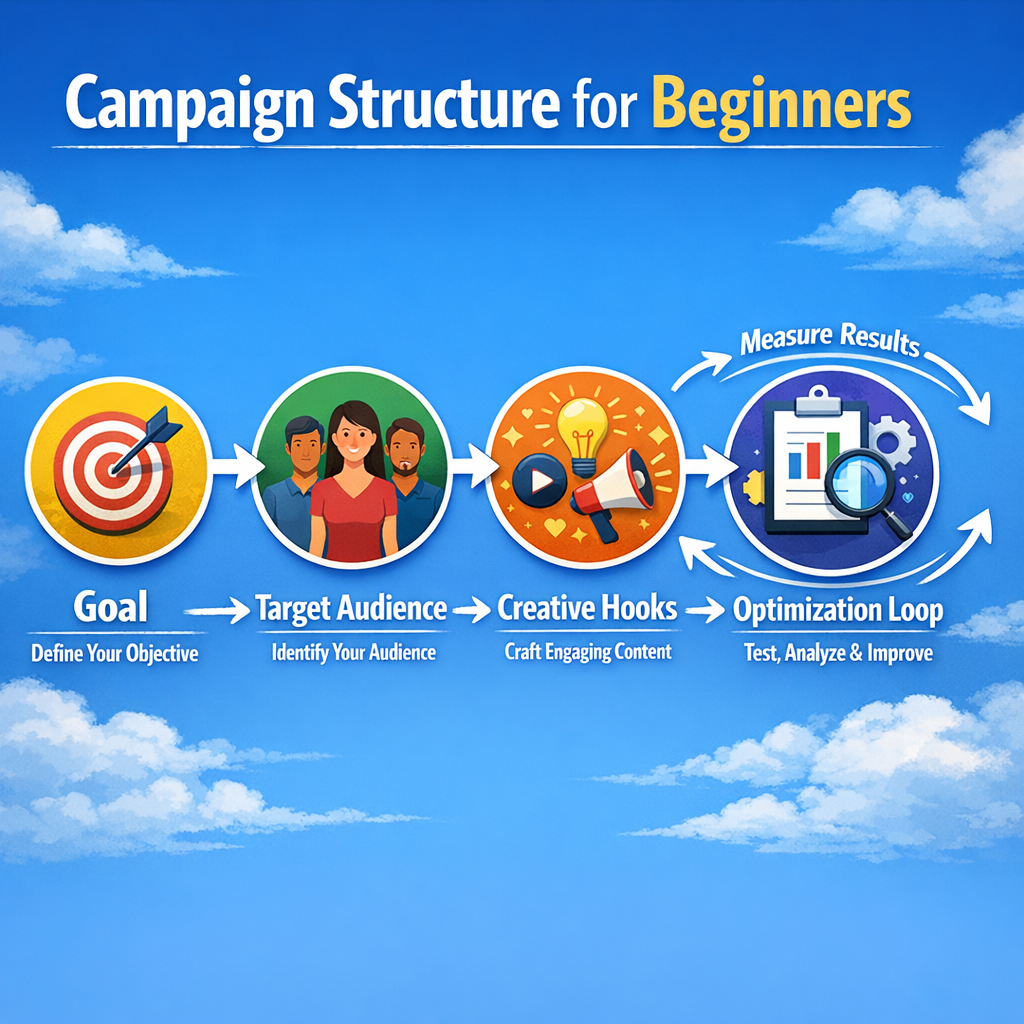
Here’s the truth: campaign structure for beginners isn’t hard—it’s just usually taught badly. Campaign structure for beginners should feel like building a simple machine: input (traffic), filter (targeting + hooks), output (sales/leads), then tuning (testing).
The problem is most beginners build a Franken-campaign: ten audiences, three objectives, random creatives, and zero idea what caused the result. Then they call it “the algorithm being weird.”
If you want performance, you need a structure that makes learning inevitable.
Table of Contents
- The only structure you need (and why most setups fail)
- The one-goal rule: pick a single job for the campaign
- The three-layer stack: campaign, ad set, ad
- Hooks before targeting: stop the scroll first
- Video hook templates that don’t sound like an ad
- Retention hooks: keep them watching, keep them moving
- Testing and budget: learn fast without lighting money on fire
- Tracking and truth: the metrics that actually matter
- Frequently Asked Questions
- The exit strategy: your next 48 hours
The only structure you need (and why most setups fail)
Use one objective, one clean funnel path, and a small set of creatives that test hooks—then iterate based on watch time, click intent, and downstream conversions. Keep audiences simple, creatives varied, and measurement tight. This setup makes it obvious what worked and what didn’t, so you can scale without guessing.
Fast forward to what beginners usually do: they copy some “pro” screenshot with 15 ad sets, 40 ads, and $5/day everywhere. That isn’t strategy. That’s spreadsheet cosplay.
Campaign structure is just coordination. If you want the textbook definition of a coordinated marketing effort, you can peek at Wikipedia’s overview of a marketing campaign. It’s not magic—it’s coordination and measurement.
And measurement matters because the moment you can’t explain performance, you can’t improve it. You’re just donating to the platform.
The one-goal rule: pick a single job for the campaign
Bottom line: your campaign gets one job.
Not “brand awareness and leads and sales and followers.” Pick the one outcome you’re paying for. Everything else is a distraction wearing a lanyard.
Three beginner-friendly jobs:
- Cold acquisition: introduce, qualify, and drive a first conversion (lead, purchase, booking).
- Retargeting: get “almost buyers” over the line with proof, clarity, and friction removal.
- Creative testing: find hooks and angles that consistently earn attention and clicks.
If you’re still setting up your paid stack end-to-end, don’t improvise. Build a clean foundation first, then add complexity later. I’ve laid out a practical, no-nonsense sequence in this rapid 7-day paid ads setup sprint so you’re not “optimizing” a broken pipeline.
The three-layer stack: campaign, ad set, ad
Think of this like engineering layers:
- Campaign: the mission (objective + budget container).
- Ad set: the delivery plan (audience, placements, optimization event).
- Ad: the persuasion unit (hook, message, proof, CTA).
Beginners screw up by treating ad sets like “mini campaigns” and ads like “pretty posts.” Wrong.
Your learning happens at the ad level. Creative is where you test hook ideas for reels, short form hooks, and stop the scroll hooks. Targeting should be boring at first.
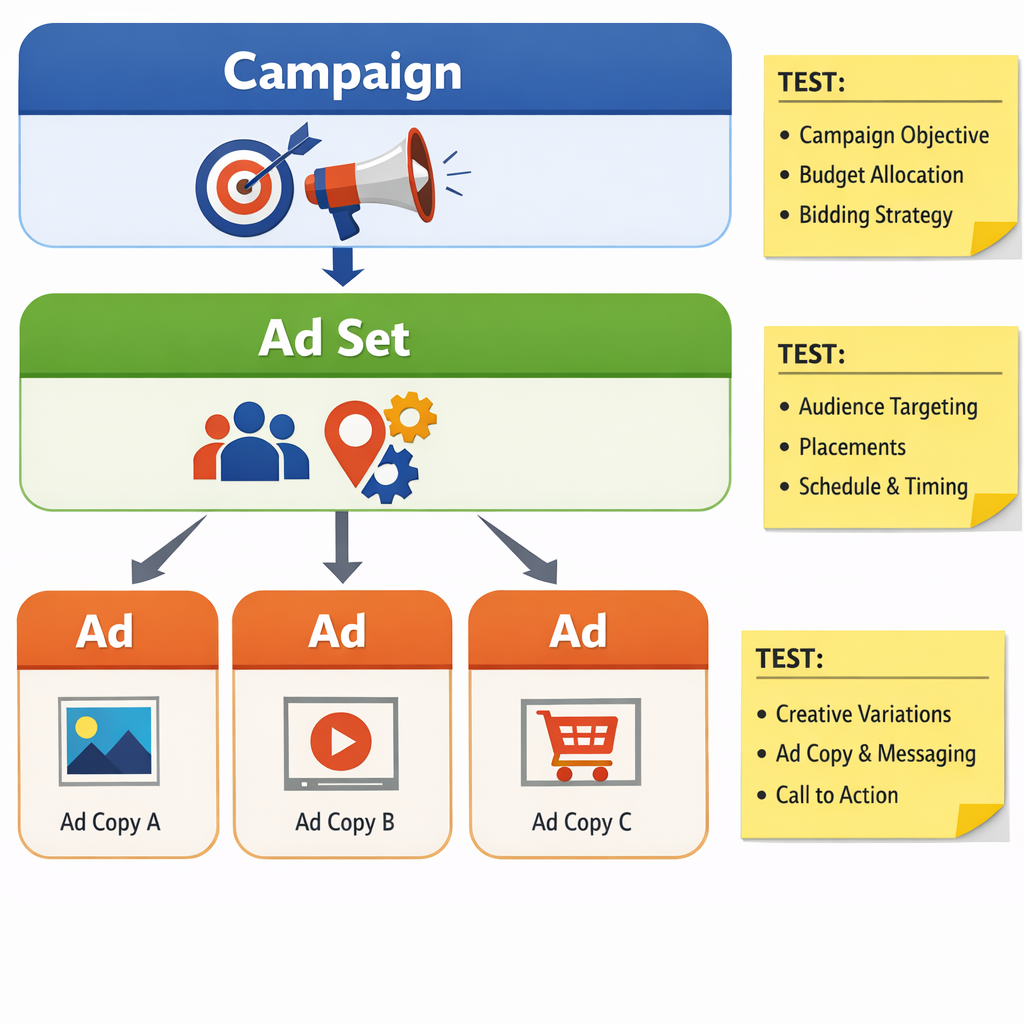
A solid beginner setup looks like this:
- 1 campaign (one objective)
- 2–4 ad sets (simple audiences; don’t over-segment)
- 3–6 ads per ad set (different hooks/angles, same offer)
Yes, you will feel tempted to add more. Don’t. If you can’t manage the learning loop, you don’t deserve the complexity yet.
Hooks before targeting: stop the scroll first
Here’s the uncomfortable part: most “targeting problems” are actually creative problems.
If your video hook templates are weak, the platform can’t save you. It will still show your ad to people. They’ll just ignore it efficiently.
So your priority is: win the first second, then earn the next five, then make the click feel inevitable.
If you want to nerd out on why experimentation works, A/B testing is literally a randomized experiment framework. Wikipedia’s A/B testing page gives the clean definition. It’s testing with control and comparison. That’s what we’re doing with hooks—testing “attention hypotheses.”
Also: if you’re using testimonials, influencer clips, or “results” claims, don’t get cute with disclosures. The FTC has very clear expectations for endorsements and disclosures. Read the FTC guidance and keep it clean. You’re building a business, not speedrunning a ban.
Video hook templates that don’t sound like an ad
Let’s talk hook ideas for reels and shorts without the cringe.
Stop the scroll hooks work when they do one of these fast:
- Call out the problem in the viewer’s language.
- Show the payoff before you explain it.
- Break a pattern (unexpected visual, blunt statement, sharp contrast).
- Trigger curiosity with a specific open loop.
Here are plug-and-play video hook templates you can actually say out loud:
- “If you’re doing X, stop. It’s costing you Y. Do this instead.”
- “I thought X was the answer. Turns out it was the problem.”
- “Watch this for 7 seconds. If it doesn’t help, scroll.”
- “This is why your [result] is stuck: you’re optimizing the wrong thing.”
- “I’m going to show you the exact setup I use so I don’t guess.”
Notice what’s missing? “Hey guys,” “I’m so excited,” and a 12-second logo intro. That stuff kills momentum.
Also, your production doesn’t need to be Hollywood. But it does need to be watchable. If your audio is trash, your retention hooks won’t matter.
One small gear upgrade (like a decent lapel mic) can do more for performance than another week of “tweaking targeting.”
And if your campaign setup feels messy, go back to fundamentals. This paid ads setup sprint is basically the “stop freehanding your system” guide.
Retention hooks: keep them watching, keep them moving
Short form hooks get the click. Retention hooks get the conversion.
Most beginners confuse retention with “be entertaining.” No. Retention is progress.
Here’s a simple retention stack that works across Reels/Shorts/TikTok:
- Open loop: “In 20 seconds you’ll know exactly what to do.”
- Micro-proof: screenshot, demo, quick before/after, short clip of result.
- Step-by-step: 2–4 steps max. If it needs 12 steps, it’s a course, not a Reel.
- Payoff: show the outcome or the template.
- CTA: one action, one link, one reason.
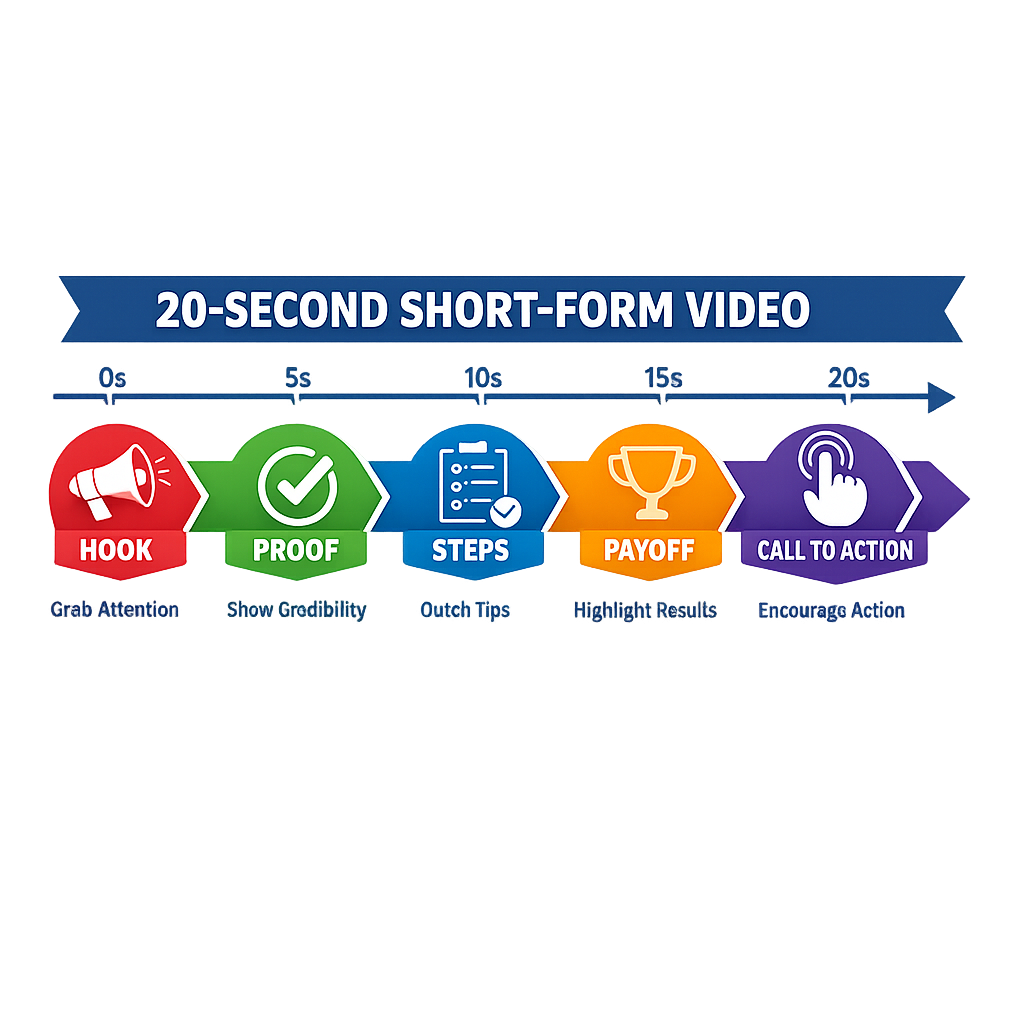
Insider reality: your “best” script can still flop if the first frame is visually boring. Use a high-contrast opening shot, big on-screen text, and movement in the first second. Not chaotic movement—intentional movement.
If you’re running paid traffic, don’t ignore platform-side quality signals. Google’s Ads documentation on ad quality and relevance is blunt: relevance matters for performance and efficiency. Quality signals impact how your ads compete. (Different platform, same truth: bad ads pay a tax.)
Testing and budget: learn fast without lighting money on fire
Testing isn’t “try random stuff.” Testing is: change one variable on purpose.
A beginner testing plan that doesn’t suck:
- Keep the offer constant for the first round.
- Test hooks, not fonts. Your hook is the lever.
- Use 3–5 creative angles (pain, proof, demo, myth-bust, comparison).
- Let winners breathe. Don’t reset learning every time you get nervous.
Budget rule of thumb: allocate enough to get meaningful signal, not just vibes. If you’re spending so little that you can’t collect consistent impressions, you’re not testing—you’re sampling.
Also, please stop duplicating campaigns like a copy machine. If you want a repeatable launch motion, build the system once, then reuse it. That’s why I keep pointing people to this 7-day paid ads setup plan: structure first, creativity second, scaling third.
A stable tripod isn’t “nice to have.” It’s the difference between “this looks legit” and “why is the camera seasick?”
Tracking and truth: the metrics that actually matter
Here’s the part most people avoid because it forces accountability.
If you can’t track the funnel, you can’t fix the funnel.
For short-form campaigns, I care about three buckets:
- Attention: 3-second views, average watch time, hook hold (platform-specific).
- Intent: click-through rate (CTR), landing page views, on-site engagement.
- Outcome: cost per lead, cost per purchase, conversion rate, revenue.
One-sentence truth: high CTR with no conversions usually means your hook over-promised or your page under-delivered.
Another one: low CTR with good conversion rate usually means your offer is strong but your hooks are weak.
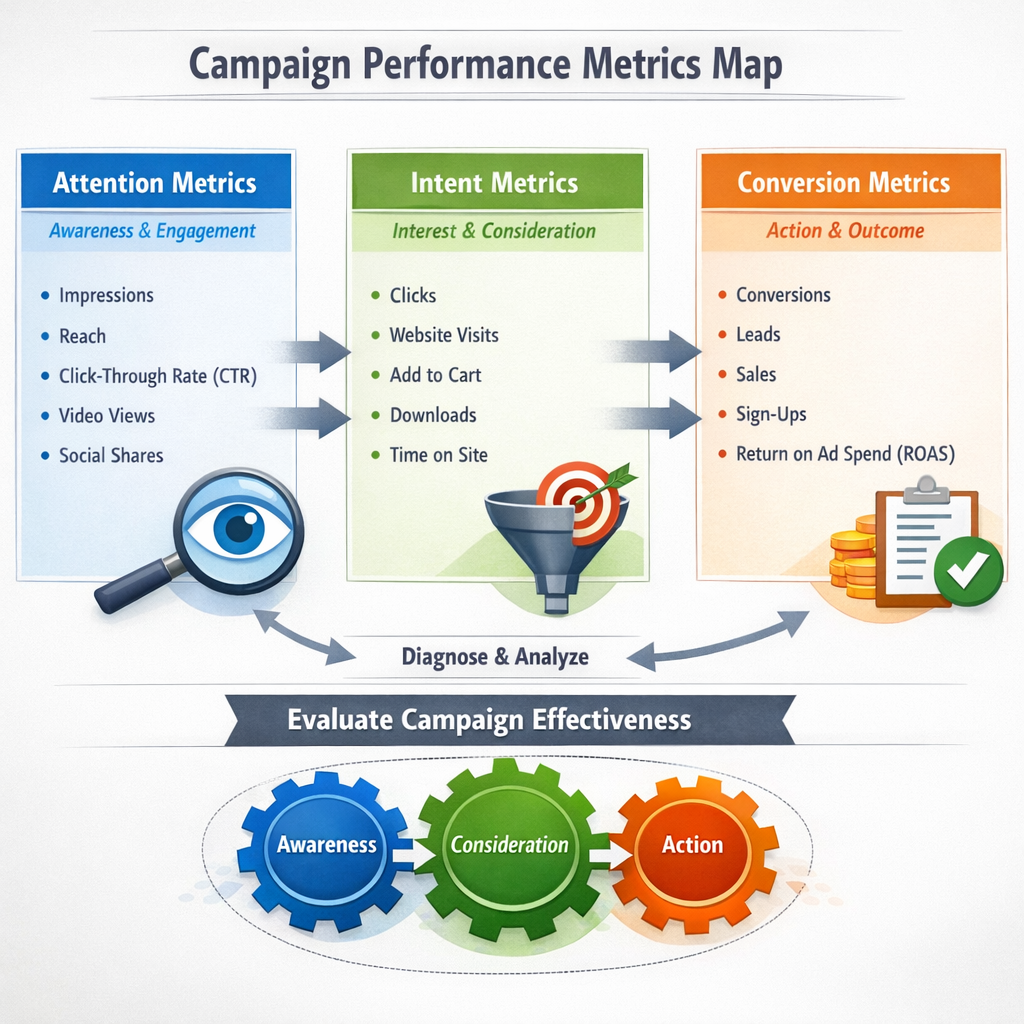
And yes, attribution can be messy. But messy doesn’t mean “give up.” It means build a decision process: define what a “winner” looks like, define when you cut losers, define how you iterate.
If you’re still not sure your foundation is correct (pixel, events, naming conventions, basic hygiene), don’t “optimize” in the dark. Use this paid ads setup sprint guide to make your stack measurable before you scale spend.
Frequently Asked Questions
How many campaigns should a beginner run at once?
One. Seriously. One campaign, one goal, small creative set. Beginners learn faster when the data isn’t fragmented across a dozen places. Add more campaigns only after you can explain why your current one is working.
What matters more: targeting or creative?
Creative, most of the time. Targeting can’t rescue boring hooks. If your stop the scroll hooks don’t earn attention, you’re paying for impressions that do nothing. Nail the message first, then tighten the audience based on actual results.
How long should I wait before I kill an ad?
Don’t kill instantly unless it’s obviously broken. Give it enough impressions to judge the hook and early retention. Then cut losers fast and reallocate. The goal isn’t to “be patient.” The goal is to learn without panicking.
Do I need different hooks for Reels, TikTok, and Shorts?
The hook patterns are universal, but the packaging changes. Reels often likes cleaner visuals; TikTok tolerates rough authenticity; Shorts can reward tighter edits. Keep the core idea, tailor the pace, and test in platform-native format.
What’s the simplest way to improve retention hooks?
Open loop + micro-payoffs. Promise a clear outcome early, then deliver progress every few seconds—proof, a step, a demo, or a contrast. Retention isn’t “watch till the end.” Retention is “this keeps getting useful.”
The exit strategy: your next 48 hours
Here’s your insider takeaway: structure is how you buy learning. If your campaign structure makes learning obvious, you win even when an ad loses—because you know why.
Your next steps:
- Choose one campaign job (acquisition, retargeting, or testing).
- Build 3–5 hook variations using the templates above.
- Add retention hooks (open loop + proof + payoff).
- Launch with simple audiences and watch the data like a grown-up.
Bottom line: beginners don’t need more hacks. They need a setup that tells the truth.
Now go build. And if you feel the urge to create “Campaign 2: Just In Case,” close the tab and step away from the keyboard. Your future self will thank you.
As an Amazon Associate, I earn from qualifying purchases.



2 Comments