
Algorithm Hacking & Growth: Why Your Posts Don’t Spread
Algorithm hacking & growth in 2026 isn’t about “tricks.” It’s about understanding what the machine is rewarded for, then engineering your content and distribution like an adult. The problem is most creators are still playing 2018 Instagram: post, hope, repeat.
Fast forward to now: every major platform is a recommender system competing for attention, sessions, and retention. If your content doesn’t hold attention and create satisfaction signals, you’re not “shadowbanned.” You’re just losing the auction.
Here’s the truth: you don’t need more content. You need a better content distribution strategy, cleaner signal design, and a test loop that turns guesses into wins. If you want a practical framework you can actually run week after week, start here and keep it ruthless.
For more hands-on templates and tactical breakdowns, I keep the broader framework updated at Social Media Marketing Techniques—use it as your reference library when you build your own system.
Table of Contents
- The 2026 reality: algorithms optimize sessions, not your feelings
- How the feed actually decides what to show
- Signal engineering: what you can control (and what you can’t)
- Packaging that wins: hooks, promises, and clarity
- Retention & satisfaction: the real north star
- Distribution loops: build reach like a system
- Platform behavior in 2026: patterns that keep showing up
- Content mix & production: the anti-burnout operating model
- Measurement & testing: stop lying to yourself
- Anti-patterns that look smart and perform badly
- Frequently Asked Questions
- Bottom line: the “insider” play
The 2026 reality: algorithms optimize sessions, not your feelings
Core answer: In 2026, algorithm optimization means designing content that reliably creates strong satisfaction signals (retention, shares, saves, follows) and then amplifying it through repeatable distribution loops. The algorithm tests content in small batches, expands winners, and suppresses losers fast. Your job is to raise the win-rate with better packaging, retention, and distribution.
Most “growth advice” is either superstition or motivational posters for people who don’t ship. You’ve seen it: “post daily,” “use 30 hashtags,” “never post external links,” “the algorithm hates you.” Cute. Also wrong.
Algorithms are not moral judges. They’re optimization systems. They reward content that increases a platform’s core outcomes: session length, return visits, and user satisfaction. Your content is basically a candidate in a tournament, and the scoreboard is behavior.
The simplest mental model: the platform predicts, “If I show this to this person, will they watch, engage, and stick around?” If yes, you get distribution. If no, you get quietly buried under an avalanche of content that did a better job.
If you want a solid conceptual foundation, learn what recommender systems are and why they behave this way: Wikipedia’s overview of recommender systems is a good starting point. It’s not “creator advice,” it’s the machinery you’re fighting.
Now the uncomfortable part: if your content isn’t growing, it’s usually not because you’re missing a secret. It’s because you’re not feeding the machine what it needs: strong signals, clean positioning, and a distribution strategy that gives your posts enough “initial conditions” to win the first test.
And yes, you can get momentum without “going viral.” The goal is a repeatable system that compounds. Viral spikes are nice. They’re also a terrible business model.
If you want a practical baseline playbook that’s not allergic to reality, bookmark this algorithm growth resource hub and treat it like your operating manual, not weekend reading.
How the feed actually decides what to show
Bottom line: ranking is a prediction problem under uncertainty. The platform has limited inventory (time and attention) and unlimited content. So it does what any rational system does: test, measure, expand winners, drop losers.
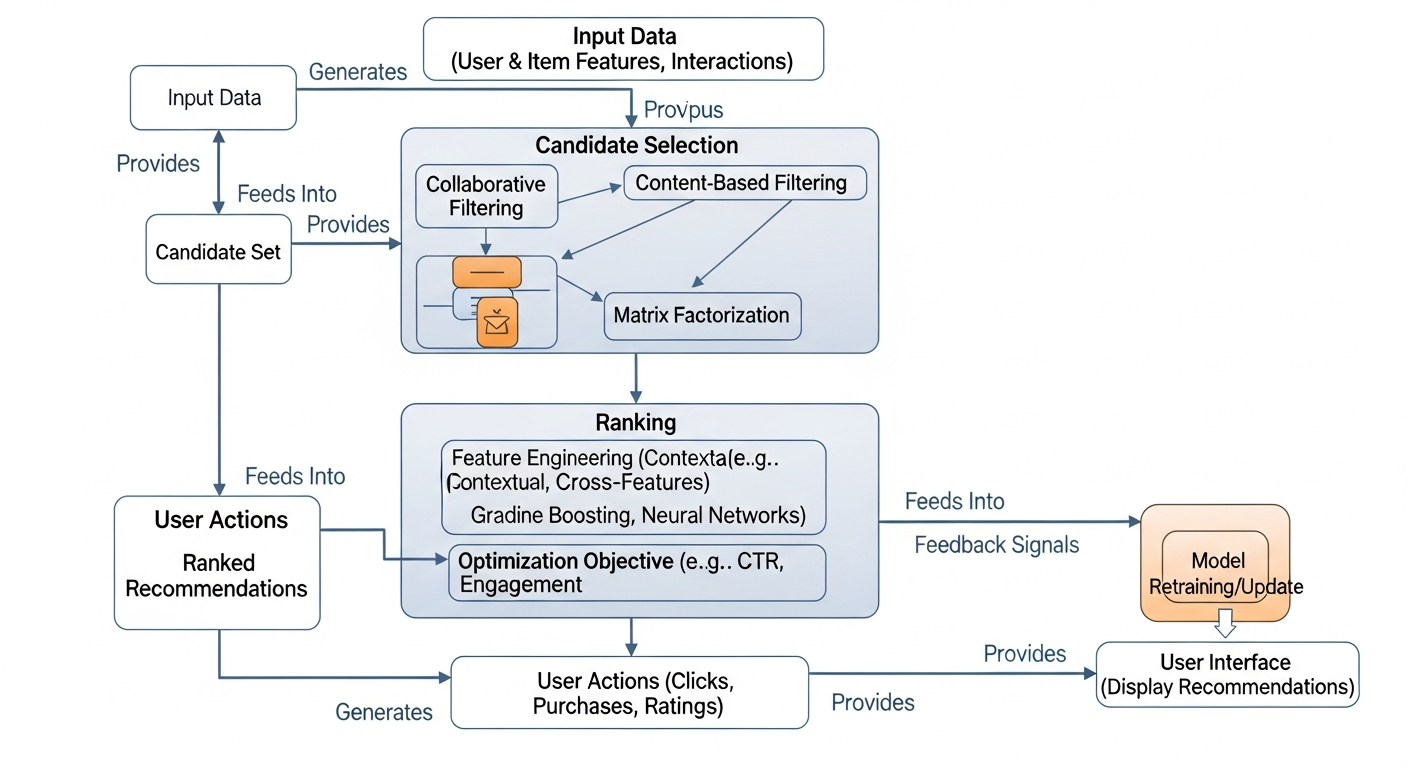
Most feeds use a variation of this pipeline:
- Candidate generation: collect possible posts for a user (following, similar interests, trending, friends-of-friends, topic clusters).
- Scoring: predict watch probability, completion likelihood, engagement likelihood, follow likelihood, and session impact.
- Ranking: order content to maximize predicted outcomes.
- Feedback loop: user actions retrain the system and update future predictions.
Here’s the truth: the algorithm doesn’t “love” your niche. It loves predictable user satisfaction. If your niche consistently satisfies a slice of users, you win. If it doesn’t, you lose. Simple. Not easy.
Platforms also don’t need perfection. They need “better than alternatives.” Your content competes against a creator who has already solved hook, pacing, and payoff. Your job is to stop shipping “pretty good” and start shipping “obviously better.”
Want a deeper, platform-native view of how large-scale recommendation is built? Google published technical work describing YouTube-style ranking systems at a high level (candidate generation + ranking). It’s not a magic spell, but it’s real engineering: Google Research publications are a rabbit hole worth falling into if you like facts more than vibes.
Also, a reminder: not everything is “algorithm.” Moderation, policy enforcement, and quality thresholds exist. If you’re pushing edgy content, health claims, or borderline spam, you’re in a different game. And if you do affiliate marketing or endorsements, don’t play stupid—disclosures matter: FTC guidance on endorsements.
For a clean checklist that keeps your growth experiments grounded, I recommend using a recurring audit from this social media optimization reference while you iterate—consistency beats reinvention.
Signal engineering: what you can control (and what you can’t)
Most creators try to “hack the algorithm” by poking the wrong variables. They obsess over posting times and hashtags while ignoring the obvious: the algorithm responds to behavior. Behavior comes from value, clarity, and pacing.
What you can control:
- Packaging: headline, hook, thumbnail/frame, opening line, on-screen text.
- Promise: what the viewer thinks they’ll get if they keep watching.
- Delivery: pacing, structure, proofs, examples, “show me,” not “trust me.”
- Friction: dead air, tangents, weak transitions, unclear audio/visuals.
- Distribution: who sees it first and why (seed audiences, collaborations, communities).
- Consistency: repeatable output quality so the model can predict satisfaction.
What you mostly can’t control:
- Market saturation: if your niche is flooded, average content dies faster.
- Platform shifts: ranking weights change; your fundamentals should not.
- Cold-start bias: new accounts need proof faster; distribution is tougher early.
- Viewer mood: people scroll differently at 7am vs 1am. Don’t overfit.
The problem is creators confuse “control” with “influence.” You can influence outcomes by improving inputs, but you can’t demand distribution. That mindset shift alone will save you months of whining.
Quick diagnostic: if your content gets impressions but not watch time, you have a packaging problem. If it gets watch time but not shares/saves, you have a satisfaction/payoff problem. If it gets strong metrics but still doesn’t spread, you have a distribution problem (or your niche is too narrow and you need adjacent audiences).

If you want a quick audit framework to spot these bottlenecks, pull the checklist style approach from this growth and algorithm optimization guide and run it weekly. Boring? Yes. Effective? Also yes.
Packaging that wins: hooks, promises, and clarity
Packaging is not “manipulation.” Packaging is respect for the viewer’s time. People scroll because the feed is a casino. Your job is to earn the next second.
Three rules that keep winning across platforms:
- Rule #1: Lead with the payoff. Don’t warm up. Don’t “hey guys.” Start with the result, the insight, or the tension.
- Rule #2: Make one promise. Your post should answer one question or deliver one transformation. Not seven.
- Rule #3: Prove you’re worth listening to. Show evidence early: a demo, a chart, a before/after, a direct example.
Hooks that work aren’t complicated. They’re specific and testable. Examples:
- “If your reach dropped, it’s probably this.” (problem identification)
- “Here’s the 15-second fix I use before I publish.” (process promise)
- “Stop doing X. Do this instead.” (contrast + directive)
- “I ran 20 tests—this one doubled saves.” (evidence + curiosity)
Now the unpopular opinion: many creators use “hooks” as bait and then deliver oatmeal. That’s not growth. That’s churn. Platforms learn too. If you spike curiosity but disappoint, your future distribution gets harder.
So build a clean hook stack:
- Context in 1 line: what the viewer is about to get.
- Friction point: what’s blocking them right now.
- Immediate value: a quick win or proof.
- Escalation: the deeper insight or framework.
When you tighten packaging, you don’t just increase reach and engagement—you make the algorithm’s job easier. Clear content is easier to categorize, easier to test, and easier to match to interested viewers.
Need more packaging frameworks that aren’t cringe? The templates at this social media growth playbook are a good reference when you’re stuck and tempted to post “tips” that nobody asked for.
Retention & satisfaction: the real north star
Everyone wants “more reach.” Cool. The algorithm wants “more satisfaction.” That’s why retention is the foundation. If people leave, distribution dies.
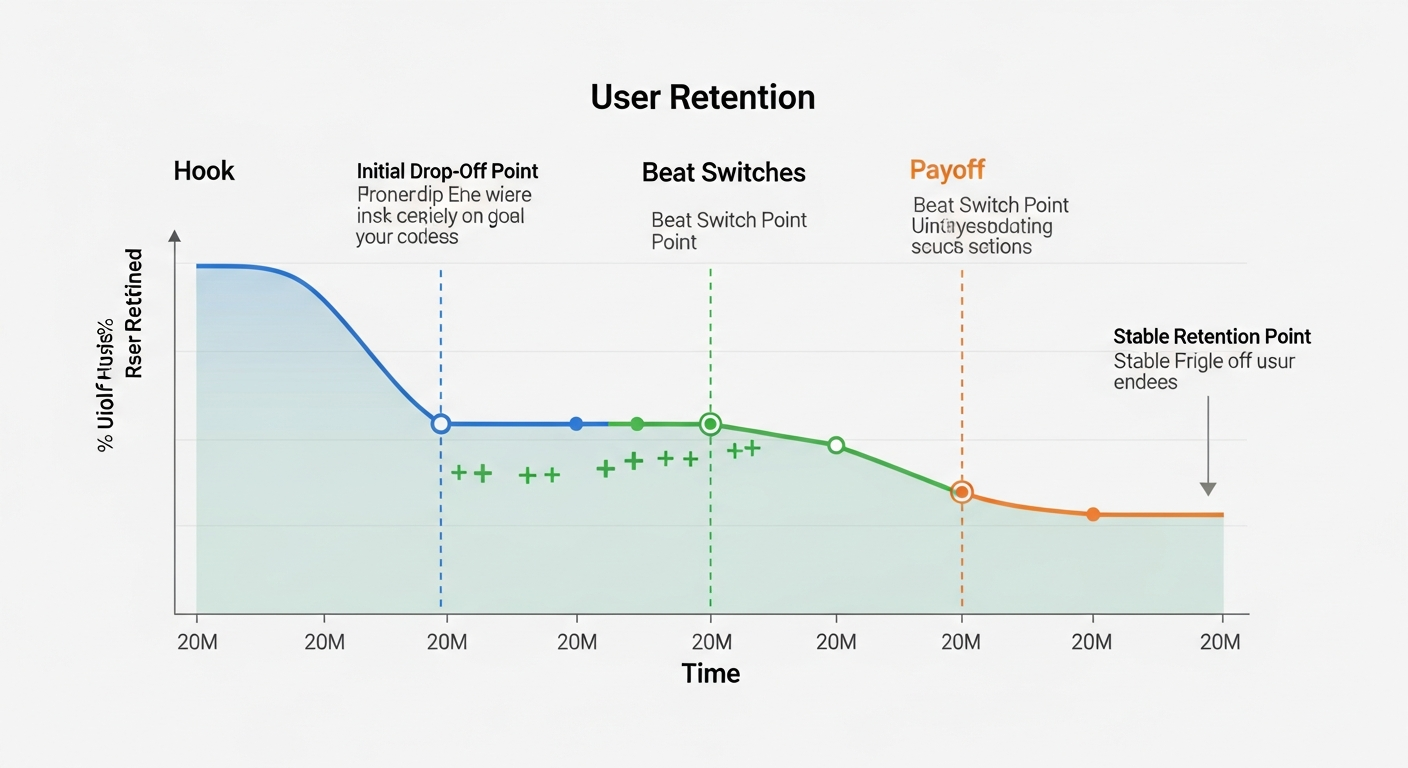
Retention isn’t just watch time. It’s moment-to-moment momentum. People stay when they feel progress: new info, better clarity, rising tension, visible outcomes.
Practical retention engineering looks like this:
- Shorten setup: cut the intro by 30–50% and move context into on-screen text.
- Beat switches: change visuals, framing, or pacing every 2–5 seconds (without becoming a clown show).
- Open loops: tease a payoff you actually deliver later (“I’ll show you the template at the end”).
- Micro-payoffs: drop small wins throughout, not one big reveal at the end.
- Remove filler: if it doesn’t move the story, it’s dead weight.
Now, satisfaction signals are the “strong” ones: saves, shares, follows, profile taps, re-watches, and meaningful comments. A comment like “first!” is not satisfaction. It’s noise.
If you want to improve satisfaction signals without begging for them, do this: end your post with a practical next step. Not “like and follow.” A real step. People save and share things that reduce their cognitive load later.
One more truth bomb: “educational” content often underperforms because it’s structured like a lecture. People don’t scroll for lectures. They scroll for relief, clarity, and momentum. Teach like you’re helping a smart friend fix something right now.
To keep your organic growth strategy consistent, use a repeatable post structure and iterate small elements weekly. The moment you can’t explain why a post worked, you’re gambling again. If you want a clean iteration framework, use the weekly audit concept from this algorithm optimization resource.
Distribution loops: build reach like a system
This is where most creators lose. They treat distribution like an afterthought, then complain that “the algorithm didn’t push it.” No. You didn’t push it.
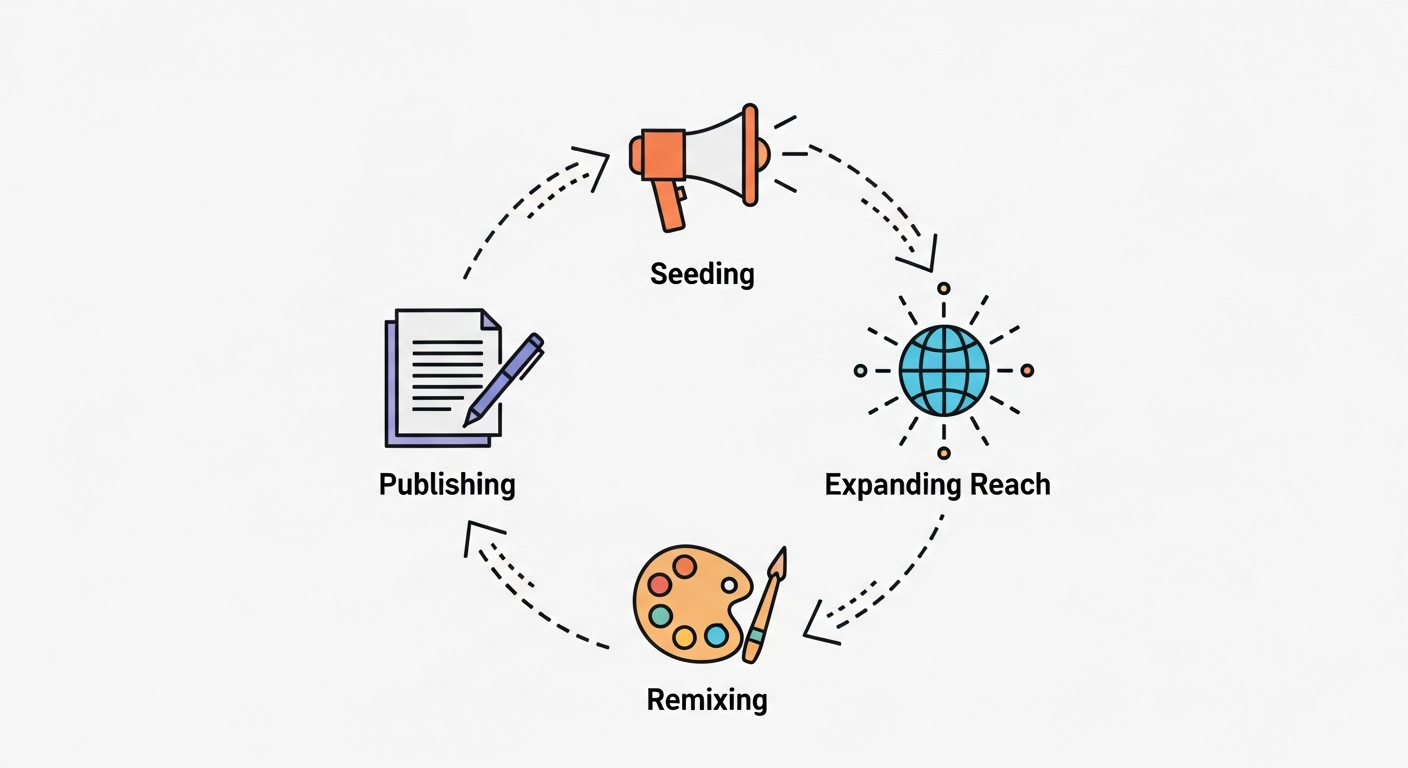
A real content distribution strategy is a loop: publish → seed → collect feedback → remix → republish → expand. If you’re only doing the first step, you’re not doing distribution. You’re doing wishful thinking.
Here are distribution loops that work without turning you into a spam goblin:
Loop 1: The “core audience seed”
Identify 20–50 people who actually care (customers, peers, community members). When you publish, you seed it directly: email, DM, community post. Not “please like.” You send it as a resource. The goal is fast initial engagement from the right audience so the algorithm can classify your content correctly.
Loop 2: The “collab bridge”
Instead of begging for shoutouts, do joint content where both audiences win: a debate, a teardown, a shared framework. The algorithm sees cross-audience interest and expands distribution with less friction.
Loop 3: The “remix ladder”
One strong idea becomes multiple formats: short clip → carousel summary → long-form breakdown → live Q&A. Each format hits different consumption preferences and feeds the others. This is how you get compounding reach without doubling workload.
Loop 4: The “search capture loop”
Some platforms increasingly behave like search engines for content. Build posts that answer specific questions, use clear titles/on-screen text, and create series. That’s algorithm hacking & growth with a long tail: you earn impressions for weeks, not hours.
And yes, this is where owning a home base matters. If you’re building real leverage, you want a site that organizes your best frameworks and resources. I use this site as the central knowledge hub conceptually—your version might be different, but the strategy is the same: don’t rent your entire business.
Distribution also means sequencing. Don’t drop one post and move on. Publish a “Part 2” that answers the top comment question. Publish a teardown of your own post results. Publish the template you teased. You’re not “repeating yourself.” You’re building a narrative arc the algorithm can amplify.
If you want more examples of distribution sequences that don’t feel spammy, pull ideas from this content distribution strategy hub and adapt them to your niche.
Platform behavior in 2026: patterns that keep showing up
I’m not going to pretend I can predict every platform tweak. Nobody can. But patterns repeat because incentives repeat.
Here are the recurring platform-level behaviors you should design for:
1) “Original-ish” beats copy-paste
Platforms want differentiated content because it increases catalog breadth and user satisfaction. Straight re-uploads and low-effort reposts tend to underperform over time. The fix isn’t “never remix.” It’s to add meaningful transformation: commentary, proof, re-editing, new framing, or updated data.
2) Multi-modal clarity wins
Audio + captions + on-screen text is not optional. Silent scrolling is still a huge chunk of consumption. If your message requires sound, you’re discarding viewers on purpose.
3) Satisfaction signals are weighted heavier than vanity engagement
Shares and saves often correlate with “this mattered.” Comments can be great when they’re thoughtful. But bait (“comment YES”) is a short-term sugar high with a long-term hangover.
4) Session value matters
Content that keeps users on-platform is generally easier to distribute. That doesn’t mean you never send people off-platform. It means you sequence: deliver value in-app, then route qualified viewers to your site, email list, or offer.
5) The algorithm learns your consistency
If you regularly publish content that satisfies a consistent audience, the system has an easier time placing you. If you randomly post unrelated stuff, you force the model to guess, and it guesses wrong more often.
One more thing: “community” keeps getting rewarded because it stabilizes retention. If you can build recurring interaction around a theme—weekly audits, series, challenges—the platform sees repeat sessions, which is the jackpot metric.
If your strategy feels scattered, build a category map and stick to it. A simple way to do this is to anchor your series and hubs back to a single reference point like this social media algorithm growth library, then expand with clusters. It’s boring. It works.
Content mix & production: the anti-burnout operating model
The fastest way to kill your growth is to burn out. The second fastest way is to produce “content” that’s actually just filler disguised as productivity.
Your 2026 content mix should be a portfolio, not a random pile:
- Evergreen pillars (10–20%): foundational posts you can reference for months.
- Weekly experiments (40–60%): controlled tests on hook, format, and payoff.
- Social proof & case studies (10–20%): results, breakdowns, lessons learned.
- Community content (10–20%): Q&A, responses, stitched commentary, collaborations.
This is how you build an organic growth strategy that compounds: pillars create authority, experiments create learning velocity, proof creates trust, and community creates retention.
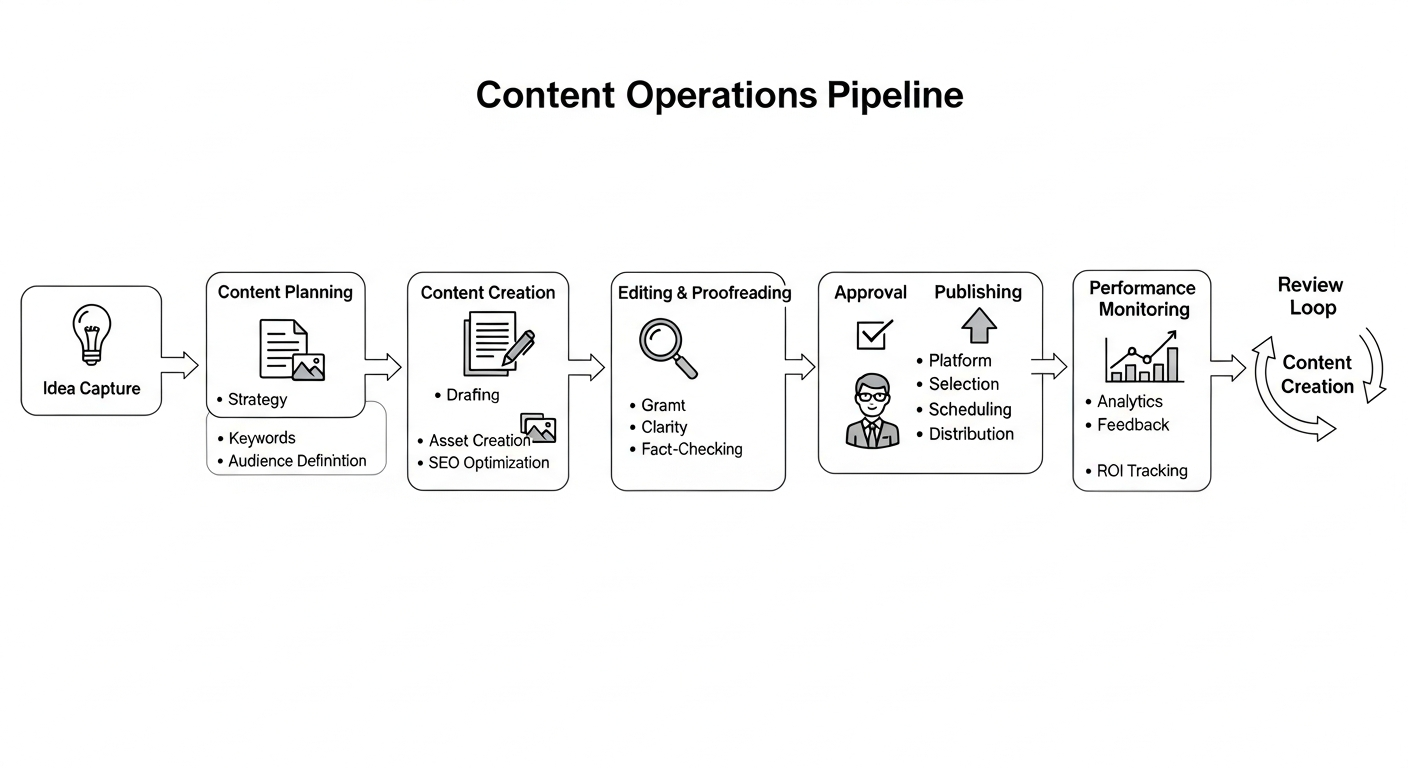
Now let’s talk production like grown-ups. Most teams lose hours to chaos: scattered docs, inconsistent scripts, and “we’ll fix it in editing.” You need a tight pipeline:
- Idea capture: store raw ideas with the user pain and the promised outcome.
- Outline template: hook → friction → proof → steps → recap → next action.
- Production checklist: captions, on-screen text, audio quality, visual beat switches.
- Distribution checklist: seed list, community post, follow-up reply post plan.
- Review loop: analyze retention curve, save/share rate, and follow conversion.
One-sentence truth: your system is your edge. Talent is nice. Systems are scalable.
If you want to build this pipeline with fewer mistakes, use this site’s framework-style approach as a model: consistent categories, repeatable templates, and content designed to be referenced and reused.
Measurement & testing: stop lying to yourself
Most creators “analyze” performance like this: they look at views, feel emotions, then change everything. That’s not analysis. That’s interpretive dance.
In 2026, your measurement stack should focus on three layers:
Layer 1: Attention
- Hook hold: how many viewers stay past the first 1–3 seconds.
- Average watch time / completion: did you keep the promise?
- Retention dips: where did you lose them?
Layer 2: Satisfaction
- Saves: “I want this later.”
- Shares: “This makes me look helpful/smart.”
- Follows/profile taps: “I want more of this.”
Layer 3: Business value
- Clicks/conversions: if you route off-platform, does it convert?
- Lead quality: are you attracting buyers or freeloaders?
- Repeat exposure: are people coming back?
Here’s the truth: you don’t need 50 metrics. You need a few that diagnose bottlenecks. If hook hold is weak, fix packaging. If watch time is weak, fix pacing. If satisfaction is weak, strengthen the payoff and next step. If off-platform conversion is weak, fix your offer and sequencing.
Run controlled experiments. One change at a time. A/B test hooks by publishing the same idea with different openings (on different days, ideally). Compare retention, not views. Views are downstream.
Also: don’t confuse correlation with causation. Sometimes a post wins because the audience was ready. Sometimes it loses because you published into a noisy moment. That’s why you test repeatedly.
If you want a structured approach to weekly analysis, pull the audit rhythm from this algorithm growth framework and keep it consistent. “Random analysis” is not a strategy.
Anti-patterns that look smart and perform badly
Let’s talk about the stuff that feels productive but quietly wrecks your growth.
Anti-pattern #1: Chasing the format du jour
If you change your whole strategy every time a platform tweaks a feature, you’ll always be late. Format matters, but fundamentals matter more: clear promise, strong delivery, satisfaction signals, distribution loops.
Anti-pattern #2: “Educational” content with no stakes
Lists of tips without tension are sleepy. Make the viewer feel the cost of not acting, then give them a real path out.
Anti-pattern #3: Comment bait and engagement farming
It can spike short-term activity, but it trains low-quality behavior. The algorithm learns the audience you attract. If you attract low-intent viewers, you get more of them. Congratulations, you played yourself.
Anti-pattern #4: Posting without distribution
If your plan is “post and hope,” you don’t have a plan. You have a hobby. Build a seed list, a community loop, and a remix ladder.
Anti-pattern #5: Overproducing and underlearning
Some teams publish constantly and learn nothing because they never run controlled tests or track bottlenecks. Slow down just enough to understand why something worked, then scale that.
One-sentence summary: don’t optimize for looking busy; optimize for compounding results.
To keep your strategy grounded (and not vibe-based), treat this social media marketing techniques resource as your reminder: fundamentals first, trends second.
Frequently Asked Questions
Is “algorithm hacking” just clickbait, or is it real?
It’s real when you treat it as system design: packaging, signal clarity, retention, and distribution loops. It’s nonsense when it’s “post at 7:13 PM and pray.” Sustainable growth comes from repeatable inputs you control, not superstitions.
What’s the fastest way to increase reach and engagement without going viral?
Improve your first 2 seconds (hook), tighten the content promise, and build a simple distribution loop (DMs, email, community, collaborations). If the content retains, the algorithm will test it wider. If it doesn’t, no posting schedule will save it.
Should I optimize for watch time, saves, shares, or comments?
Optimize for the metric the platform uses as a proxy for satisfaction and session value. Usually that means retention first, then shares/saves (strong intent), then meaningful comments. Comments alone can be noisy; low-quality comment bait often backfires.
How many posts do I need per week for organic growth strategy in 2026?
Enough to run experiments without burning out: 3–5 quality posts per week beats 14 rushed ones. Consistency matters, but the real lever is learning velocity—tight feedback loops, deliberate iteration, and strong distribution.
Do external links kill reach?
External links can reduce in-app session value, so some platforms may distribute them less. The workaround isn’t hiding links—it’s sequencing: deliver value first, then route the most qualified viewers off-platform using pinned comments, profiles, or follow-up posts.
Bottom line: the “insider” play
Here’s the truth: algorithm hacking & growth is just disciplined execution with a feedback loop. You earn distribution by making the platform money the honest way—keeping people satisfied and coming back—then you amplify wins with a real content distribution strategy.
The insider takeaway: stop trying to “beat the algorithm” and start building a system the algorithm can reliably reward: strong packaging, retention-first delivery, satisfaction signals, and distribution loops that create repeatable lift.
Do that consistently and you’ll see what most creators never see: compounding organic growth that doesn’t collapse the moment a platform tweaks a ranking weight.
Now go ship. And if you catch yourself blaming the algorithm this week, read this sentence again: your inputs are the product. The machine just grades them.
Tools & resources that support algorithm optimization
If you’re serious about improving workflow and signal quality, a few tools help—mostly because they reduce friction and speed up iteration. These are search links (not direct product links), because stock changes and I’m not here to play broken-link roulette.
1) Smartphone video rig essentials (stability + audio)
Shaky video and bad audio tank retention fast. Stabilize the shot and make speech crisp—your watch time will thank you.
2) Wireless lavalier microphone (clean speech = higher retention)
If you do talking-head content, audio is a cheat code. Viewers will tolerate average video. They won’t tolerate muffled speech.
3) Simple softbox or key light (visual clarity sells competence)
Clean lighting increases perceived quality and reduces viewer friction. It’s not “aesthetic.” It’s signal support.
4) Content planning whiteboard or desk planner (reduce chaos)
Yes, analog works. A visible plan reduces decision fatigue and keeps your experimentation cadence consistent.
As an Amazon Associate, I earn from qualifying purchases.