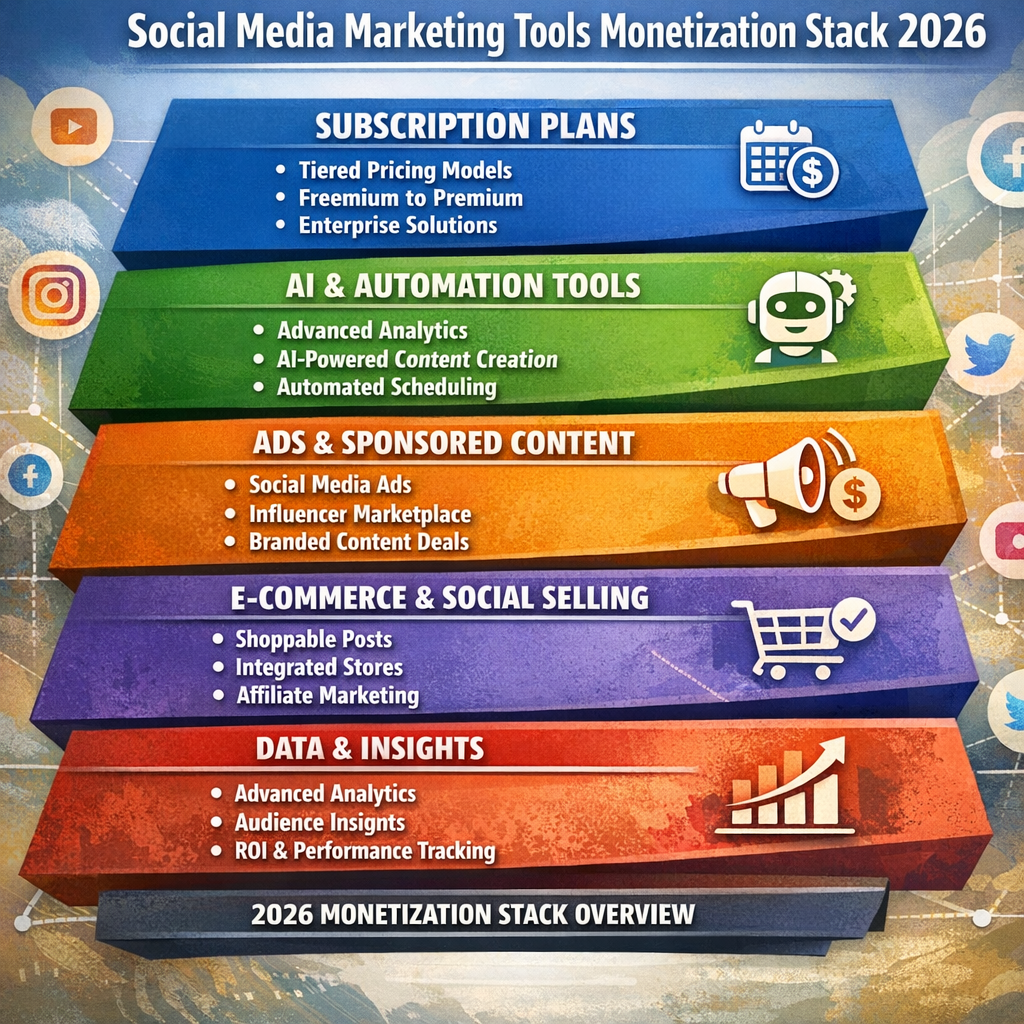
Here’s the truth: Social Media Marketing Tools & Software won’t save you. They’ll just make you faster at whatever you already are.
If your process is messy, you’ll scale mess. If your tracking is fake, you’ll automate fake confidence. And if your “strategy” is vibes, no dashboard on Earth is going to produce revenue out of thin air.
The problem is most people buy tools like they buy gym memberships: hope first, discipline later. Fast forward to 2026 and the winners aren’t the people with 23 subscriptions. They’re the ones with a clean stack that turns content into a repeatable, measurable pipeline.
Table of Contents
- The Monetization Stack in Plain English
- The Core Principle: Tools Don’t Make Money, Workflows Do
- The 2026 Stack by Layer: What to Use (and What to Skip)
- Batching Is the Cheat Code: Your Batch Content Workflow
- Analytics That Don’t Lie: How to Measure What Actually Pays
- Automation With Guardrails: Where AI Helps (and Where It Hurts)
- Shopping List: The Only Gear That Actually Moves the Needle
- Frequently Asked Questions
- Exit Strategy: The Insider Takeaway
The Monetization Stack in Plain English
Snippet Trap (read this if you’re busy): The best Social Media Marketing Tools & Software stack in 2026 is a lean system: plan and batch content, produce quickly, schedule via reliable publishing, measure with dashboards tied to business outcomes, and automate only the repetitive parts. If a tool doesn’t improve output, speed, or revenue attribution, it’s dead weight.
Let’s define “monetization stack” like an adult: it’s the set of tools that turns attention into money with minimal chaos. Not the fanciest UI. Not the tool your favorite guru is “partnered” with. Money.
Also, quick reality check: there are billions of people on social platforms. DataReportal’s global reporting puts social media user identities in the billions and still growing, which is great news… and also why competition is savage. :contentReference[oaicite:0]{index=0}
More competition means you need two things:
- Throughput: consistent output without burning out.
- Signal clarity: knowing what content drives clicks, leads, and sales (not just “engagement”).
That’s why your stack should be built around workflow and measurement, not shiny features.
The Core Principle: Tools Don’t Make Money, Workflows Do
Bottom line: most tool “reviews” are just feature lists wearing a trench coat. Features are not outcomes.
Here’s how to evaluate any tool in 30 seconds:
- Does it reduce cycle time from idea → posted content?
- Does it improve quality (better creative, fewer mistakes, better hooks)?
- Does it improve attribution (you can prove revenue impact)?
- Does it integrate cleanly with what you already use?
If the answer isn’t “yes” to at least one of those, it’s probably tool-shaped procrastination.
And no, “all-in-one” doesn’t automatically win. Many all-in-one platforms are mediocre at everything, which is a polite way of saying they suck for specialists. They become expensive the moment you need real reporting, approvals, governance, or non-trivial workflows.
If you’re a small business, the SBA’s guidance is pretty straightforward: understand your market and use measurement to reduce risk. Tools should support that discipline, not replace it. :contentReference[oaicite:1]{index=1}
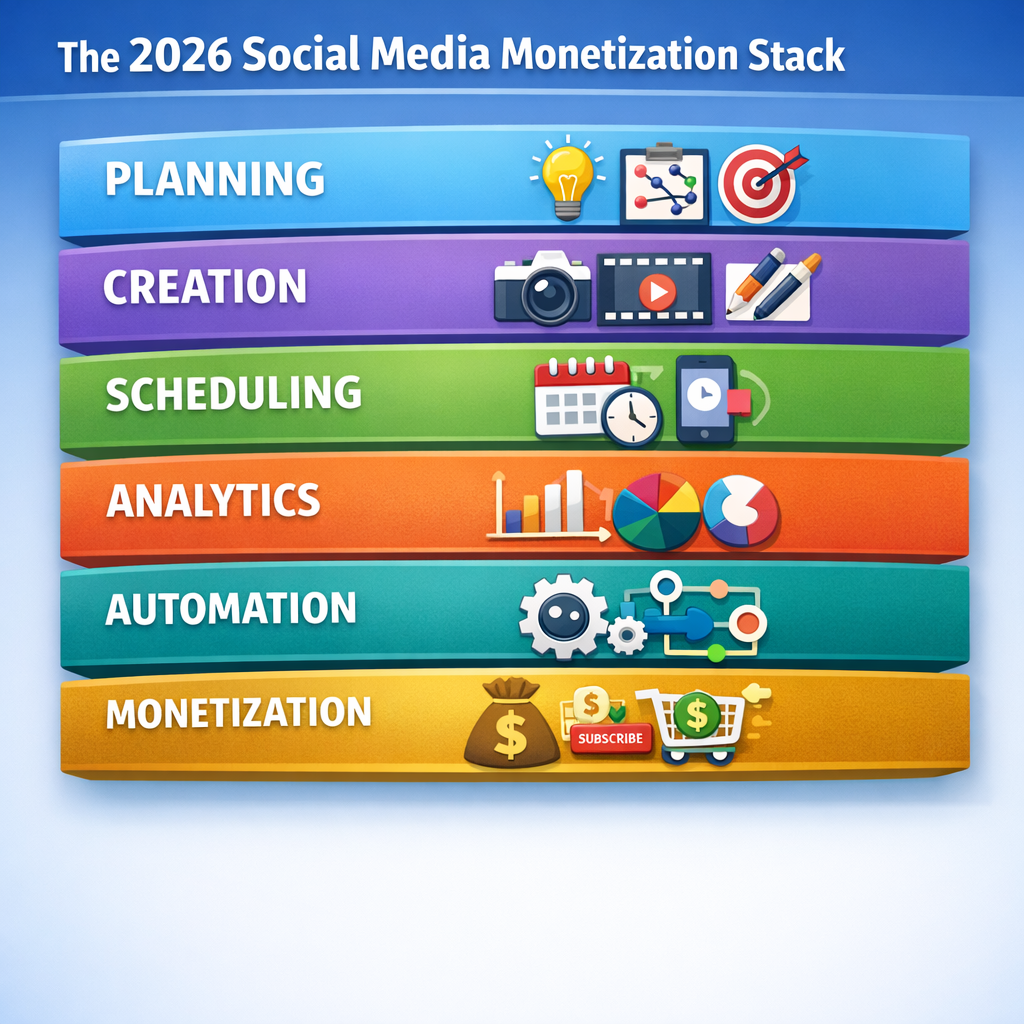
The 2026 Stack by Layer: What to Use (and What to Skip)
Layer 1: Planning & System (where most people fail)
Your “system” is where revenue starts. Not your captions.
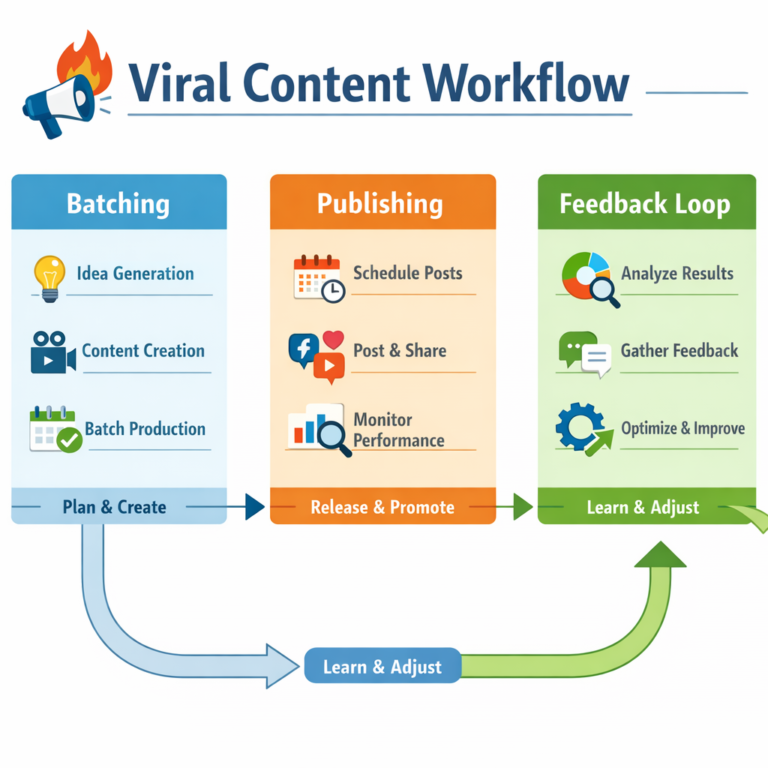
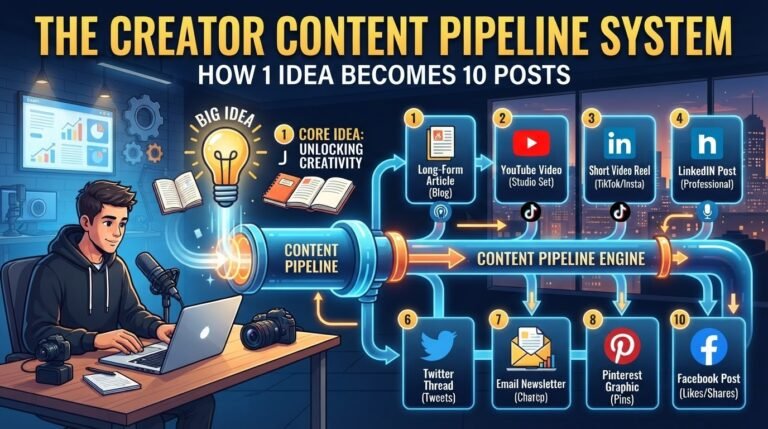
Use: Notion or Airtable (pick one). A simple pipeline: Ideas → Scripts → Record → Edit → Scheduled → Published → Results.
Skip: Overbuilt project tools if you’re solo. If you can’t keep a weekly cadence with a basic board, adding Jira won’t magically fix your life.
Layer 2: Creation (speed + repeatability beats “perfect”)
Use: Canva (fast), CapCut (fast), Descript (fast for talking-head edits), and a shared brand kit.
Skip: Tool-hopping. If your team can’t find the latest logo, you don’t have a design problem—you have an ops problem.
Layer 3: Scheduling & Publishing (don’t sabotage distribution)
Scheduling is supposed to remove busywork, not kneecap reach.
Use: platform-native scheduling where possible (Meta tools, TikTok tools, YouTube scheduling) and a third-party scheduler only when it saves real time or supports approvals.
Skip: “post everywhere with one click” if it ignores platform format. Same content pasted across platforms is how you look lazy and get lazy results.
Platforms rank content based on a large number of signals, and Meta has been explicit that it uses many signals to predict what people find valuable. Translation: you don’t get to brute-force this with automation. :contentReference[oaicite:2]{index=2}
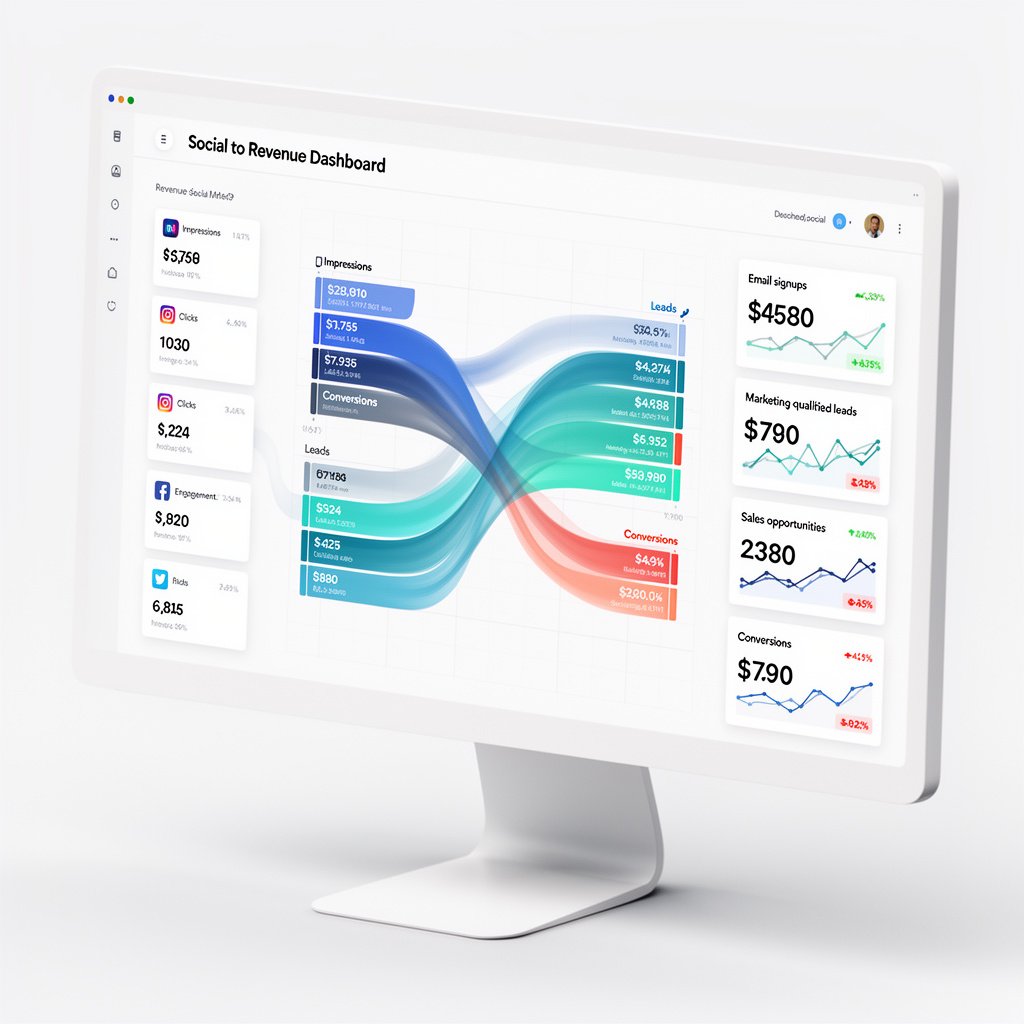
Layer 4: Analytics (because vibes don’t pay invoices)
Use: native analytics + one dashboard. Looker Studio is the common “good enough” layer because it’s flexible and cheap.
Skip: vanity metric dashboards that don’t connect to a business outcome (email signups, booked calls, purchases).
Layer 5: Automation (do the boring parts, not the thinking)
Marketing automation exists to eliminate repetitive tasks and consolidate multi-channel actions into measurable flows. That’s the idea, anyway. :contentReference[oaicite:3]{index=3}
Use: automation for routing (lead capture → CRM/email), reporting pulls, and content repurposing drafts.
Skip: fully automated “AI content machines” that spray posts without QA. That’s how you become the brand equivalent of a robocall.
Batching Is the Cheat Code: Your Batch Content Workflow
If you want consistent output without hating your life, you need a batch content workflow. It’s not optional. It’s ops.
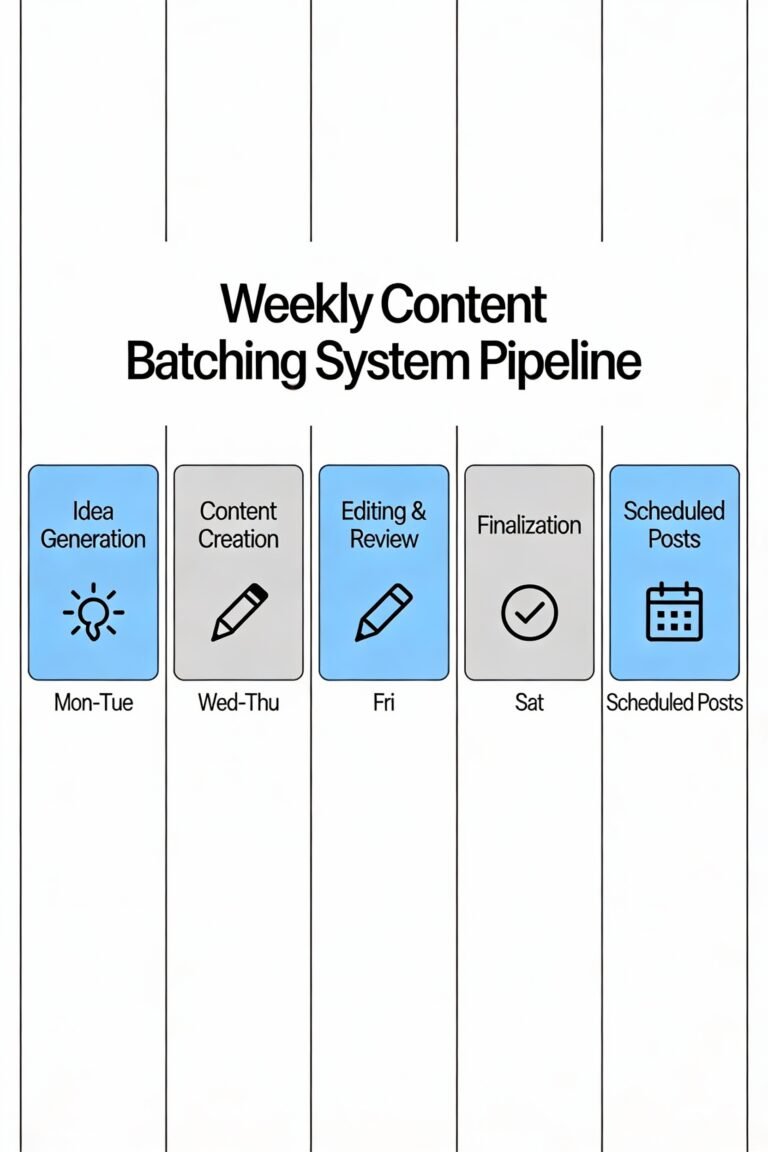
Here’s a weekly content system that actually works for most creators and small teams:
Step 1: Monday — Decide what “winning” means this week
- Pick one business KPI (email signups, calls booked, product clicks).
- Pick one content theme (one audience pain point).
- Write 10 hooks. Yes, ten. Hooks are cheap. Shooting content is not.
Step 2: Tuesday — Build the content batching template
Make a simple content batching template with repeatable slots:
- Hook: 1 sentence
- Problem: 2–3 sentences
- Fix: 3 bullets
- Proof: 1 example or mini-case
- CTA: 1 action
It’s boring.
That’s the point. Boring systems are scalable.
Step 3: Wednesday — Record in one block
Record 8–12 short clips in one session. Change shirts twice if you need “variety.” Don’t overthink it.
Step 4: Thursday — Edit assembly-line style
Edit in batches: all captions first, then all cuts, then all overlays, then all exports. Context switching is where productivity goes to die.
Step 5: Friday — Schedule + tag + measure
Schedule everything, tag links (UTMs), and set one checkpoint: what’s getting saved/shared/clicked?
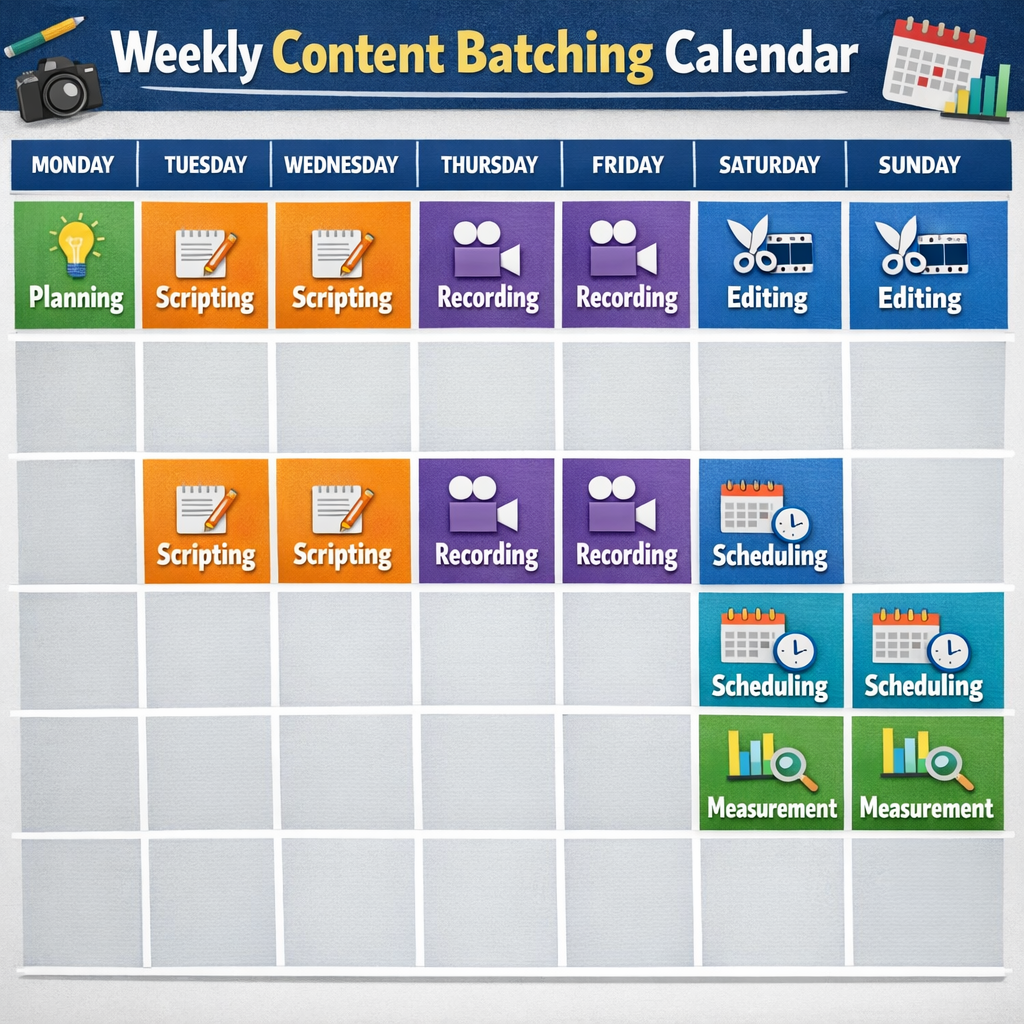
Insider move: If you can’t commit to five days, compress it. Plan + script in 90 minutes, record in 2 hours, edit in 2 hours, schedule in 45 minutes. Still works.
Analytics That Don’t Lie: How to Measure What Actually Pays
Most “analytics” are just engagement screenshots posted by people trying to sell you a course.
Here’s what you track if you want monetization:
- Content-to-click rate: clicks / impressions (or link taps / views).
- Click-to-lead rate: leads / clicks (email signup conversion).
- Lead-to-revenue rate: purchases / leads (or calls booked / leads).
- Time-to-first-result: how many posts until a KPI moves.
Then you map content formats to outcomes:
- Short video: reach + top-of-funnel
- Carousel/how-to: saves + credibility
- Live/webinar: conversion events
- Newsletter: compounding distribution you actually own
Also: don’t obsess over a single post. Monetization comes from patterns, not miracles.
Automation With Guardrails: Where AI Helps (and Where It Hurts)
Automation is great when it removes tedious steps. It’s terrible when it replaces judgment.
Good automation (do this)
- Repurposing: turn one long video into 8 shorts (drafts), then human QA.
- Tagging + filing: auto-sort assets by campaign, format, and theme.
- Reporting: pull weekly metrics into a single view without manual work.
- Lead routing: form fill → email sequence → calendar booking.
Bad automation (don’t do this)
- Fully automated posting: no review, no platform adaptation, no testing.
- Fake personalization: “Hey {FIRSTNAME}!” with generic filler right after.
- Auto-DM spam: congrats, you’re a bot. People can tell.
Remember: platforms are optimizing for value prediction at scale. If your automation produces low-value signals (quick bounces, hides, low watch time), you’re training the platform to ignore you. :contentReference[oaicite:4]{index=4}
Shopping List: The Only Gear That Actually Moves the Needle
Most “creator gear” lists are just expensive hobbies. Here’s what’s worth it because it directly increases throughput and quality.
1) Audio that doesn’t sound like a tin can
Insight: People will forgive mid video. They will not forgive bad audio.
2) Lighting that makes you look like you slept
Insight: Lighting is the cheapest “production value” upgrade you’ll ever buy.
3) A control surface (optional, but a throughput monster)
Insight: If you edit a lot, a stream deck / macro pad can shave real minutes off every session. Over a year, that’s weeks.
4) Storage you can trust
Insight: Losing footage is the fastest way to invent new swear words.
Notice what’s missing: exotic cameras, $900 lenses, and “cinema rigs.” If you’re not already maxing out content volume and testing, those purchases are just expensive avoidance.
Frequently Asked Questions
Do I need an all-in-one platform (or is a lean stack better)?
Lean stack, unless you have a real reason. All-in-one is only good when your org is mature enough to configure it and keep it clean. Otherwise it becomes a pricey junk drawer.
What’s the minimum tool stack that still monetizes?
A content system (Notion/Airtable), a creation tool (Canva/CapCut), a scheduler (native or third-party), and a reporting layer (native analytics + one dashboard). Everything else is “nice to have” until you hit volume.
How do I stop scheduling tools from wrecking my reach?
Use official API publishing, avoid spammy cross-post blasts, and run controlled tests. Same format, same time window, different publish method. Measure instead of arguing on the internet.
What’s the fastest way to build a weekly content system that doesn’t collapse?
Batching. A weekly content system with fixed blocks (plan, record, edit, schedule, measure) beats motivation every time. Use a content batching template so decisions are pre-made.
Exit Strategy: The Insider Takeaway
If you take one thing from this: your stack is only as good as your workflow. Tools should reduce cycle time, improve quality, or improve attribution. If they don’t, they’re just subscriptions with delusions of grandeur.
Build the system. Batch the work. Measure what pays. Automate the boring parts.
And if you catch yourself shopping for tools again… congrats. You’re procrastinating in 4K.
As an Amazon Associate, I earn from qualifying purchases.


2 Comments
Comments are closed.