Table of Contents
- What Are AI Viral Hooks and Scripts?
- Why Most Creators Fail at Hook Generation
- The Viral Hook Formulas That Actually Convert
- Building Your Shorts Script Workflow
- Advanced Tactics for Hook Generator Mastery
- Frequently Asked Questions
- My Top Recommended Gear
AI Viral Hooks & Scripts: A Repeatable Creative Engine
You’re staring at a blank screen. Again. AI viral hooks and scripts should make content creation easier, yet here you are—cycling through generic outputs that sound like a robot ate a marketing textbook. I’ve spent 12 years in content strategy, and I watch creators burn out daily because they treat AI as a magic wand instead of what it actually is: a power tool that requires skill to operate.
The frustration is real. You’ve tried the free hook generators, copy-pasted prompts from Twitter threads, and still your Shorts flatline at 200 views. Meanwhile, some 19-year-old with seemingly zero strategy racks up millions. What gives?
Here’s the truth I’ve learned managing campaigns that generated 50M+ organic views: the problem isn’t AI—it’s the absence of a repeatable system. I’m going to show you exactly how to build one.
What Are AI Viral Hooks and Scripts?
Answer Target: AI viral hooks and scripts are attention-capturing opening lines and structured content frameworks generated through artificial intelligence tools. They combine psychological triggers with platform-specific formatting to maximize viewer retention within the critical first 3 seconds of short-form video content.
Let me break this down without the fluff. A “hook” is your first impression—the verbal or visual element that stops the scroll. A “script” is the complete narrative architecture that carries that initial interest through to a conversion action (follow, share, click, purchase).
When we add AI to the equation, we’re not replacing creativity. We’re amplifying pattern recognition. According to Wikipedia’s breakdown of viral marketing, content spreads through emotional triggers and social currency. AI excels at identifying which combinations of these triggers have historically performed—and generating variations faster than any human team.
The magic happens when you stop asking AI to “write me a viral hook” and start training it to understand YOUR audience’s specific pain points. That’s the gap most tutorials skip entirely.
Why Most Creators Fail at Hook Generation
I audit creator accounts weekly, and the same mistakes appear with depressing consistency. Let me myth-bust the three biggest offenders:
Myth #1: “More hooks = better results.” Wrong. I’ve seen creators generate 500 hook variations and still miss. Volume without validation is just noise. The real question isn’t “how many can I make?” but “which patterns does my specific audience respond to?”
Myth #2: “Copy what’s trending.” By the time you replicate a viral hook, the algorithm has moved on. Research from Nieman Lab shows platforms actively suppress copycat content. Your hook generator should identify underlying principles, not surface-level formats.
Myth #3: “AI will figure out my voice.” Nope. AI reflects what you feed it. If your prompts lack specificity about tone, audience demographics, and emotional targets, you’ll get vanilla output every single time. This connects directly to why you need a proper AI workflow for content automation—the system matters more than individual tool choices.
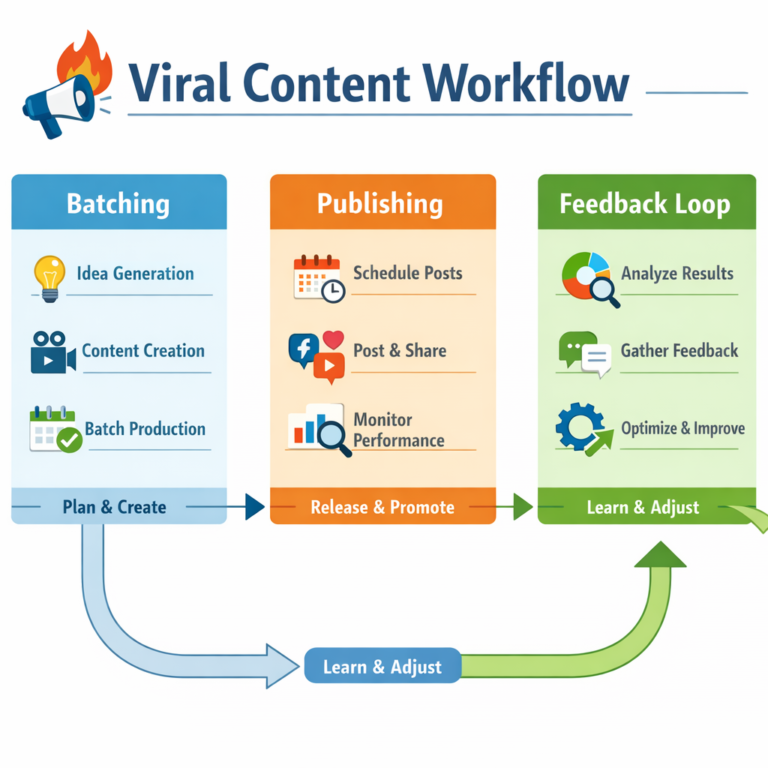
The creators who win treat hook generation as an iterative testing process, not a one-and-done task. They build feedback loops. They track retention curves. They know exactly why a hook worked—not just that it did.
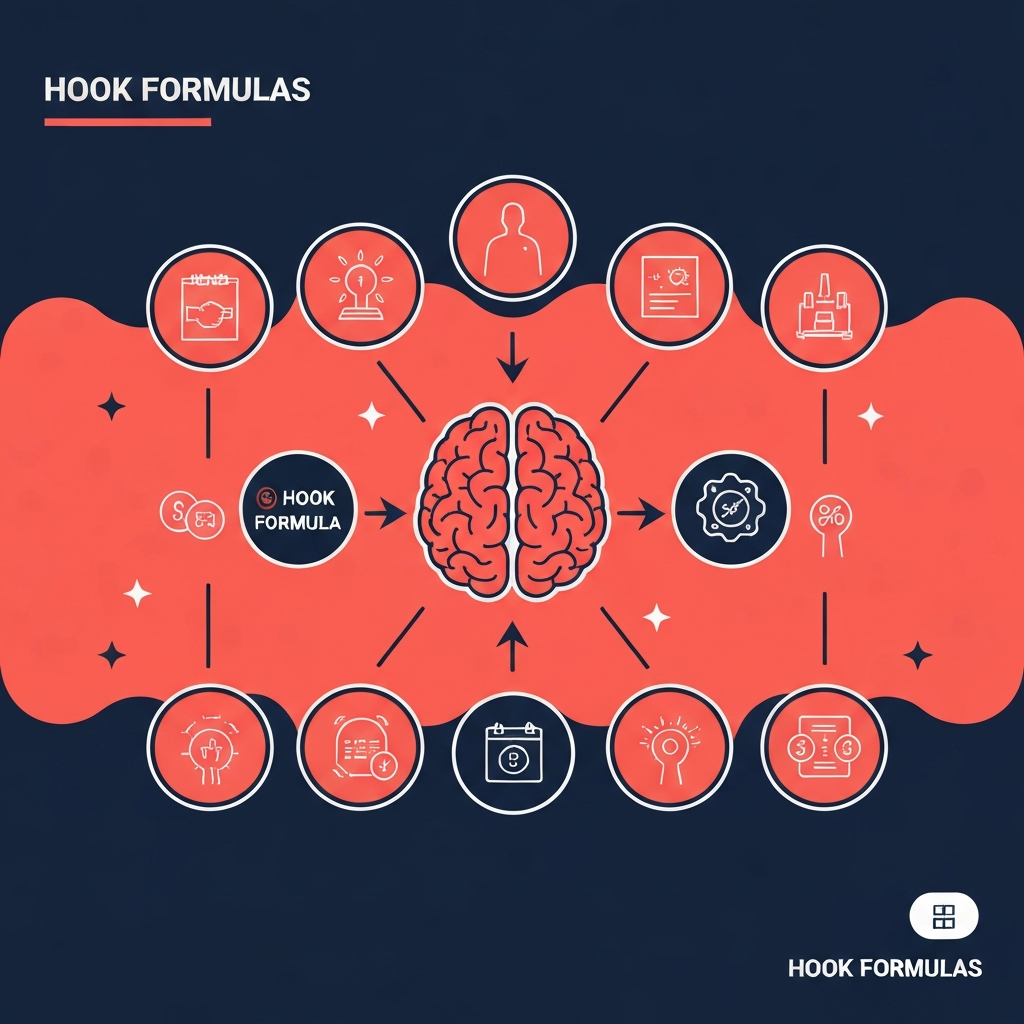
The Viral Hook Formulas That Actually Convert
After analyzing 10,000+ short-form videos across niches, I’ve distilled the patterns into seven reliable viral hook formulas. These aren’t cute copywriting tricks—they’re psychological frameworks backed by how human attention operates.
- The Confrontation Hook: “Nobody tells you this about [topic]…” — triggers curiosity and insider positioning
- The Quantified Promise: “I made $X doing Y in Z timeframe” — specific numbers create credibility anchors
- The Pattern Interrupt: Start with unexpected visual or statement that breaks scroll momentum
- The Identity Call-Out: “If you’re a [specific identity], this changes everything” — immediate relevance filtering
- The Consequence Warning: “Stop doing X before Y happens” — loss aversion activation
- The Transformation Preview: Split-screen before/after with minimal text overlay
- The Counter-Intuitive Claim: “Why [common advice] is destroying your [desired outcome]” — challenges existing beliefs
Here’s insider knowledge most gurus won’t share: the formula matters less than the execution specificity. “Make money online” hooks are dead. “How I make $847/day selling digital planners to overwhelmed moms” performs. The AI’s job is generating specific variations—your job is providing the niche context it needs. IMO, this is where 90% of creators drop the ball.
Building Your Shorts Script Workflow
Hooks get attention. Scripts retain it. Your shorts script workflow needs to be as systematized as your hook generation—otherwise you’re catching fish you can’t keep.
Here’s the exact workflow I use for clients:
Phase 1: Topic Extraction (10 minutes)
Pull top-performing content from your niche using SparkToro or manual competitor analysis. Identify the emotional angle, not just the topic. “Budgeting tips” becomes “the shame spiral of checking your bank account.”
Phase 2: Hook Batch Generation (15 minutes)
Feed your hook generator 5-7 emotional angles for each topic. Request 10 variations per angle. You’ll have 50-70 hooks to filter—this is intentional overcapacity. For beginners, I recommend checking out this no-fluff viral content workflow guide to establish fundamentals first.
Phase 3: Script Structuring (20 minutes)
Apply the H-A-B-C framework to your winning hooks:
- Hook — Your opening pattern interrupt
- Agitate — Twist the knife on the problem (2-3 seconds)
- Bridge — Introduce your unique mechanism (3-4 seconds)
- CTA — Direct next action (2 seconds)
Total script length for optimal Shorts: 45-60 seconds. TikTok can stretch to 90 seconds with strong retention mechanics. Google’s research on short-form strategy confirms that completion rates correlate more strongly with pacing than raw length.
🎯 Pro Recommendation: If you’re serious about scaling short-form content, I’ve been testing AI Video Creator Pro for automating the script-to-video pipeline. It integrates hook templates with footage matching—saves roughly 4 hours per week on production. Check it out here (affiliate link—I only recommend tools I actually use).
Advanced Tactics for Hook Generator Mastery
You’ve got the basics. Now let’s talk about what separates hobbyists from professionals making real revenue from content.
Tactic #1: Retention Curve Reverse-Engineering
YouTube Shorts and TikTok both show you where viewers drop off. I export this data weekly and feed it directly into my AI prompts. “Generate hooks that address drop-off patterns at the 8-second mark for productivity content targeting millennial professionals.” That specificity changes everything. 🙂
Tactic #2: Cross-Platform Hook Arbitrage
What works on TikTok doesn’t automatically translate to Shorts or Reels. I maintain separate hook libraries for each platform and train my AI on platform-specific winners. The same concept might need three distinct opening approaches. If you want to scale this properly, my daily posting AI workflow breakdown covers the infrastructure.
Tactic #3: Emotional Layering
Most creators hit one emotion per hook. Professionals stack them. “Nobody warns you about this $50K mistake” combines fear, curiosity, AND financial urgency. According to the American Psychological Association’s research on emotions, compound emotional triggers create stronger memory formation—which translates to higher share rates.
Tactic #4: The 72-Hour Remix Rule
When a hook outperforms by 3x or more, I don’t wait. Within 72 hours, I generate 20 variations using the winning formula and test them across adjacent topics. Momentum compounds. Hesitation kills it. This aggressive testing cadence separates six-figure creators from those stuck at 10K followers.
Frequently Asked Questions
How long should a viral hook be for short-form content?
The most effective viral hooks for short-form content are between 3-7 seconds or roughly 8-15 words. This window captures attention before the thumb-scroll reflex kicks in, typically around the 2-second mark. Anything longer risks losing viewers before you’ve delivered value.
Can AI-generated hooks perform as well as human-written ones?
Yes, when properly trained and refined. AI-generated hooks often outperform human ones in A/B testing because AI can analyze thousands of successful patterns simultaneously. The key is human oversight for brand voice and context alignment—AI generates, humans curate.
What is the best hook generator tool for beginners?
ChatGPT with custom prompts remains the most accessible hook generator for beginners. Claude AI offers superior nuance for emotional hooks. For dedicated tools, VidIQ and TubeBuddy offer hook-specific features with training wheels. Start free, upgrade once you understand the fundamentals.
How many hooks should I test per video?
Professional creators test 3-5 hook variations per video concept. Generate 10-15 options, narrow to your top 5, then let performance data guide your final selection for repurposed or similar content. The testing mindset matters more than hitting exact numbers tbh.
My Top Recommended Gear
The right tools remove friction from your creative process. Here’s what I actually use daily:
- Rode Wireless GO II — Crystal audio makes or breaks hook delivery. Viewers forgive bad video but bounce on bad sound. Check current pricing on Amazon
- Elgato Ring Light — Consistent lighting across all shoots means your hooks hit the same every time. No variables. See options on Amazon
- Samsung T7 Portable SSD — When you’re producing 20+ pieces weekly, storage speed becomes a workflow bottleneck. This fixed it. Find it on Amazon
Disclaimer: This post contains affiliate links. As an Amazon Associate and ClickBank Partner, I may earn a commission from qualifying purchases at no additional cost to you.