

Your platform audit checklist is probably sitting in a Google Doc somewhere, collecting digital dust while your engagement rates tank. I get it—I’ve been there. You know you should audit your social presence, but between content creation, community management, and pretending to understand TikTok trends, who has time? Here’s the brutal truth: those random acts of posting without strategic review cost you money, reach, and credibility every single day.
After spending 10+ years rescuing brands from social media mediocrity, I’ve watched the same pattern destroy otherwise solid strategies. Teams post religiously, track vanity metrics, and wonder why conversions flatline. The missing piece? A systematic platform strategy audit that exposes what’s actually broken.
Table of Contents
- What Is a Platform Audit Checklist?
- Why Most Platform Audits Fail (And How to Fix Yours)
- The Complete Platform Audit Scorecard: 7 Critical Areas
- Your Step-by-Step Platform Strategy Audit Process
- Advanced Tactics: What the Pros Actually Check
- Common Myths About Social Platform Audits
- Frequently Asked Questions
- My Top Recommended Gear
What Is a Platform Audit Checklist?
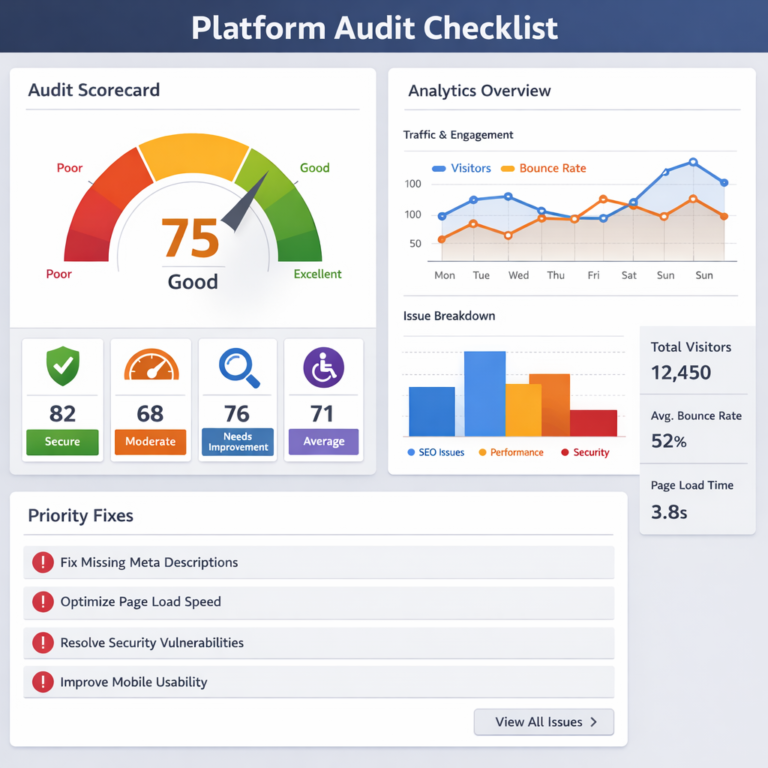
Answer Target: A platform audit checklist is a systematic framework for evaluating your social media presence across all channels. It examines profile optimization, content performance, audience alignment, competitive positioning, and strategic gaps to identify specific improvements that drive measurable results.
Think of your social platform audit template as a diagnostic tool—like bringing your car in for a 50-point inspection, except your mechanic is brutally honest about that weird noise you’ve been ignoring. The goal isn’t just checking boxes; it’s uncovering the hidden leaks in your strategy that drain resources without returning value.
I’ve seen brands spend $50K monthly on social media management without ever questioning whether their LinkedIn strategy makes sense for a B2C product, or why they’re still posting on a platform their audience abandoned years ago. A proper audit prevents this expensive ignorance.
Why Most Platform Audits Fail (And How to Fix Yours)
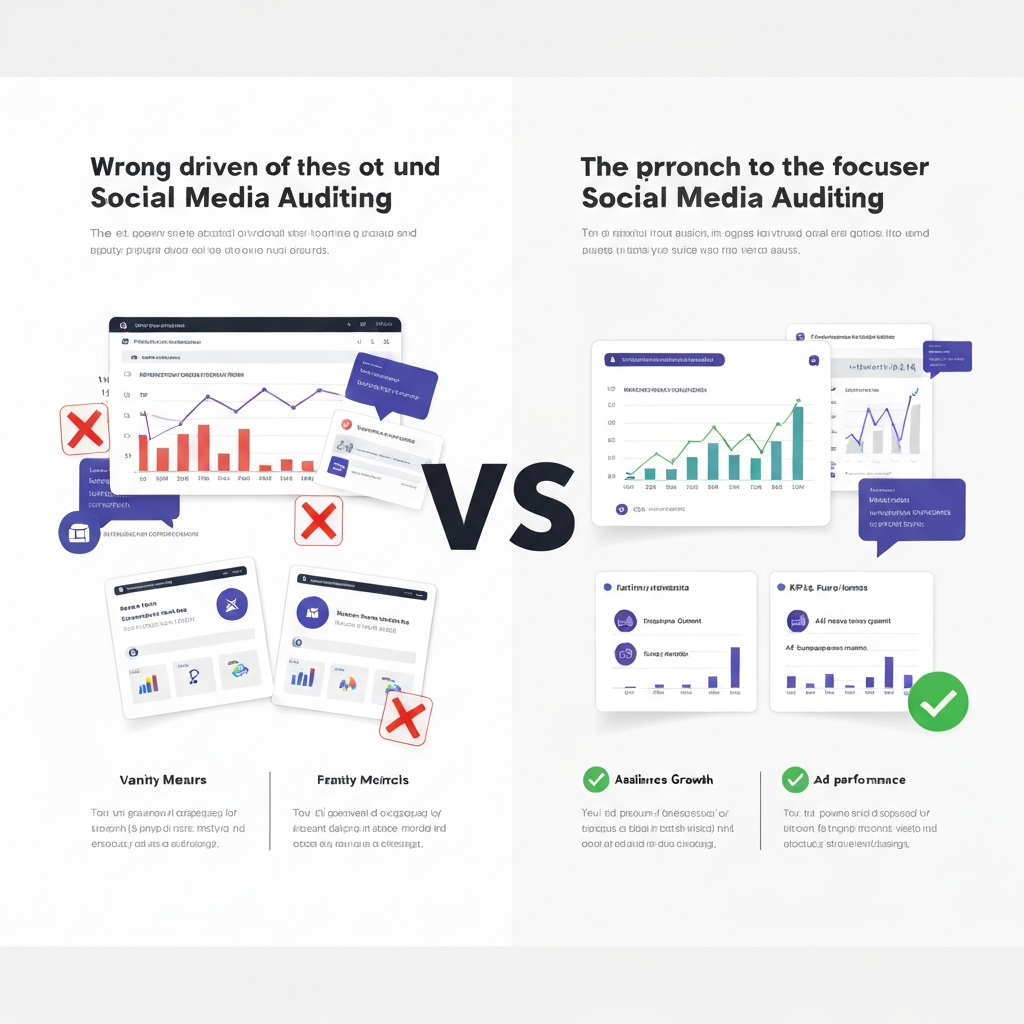
Here’s where I get a little fired up. Most platform audits fail for three predictable reasons, and I’ve watched teams repeat these mistakes for over a decade:
Mistake #1: Vanity Metric Obsession. You’re counting followers and likes while ignoring conversion rates and engagement quality. According to Pew Research Center’s social media data, platform usage patterns shift dramatically across demographics—but most audits never cross-reference performance against actual audience composition.
Mistake #2: One-Time Events. Treating audits as annual projects rather than quarterly rhythms means you’re always working with stale data. Algorithms change monthly. Your competitors aren’t waiting around. IMO, quarterly audits with monthly spot-checks represent the minimum viable frequency.
Mistake #3: Siloed Analysis. Reviewing each platform in isolation ignores how they work together (or don’t). Your Instagram might look healthy until you realize it’s cannibalizing traffic from your higher-converting Pinterest strategy.
The fix? Build your platform audit checklist around business outcomes, not platform metrics. Start with revenue impact and work backward.
The Complete Platform Audit Scorecard: 7 Critical Areas
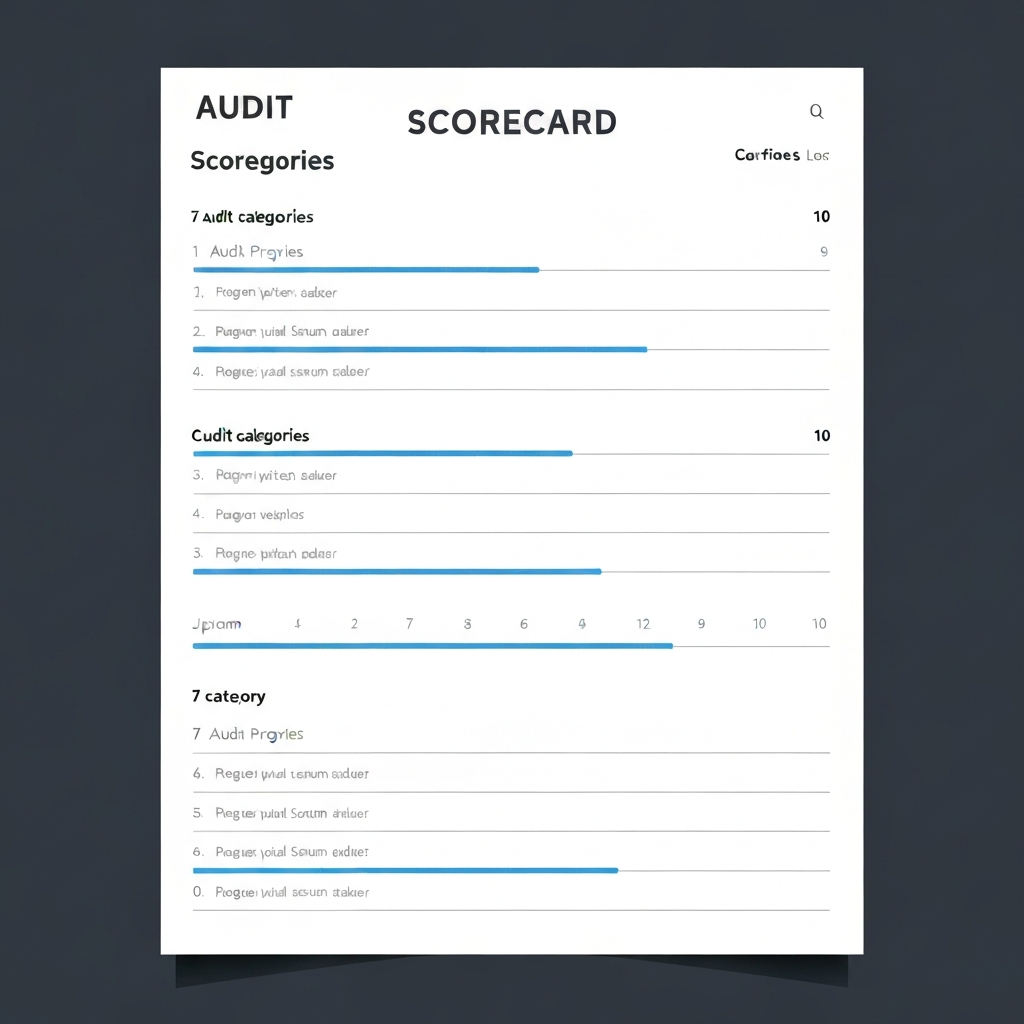
After refining my platform audit scorecard across hundreds of client engagements, I’ve distilled the essential evaluation areas into seven categories. Score each on a 1-10 scale, and you’ll have an objective baseline for tracking improvement.
1. Profile Optimization (Foundation Score)
- Bio clarity and keyword integration
- Visual branding consistency across platforms
- Link functionality and UTM tracking
- Contact information accuracy
- Username/handle consistency
2. Content Performance Analysis
- Top 10 performing posts by engagement type
- Bottom 10 posts—identifying what bombs
- Content format breakdown (video vs. static vs. carousel)
- Posting frequency vs. engagement correlation
3. Audience Alignment Check
This is where most audits get lazy. Pull your follower demographics and compare them against your ideal customer profile. The FTC’s guidelines on digital marketing also apply here—make sure your content matches the audience you’re actually reaching, not who you wish you were reaching.
4. Competitive Positioning
- Share of voice analysis
- Content gap identification
- Engagement rate benchmarking
- Response time comparison
5. Strategic Alignment
Does your social presence actually support business objectives? I audit dozens of accounts where the content strategy has completely disconnected from revenue goals. Pretty posts don’t pay bills.
6. Technical Health
- Broken links and outdated CTAs
- Pixel/tracking implementation
- API connections and integrations
- Security settings and access controls
7. Community Engagement Quality
Response rates, sentiment analysis, and conversation depth matter more than follower counts. A community that actually engages beats a silent audience every time.
Your Step-by-Step Platform Strategy Audit Process
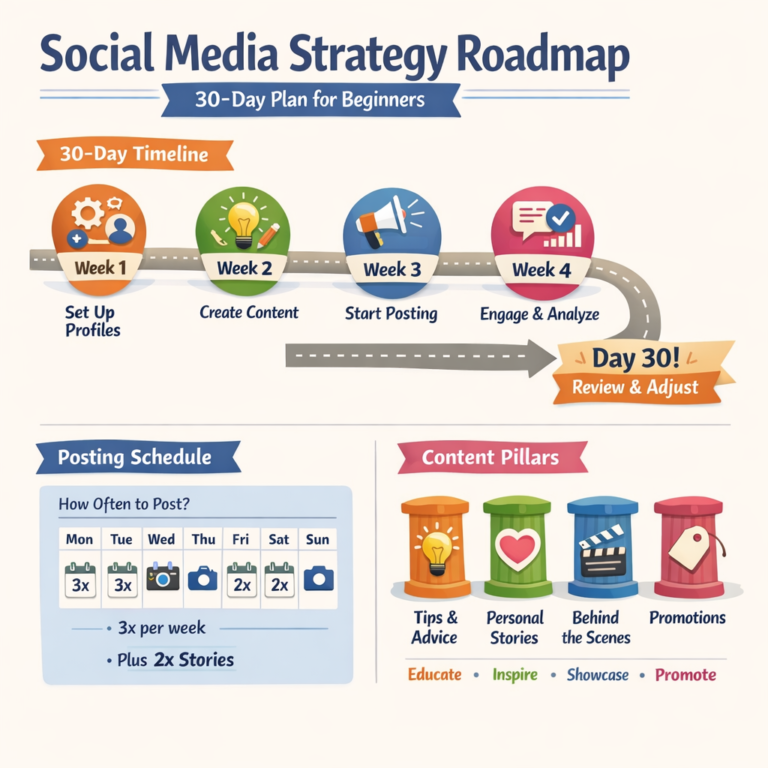
Ready to actually execute? Here’s my 30-day framework broken into digestible phases:
Week 1: Data Gathering (Days 1-7)
Export analytics from every platform. Compile competitor data. Document current posting schedules and content categories. Don’t analyze yet—just collect everything in one place. According to Harvard Business Review’s research on data analysis, separating collection from interpretation reduces cognitive bias.
Week 2: Analysis Deep-Dive (Days 8-14)
Apply your scorecard systematically. Score each platform individually, then compare cross-channel performance. Identify your top three performing content types and your three biggest gaps.
🔥 Pro Recommendation: Level Up Your Social Strategy
While auditing my own platforms last quarter, I started using a systematic approach to content optimization that genuinely moved the needle. If you’re serious about scaling your social media results, I recommend checking out Social Sale Rep—it’s helped me streamline my entire content-to-conversion pipeline.
Week 3: Strategy Reconstruction (Days 15-21)
Based on your findings, rebuild your platform strategy. This might mean abandoning underperforming channels (controversial, I know) or doubling down on what’s working. Your platform audit checklist should directly inform resource allocation decisions.
Week 4: Implementation & Baseline (Days 22-30)
Execute changes and document new baselines for your next quarterly audit. Set specific KPIs tied to business outcomes, not vanity metrics. 🙂
Advanced Tactics: What the Pros Actually Check

Once you’ve mastered the basics, here’s what separates amateur audits from professional-grade analysis:
Engagement Velocity Tracking: How quickly does engagement accumulate after posting? Posts that spike early signal algorithmic favor. Slow-building engagement might indicate strong SEO value or evergreen potential.
Dark Social Attribution: Most analytics miss shares via DMs, email, and messaging apps. Use unique UTM parameters and trackable links to capture this hidden traffic. The W3C web standards for tracking implementation help ensure your attribution stays accurate.
Content Decay Analysis: When do your posts stop generating value? Understanding content lifespan by platform helps optimize posting frequency and repurposing strategies.
Cross-Platform Journey Mapping: Track how users move between your platforms before converting. You might discover your Twitter drives discovery, Instagram builds trust, and LinkedIn closes deals.
Common Myths About Social Platform Audits
Myth: More followers always indicate success. Reality: I’ve audited accounts with 500K followers generating zero revenue and accounts with 5K followers printing money. Follower quality and alignment matter infinitely more than quantity.
Myth: You need expensive tools for proper audits. Reality: Native analytics plus spreadsheets handle 80% of audit requirements. Fancy tools help with scale, not fundamentals.
Myth: Audits take weeks to complete. Reality: With a solid social platform audit template, you can complete a thorough review in 4-8 focused hours. The key is systematic process, not endless time investment.
Myth: Once optimized, you’re done. Reality: Platform algorithms change constantly. What worked last quarter might actively hurt you now. Audits aren’t projects—they’re ongoing practices. TBH, that’s what separates sustainable success from flash-in-the-pan wins.
Frequently Asked Questions
How often should I conduct a platform audit?
I recommend conducting a comprehensive platform strategy audit quarterly, with lighter monthly check-ins. Major algorithm changes or business pivots warrant immediate audits regardless of schedule.
What tools do I need for a social platform audit?
At minimum, you need native analytics (free), a spreadsheet for your audit scorecard, and ideally a third-party tool like Sprout Social or Hootsuite for cross-platform comparison.
How long does a proper platform audit take?
A thorough platform audit typically takes 4-8 hours spread across 2-3 sessions. Rushing through it defeats the purpose—you need time to identify patterns and strategic gaps.
Should I audit all platforms at once or separately?
Audit each platform individually first, then compare them side-by-side. This approach reveals platform-specific issues while also exposing cross-channel inconsistencies in branding and messaging.
What’s the most commonly overlooked audit element?
Competitor response time analysis. Most audits focus exclusively on your own metrics, missing crucial benchmarking data that reveals where you’re losing competitive ground.
My Top Recommended Gear
After years of running audits for clients and my own properties, these tools have earned permanent spots in my workflow:
- Portable Monitor for Data Review: Having a second screen dramatically speeds up comparative analysis during audits. Browse Portable Monitors on Amazon →
- Wireless Presentation Clicker: Essential for presenting audit findings to clients or stakeholders without being tethered to your laptop. Browse Presentation Clickers on Amazon →
- Noise-Canceling Headphones: Deep audit work requires focus. Block out distractions and get into analytical flow state. Browse Noise-Canceling Headphones on Amazon →
Your platform audit checklist represents the difference between strategic social media marketing and expensive guesswork. Stop posting blindly and start auditing systematically. Your ROI will thank you.
Disclaimer: This post contains affiliate links. As an Amazon Associate and ClickBank Partner, I may earn a commission from qualifying purchases at no additional cost to you.




One Comment
Comments are closed.