
Table of Contents
- What Is a Social Platform Audit Template (And Why You Need One Yesterday)
- The Core Components of an Effective Platform Audit Worksheet
- My Proven 5-Step Platform Strategy Framework
- Common Platform Audit Mistakes (And How to Avoid Them)
- Advanced Tactics: Taking Your Platform Audit Scorecard to the Next Level
- FAQs About Social Platform Audit Templates
- My Top Recommended Gear
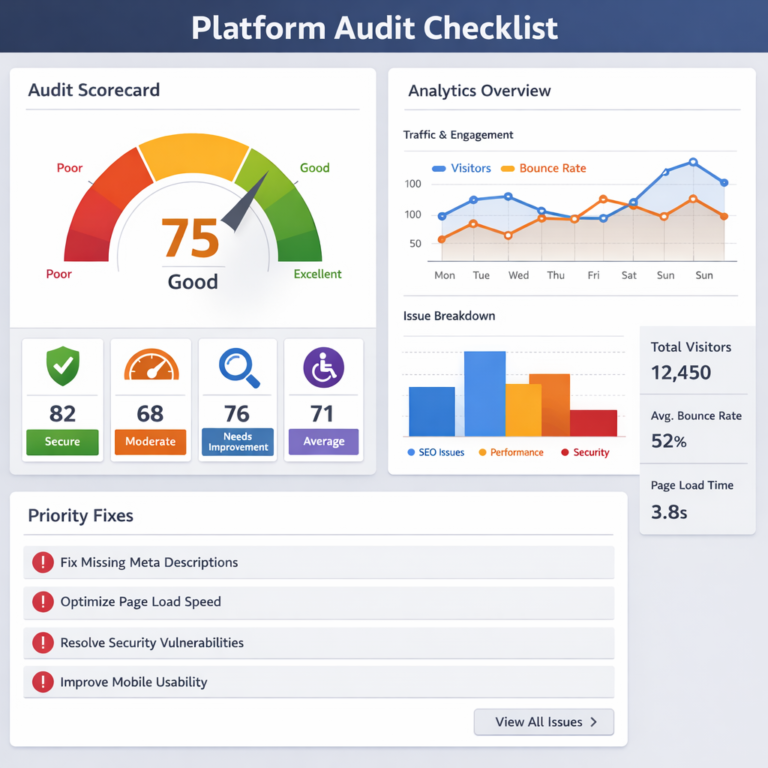
You need a social platform audit template because right now, you’re probably wasting at least 40% of your social media effort on tactics that stopped working months ago. I’ve watched countless marketers burn hours creating content for platforms where their audience barely exists—while ignoring channels practically begging for their attention. The frustration of putting in work without seeing results? I’ve felt it. The good news: I’m handing you the exact template I’ve refined over a decade of managing accounts for brands you’d recognize.
What Is a Social Platform Audit Template (And Why You Need One Yesterday)
Answer Target: A social platform audit template is a structured document that systematically evaluates your social media presence across key metrics including profile optimization, content performance, audience alignment, and competitive positioning. It transforms scattered data into actionable strategic insights.
Here’s what nobody tells you about social media marketing: the platforms change their algorithms roughly 12-15 times per year. What crushed it in January might tank by March. Without a systematic way to evaluate your performance, you’re essentially flying blind while the runway keeps shifting.
I started using audit templates back in 2014, and honestly? My first versions were garbage. But after running audits for over 200 accounts—from scrappy startups to Fortune 500 brands—I’ve distilled the process into something that actually works without requiring a PhD in analytics.
The template I’m sharing covers everything from profile hygiene (those embarrassing outdated bios we all forget about) to sophisticated engagement rate calculations that reveal whether your content actually resonates or just exists. For a complementary deep-dive into the tactical execution side, check out this platform audit checklist for a complete 30-day reset.
The Core Components of an Effective Platform Audit Worksheet
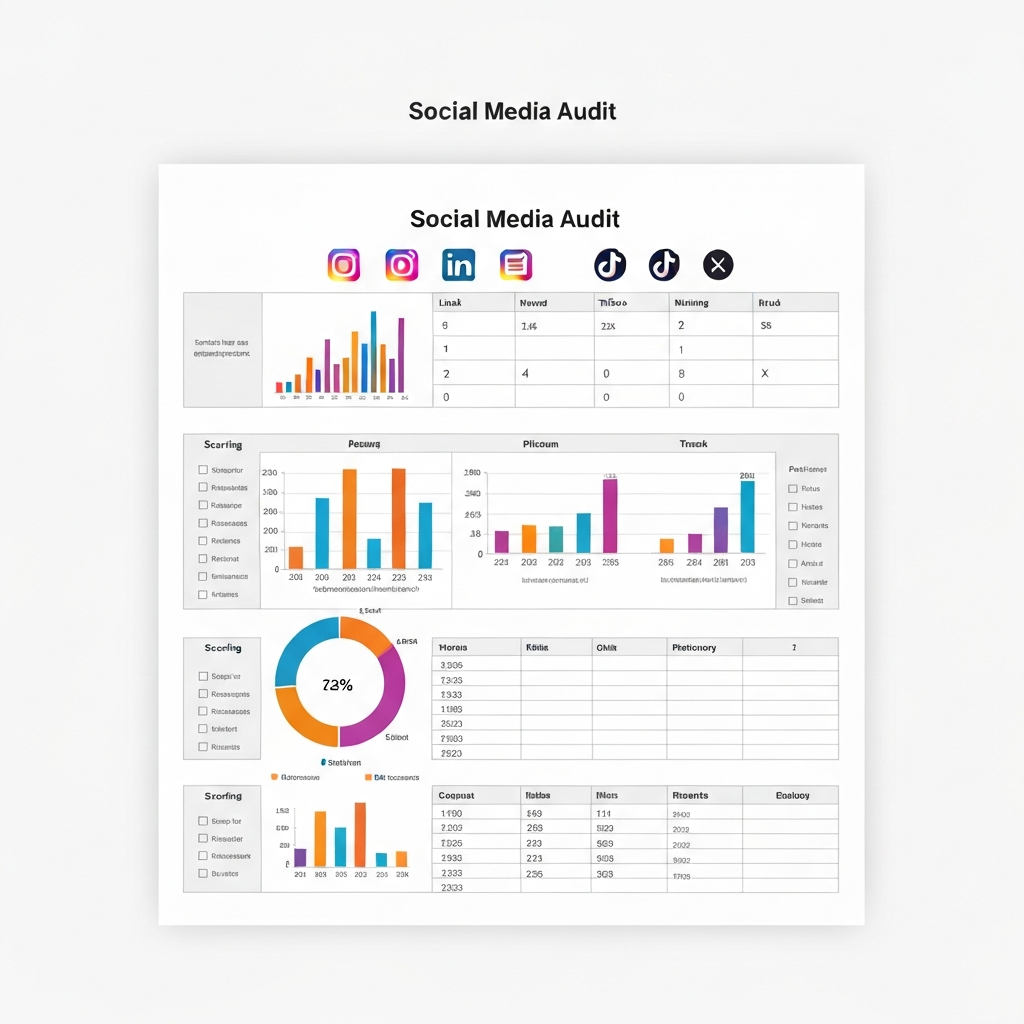
Every platform audit worksheet I create includes seven non-negotiable sections. Skip any of these, and you’re leaving critical blind spots in your strategy.
1. Profile Optimization Score
This covers the basics that too many “experts” ignore: bio completeness, link functionality, profile/cover image quality, username consistency across platforms, and contact information accuracy. I score each element 1-5 and calculate a weighted average. Sounds simple, but I regularly find broken links in profiles with 100K+ followers.
2. Audience Alignment Analysis
According to Pew Research Center’s social media data, platform demographics shift significantly year over year. Your ideal customer might have migrated, and your content strategy needs to follow. I map actual follower demographics against target buyer personas—the gaps often reveal why content underperforms.
3. Content Performance Matrix
Forget vanity metrics. I track engagement rate (calculated as total engagements divided by reach, not followers), save/share ratios, and comment sentiment. The save rate, in particular, tells you whether people find your content valuable enough to revisit. IMO, it’s the most underrated metric in social analytics.
4. Competitive Benchmarking
You need context for your numbers. An 2% engagement rate might be terrible for a lifestyle brand but exceptional for B2B software. I always benchmark against 3-5 direct competitors and 2-3 aspirational accounts.
5. Platform-Specific Technical Audit
Each platform has quirks. Instagram’s alt text for accessibility, LinkedIn’s creator mode settings, TikTok’s sound usage rights—these technical elements impact reach more than most realize.
6. Content Pillar Effectiveness
I categorize all content into 4-6 pillars and evaluate which themes drive results versus which ones you’re creating out of habit. Spoiler: most accounts have at least one content pillar that’s been dead weight for months.
7. Resource Allocation Assessment
Time and money spent per platform versus results generated. This simple ROI calculation has convinced many clients to completely abandon underperforming platforms—and their results improved because they focused their energy where it mattered.
My Proven 5-Step Platform Strategy Framework
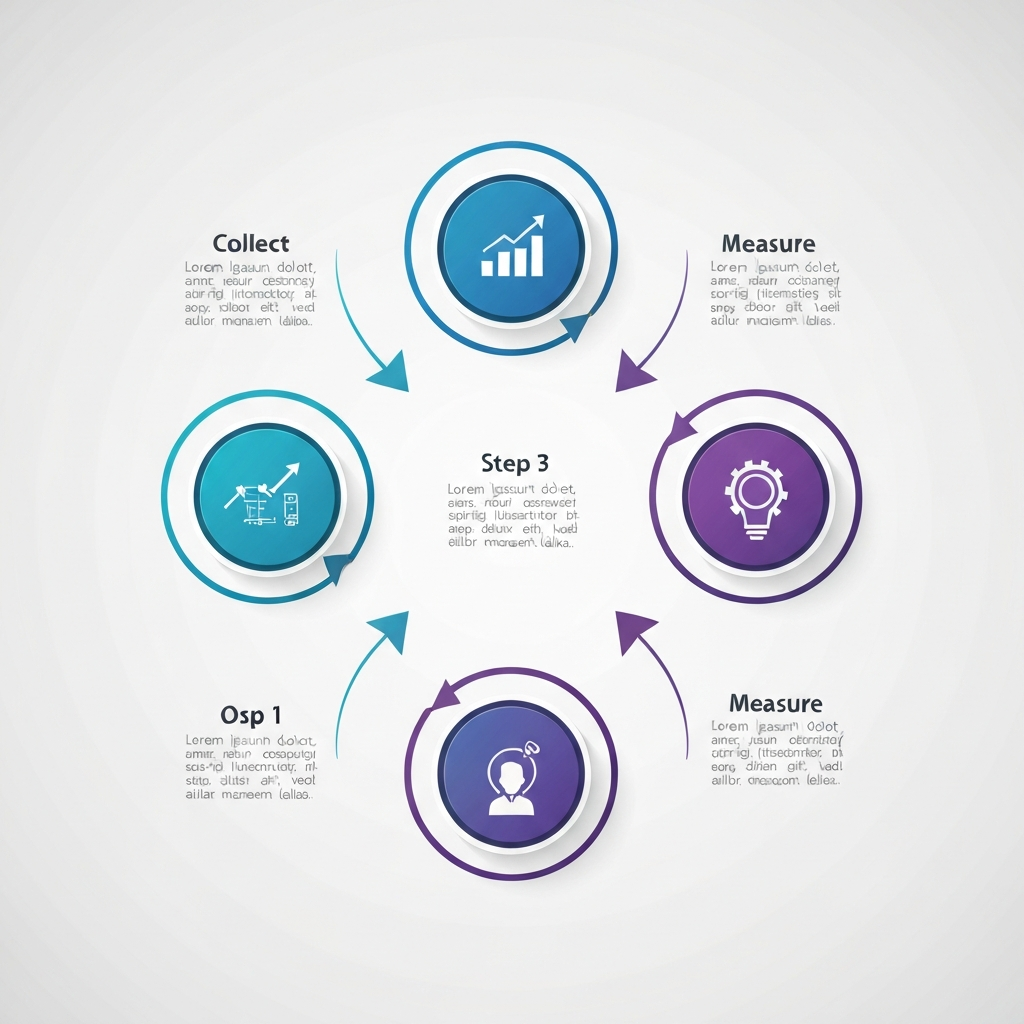
Having a template is useless without knowing how to execute. Here’s the platform strategy framework I’ve used to turn audit insights into actual growth.
Step 1: Collect Without Judgment
Pull every metric available. Export data from native analytics, third-party tools, and manual observations. At this stage, don’t interpret—just gather. I use a 90-day window for most audits, though newer accounts might need 30-60 days.
Step 2: Pattern Recognition
Look for correlations most people miss. Did engagement drop after a posting time change? Do certain content formats consistently outperform regardless of topic? When I ran audits for a tech client, we discovered their worst-performing posts all shared one trait: they were published on Tuesdays. Weird? Yes. Real? Absolutely.
Step 3: Brutal Prioritization
You cannot fix everything simultaneously. I use an impact-versus-effort matrix to identify quick wins and strategic priorities. If something requires minimal effort but promises significant impact, it goes to the top of the execution queue.
Step 4: Implementation Sprints
I structure changes into 2-week sprints rather than overwhelming overhauls. This approach allows you to isolate which changes drove improvements—critical for learning what works for your specific audience.
Step 5: Measurement Loops
Compare post-implementation metrics against your baseline. Document everything. Your platform audit scorecard becomes increasingly valuable as you build historical data showing exactly what moves the needle.
🎯 Pro Recommendation: Level Up Your Social Strategy
If you’re serious about transforming your social media results, I recommend checking out Viral Launch Academy—a comprehensive training program that complements the audit process with advanced content strategies and monetization tactics. It’s helped several clients I’ve referred generate significant ROI from their optimized platforms.
Learn More About Viral Launch Academy →
Common Platform Audit Mistakes (And How to Avoid Them)
After reviewing hundreds of audits others have created, I see the same mistakes repeatedly. Let me save you from these traps.
Mistake #1: Obsessing Over Follower Counts
Follower numbers tell you almost nothing about account health. I’ve seen accounts with 500,000 followers generate less business than accounts with 8,000 highly engaged followers. Your social media metrics should prioritize engagement quality and conversion rates.
Mistake #2: Auditing During Anomaly Periods
Don’t run an audit immediately after viral content or during seasonal spikes. You’ll draw conclusions from data that doesn’t represent normal performance. Wait for things to normalize, or at minimum, acknowledge the anomaly in your analysis.
Mistake #3: Ignoring Qualitative Data
Comments, DMs, and audience feedback often reveal insights no spreadsheet captures. I read through at least 50 recent comments during every audit. The sentiment and specific language people use inform content strategy in ways pure numbers cannot. 🙂
Mistake #4: Setting It and Forgetting It
An audit isn’t a one-time event. The brands winning on social treat their audit template as a living document, updated quarterly at minimum. Algorithm changes, audience shifts, and competitive moves require ongoing evaluation.

Advanced Tactics: Taking Your Platform Audit Scorecard to the Next Level
Ready to move beyond basics? These advanced tactics separate amateur audits from professional-grade strategic analysis.
Cohort Analysis by Follower Acquisition Period
Segment your audience by when they followed you. Followers acquired during different campaigns or content eras often have dramatically different engagement patterns. This insight helps you understand which acquisition strategies attract quality followers versus hollow numbers.
Cross-Platform Attribution Modeling
Most marketers treat each platform as isolated. I track how platforms feed each other—Instagram Stories driving newsletter signups, LinkedIn posts generating podcast downloads. This holistic view often reveals that “underperforming” platforms actually serve as crucial top-of-funnel sources.
Sentiment Trajectory Mapping
Beyond current sentiment, I chart how audience perception evolves over time. A slight negative drift might indicate messaging problems before they become crises. Tools exist for automated sentiment analysis, though tbh I still find manual sampling more accurate for smaller accounts.
Competitor Response Timing Analysis
Document how quickly competitors respond to comments and DMs, then benchmark your performance. Research from Sprout Social shows response time significantly impacts brand perception and conversion rates.
FAQs About Social Platform Audit Templates
How often should I conduct a social platform audit?
Conduct a full social platform audit quarterly, with mini-audits monthly. Major algorithm changes or significant drops in engagement warrant immediate audits regardless of your schedule. I mark Meta and LinkedIn’s algorithm update announcements on my calendar as audit triggers.
What metrics matter most in a platform audit scorecard?
Focus on engagement rate, reach-to-follower ratio, click-through rate, and conversion metrics. Vanity metrics like raw follower counts matter less than engagement quality and audience alignment. The metrics that matter most depend on your specific business objectives—brand awareness campaigns prioritize different KPIs than direct response campaigns.
Can I use the same audit template for all social platforms?
Use a core template framework but customize sections for each platform. LinkedIn requires different metrics than TikTok, and Instagram Stories need separate tracking from feed posts. I maintain a master template with platform-specific modules that can be added or removed based on where a brand operates.
How long does a proper social media audit take?
A thorough audit takes 3-5 hours per platform for initial setup. Subsequent quarterly audits take 1-2 hours each once you have baseline data and established processes. The time investment pays dividends through more effective content strategies and reduced wasted effort.
My Top Recommended Gear
These tools and resources have made my audit process significantly more efficient over the years:
- Portable Monitor for Dual-Screen Auditing: Comparing data across platforms requires screen real estate. A portable second monitor transformed how I work.
Browse Portable Monitors on Amazon → - Wireless Presenter with Timer: When presenting audit findings to clients, this tool keeps me on track and professional.
Browse Wireless Presenters on Amazon → - Large Format Notebooks for Audit Notes: I still sketch frameworks and brainstorm solutions on paper before digitizing. Old school works.
Browse Notebooks on Amazon →
Start with the template framework I’ve outlined, customize it for your specific situation, and commit to regular auditing. The brands dominating social media aren’t necessarily more creative—they’re more systematic about understanding what works and doubling down on it.
Now go audit something. Your future metrics will thank you.
Disclaimer: This post contains affiliate links. As an Amazon Associate and ClickBank Partner, I may earn a commission from qualifying purchases at no additional cost to you.