
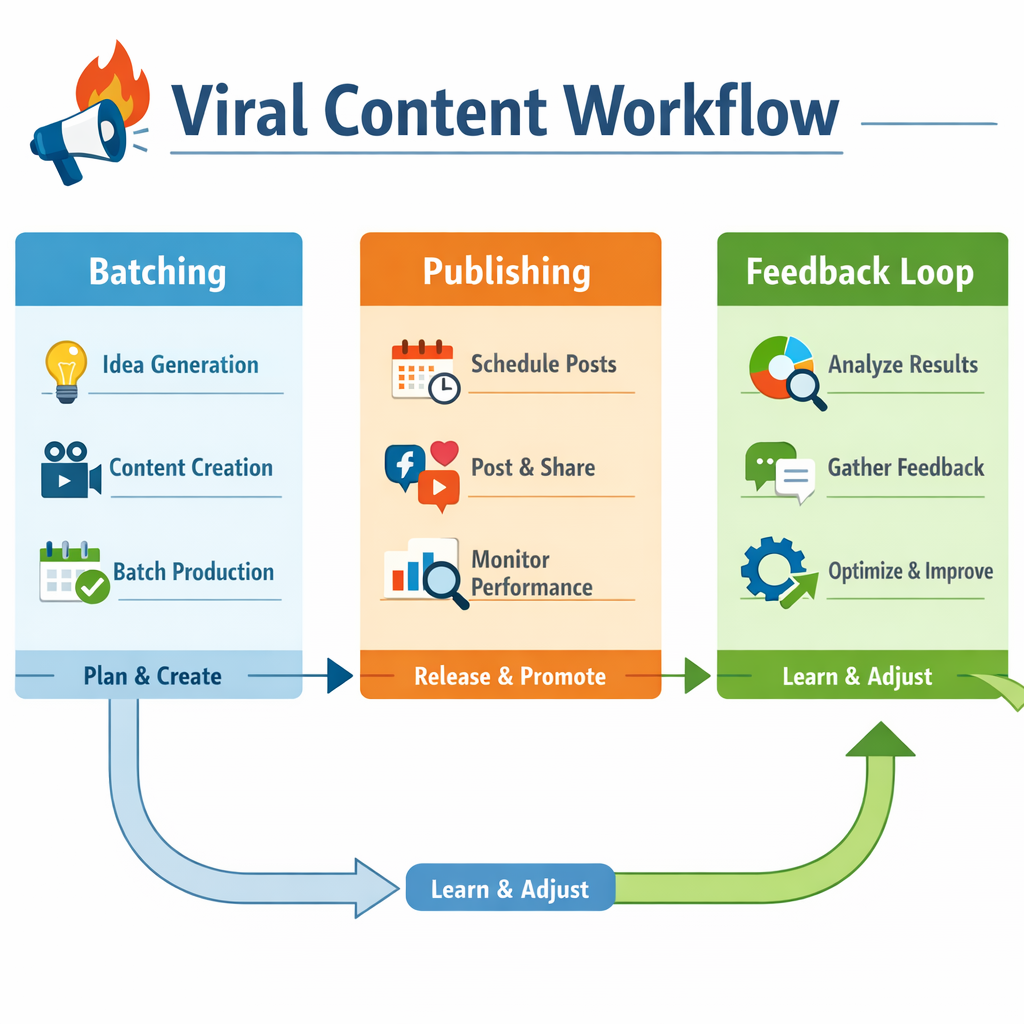
Here’s the truth: a viral content workflow for beginners isn’t about “finding your passion” or posting when you feel inspired. A viral content workflow for beginners is a boring, repeatable machine that turns ideas into posts on schedule—even when your brain is screaming for a nap.
The problem is most beginners treat content like art class. The algorithm treats it like manufacturing.
If you want results, you need a beginner content system that ships on time, a posting workflow you can actually sustain, and content batching that produces finished assets—not half-baked drafts that die in Google Docs.
Table of Contents
- What this workflow actually is (and isn’t)
- Step 1: Pick one repeatable format
- Step 2: Batch like a factory, not an artist
- Step 3: Publish cadence + feedback loop
- Tools that help (and the ones that don’t)
- Frequently Asked Questions
- Exit strategy: your one real job
What this workflow actually is (and isn’t)
Snippet answer: A viral content workflow for beginners is a repeatable system to generate ideas, batch production, publish consistently, and review performance signals weekly—so you can double down on what holds_db attention and gets shared. It’s not a single “hack.” It’s a production loop you can run.
Viral isn’t magic. It’s distribution math plus human psychology plus consistency. And yes, luck plays a part—but you can’t optimize luck if you post once a week and then disappear for a month.
The workflow goal is simple: increase the number of “good swings” you take, tighten feedback, and improve the quality of each swing without turning your life into a content sweatshop.
Fast forward to the dirty secret: most “beginner” advice is designed to make you feel productive, not to make you publish. If your plan doesn’t end with scheduled posts, it’s not a plan. It’s journaling.
If you want a deeper angle on automation, you’ll like this internal guide on AI-driven content workflows that reduce manual work. Just don’t use automation as an excuse to publish bland content at scale. That’s how you become background noise.
Also: stop treating “viral” like a moral victory. The algorithm rewards content that people consume and share. Period. If you want a foundational definition of how content marketing works (without guru perfume), Wikipedia’s overview is a clean starting point: Content marketing.
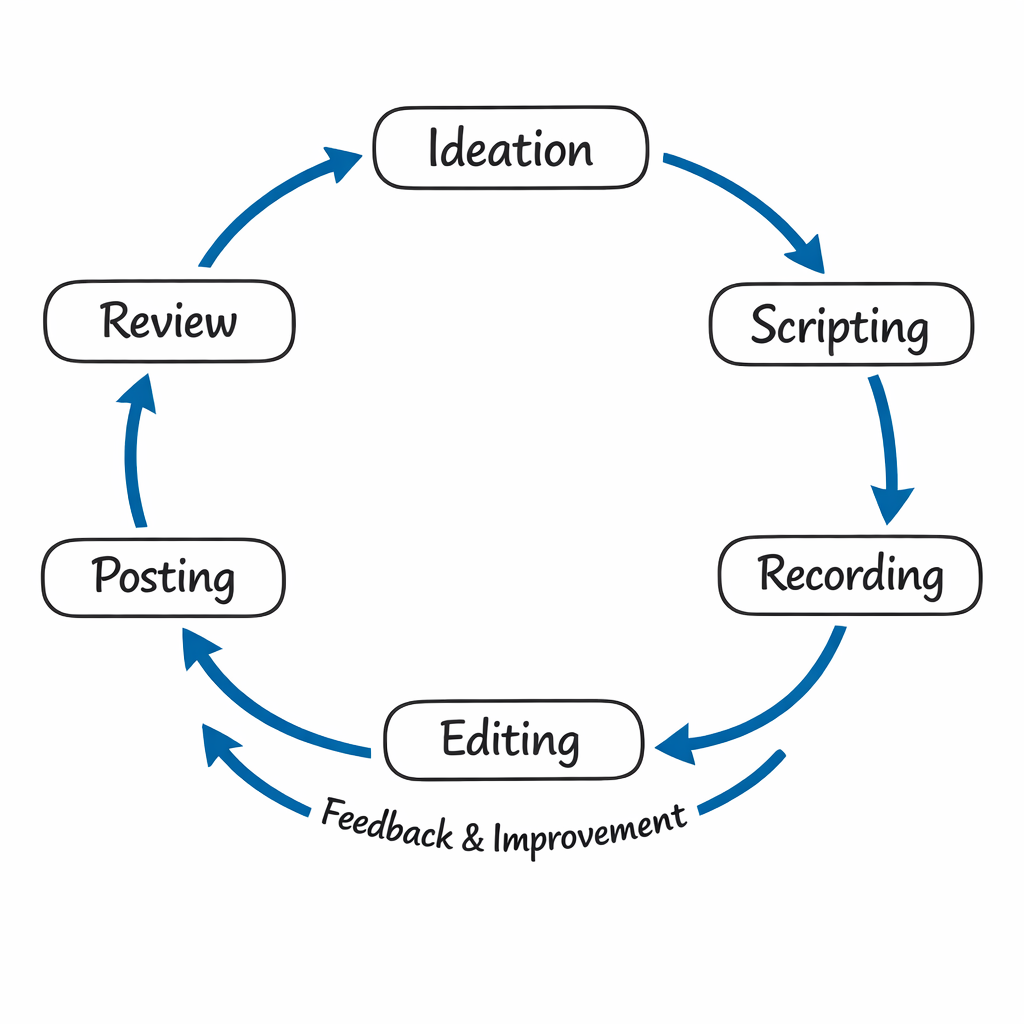
Step 1: Pick one repeatable format
Beginners fail because they try to be a full media company on Day 3.
Pick ONE format you can repeat 30 times without crying. Not ten formats. One.
Here are formats that actually scale for beginners:
- Problem → Mistake → Fix (short, punchy, high save/share potential)
- “I tested X so you don’t have to” (builds trust fast)
- 3-step mini tutorial (simple, snackable, repeatable)
- Myth → Reality (polarizes gently, pulls attention)
The problem is “creativity” becomes procrastination when you’re new. A format removes decision fatigue and makes batching possible.
Pro tip: write a one-sentence promise for your account. Not a brand statement. A promise. Example: “I help beginners ship posts that get watched, saved, and shared—without spending all day editing.”
And if you’re wondering what “people” are doing online right now, don’t guess. Pew Research has ongoing research on social media usage patterns and demographics you can sanity-check against: Pew Research Center: Internet & Technology. Use it to pick platforms intelligently instead of copying whatever a random thread says.
What sucks: “Be everywhere.” That advice is for teams with editors, designers, and a caffeine budget that violates health codes. Beginners need focus.
Beginner content system: the minimum viable content stack
- One niche lane (a narrow “who” + “what outcome”)
- One primary platform (where you publish originals)
- One repurpose platform (where you recycle smartly)
- One format (so you can batch)
Bottom line: if you can’t describe your content in one sentence, your audience can’t either.
Step 2: Batch like a factory, not an artist
This is where most “content batching” advice lies to you. People batch “ideas” and call it progress.
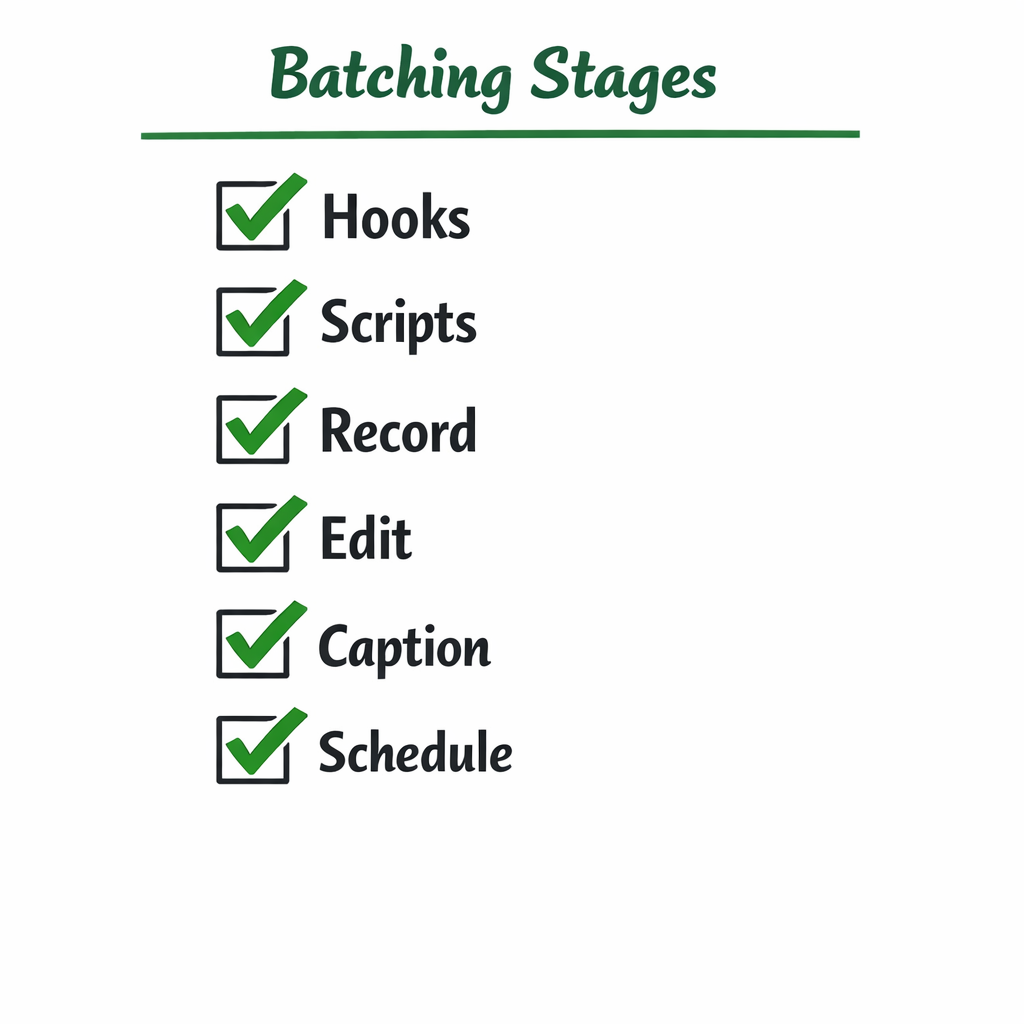
Real batching ends with publish-ready assets. Scripts written. Shots recorded. Captions drafted. Thumbnails selected. Files named. Scheduled. Done.
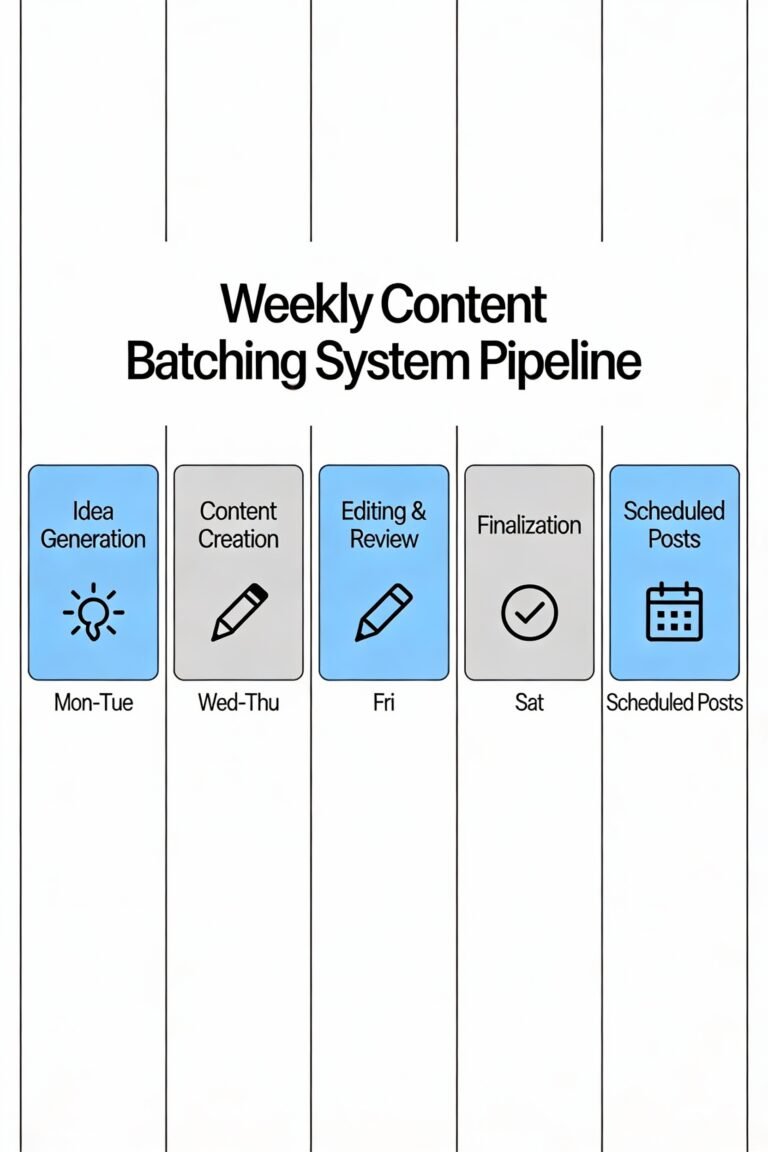
Here’s a beginner-friendly batching sprint you can run in 2–3 hours:
- Idea batch (20 minutes): write 15 hooks for your one format. Hooks are the product. The rest is packaging.
- Script batch (40 minutes): turn the best 6 hooks into 6 short scripts. Keep them tight. Aim for one idea per post.
- Record batch (45 minutes): record all 6 in one go. Same lighting, same setup, no perfection spiral.
- Edit batch (45 minutes): add captions, tighten dead air, remove “uh.” Stop polishing. Ship.
- Schedule (15 minutes): write captions, pick posting times, load everything into a queue.
Need help speeding this up? Pair the above with the internal breakdown on automating parts of your content pipeline with AI—especially hook variations, outline drafts, and repurposing. Just keep a human voice on the final output.
Engineer mindset: remove variance. Same setup. Same template. Same file naming. Your future self will thank you.
Also, if you’re still “waiting for motivation,” you’re building a hobby, not a system.
Content batching guardrails (so you don’t waste hours)
- Timebox editing. If a post needs Hollywood editing to be watchable, your script is the real problem.
- Kill complexity early. Fancy transitions don’t fix boring ideas.
- Reuse your winners. Same idea, new angle, different hook. That’s not lazy; it’s smart iteration.
For a sanity check on how search and discovery systems reward content, Google’s documentation on how Search works is worth reading (yes, even if you’re focused on social platforms): Google Search Central: How Search Works. The meta-lesson is the same: relevance + usefulness + signals.
Step 3: Publish cadence + feedback loop
Your posting workflow should feel like brushing your teeth. Not a spiritual quest.
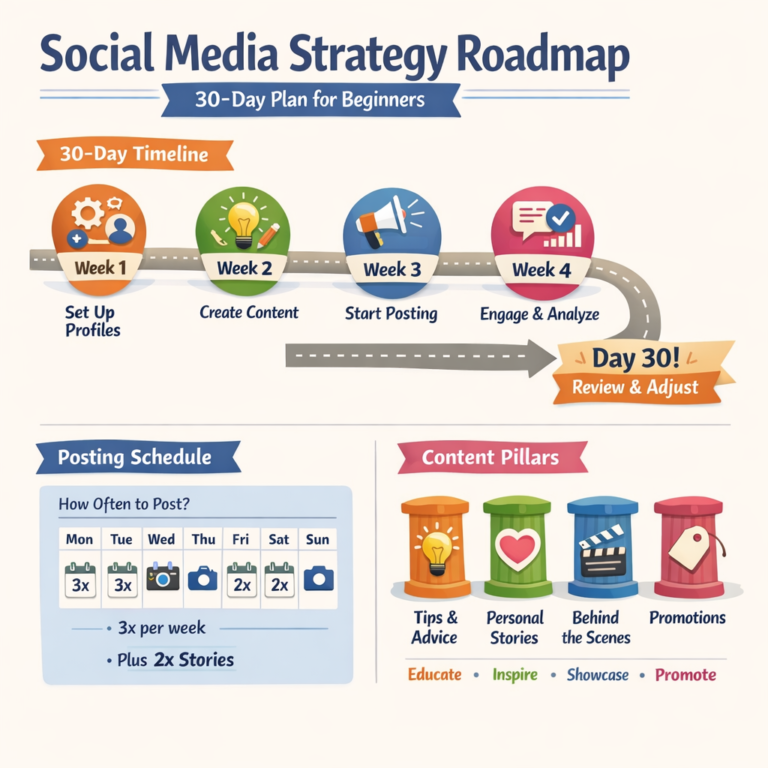
Minimum viable cadence: 3 posts/week for 8 weeks.
Why? Because you need enough volume to detect patterns without melting down. Daily posting can work, but beginners usually burn out and disappear. Consistency beats intensity.
Now the part everyone avoids: review.
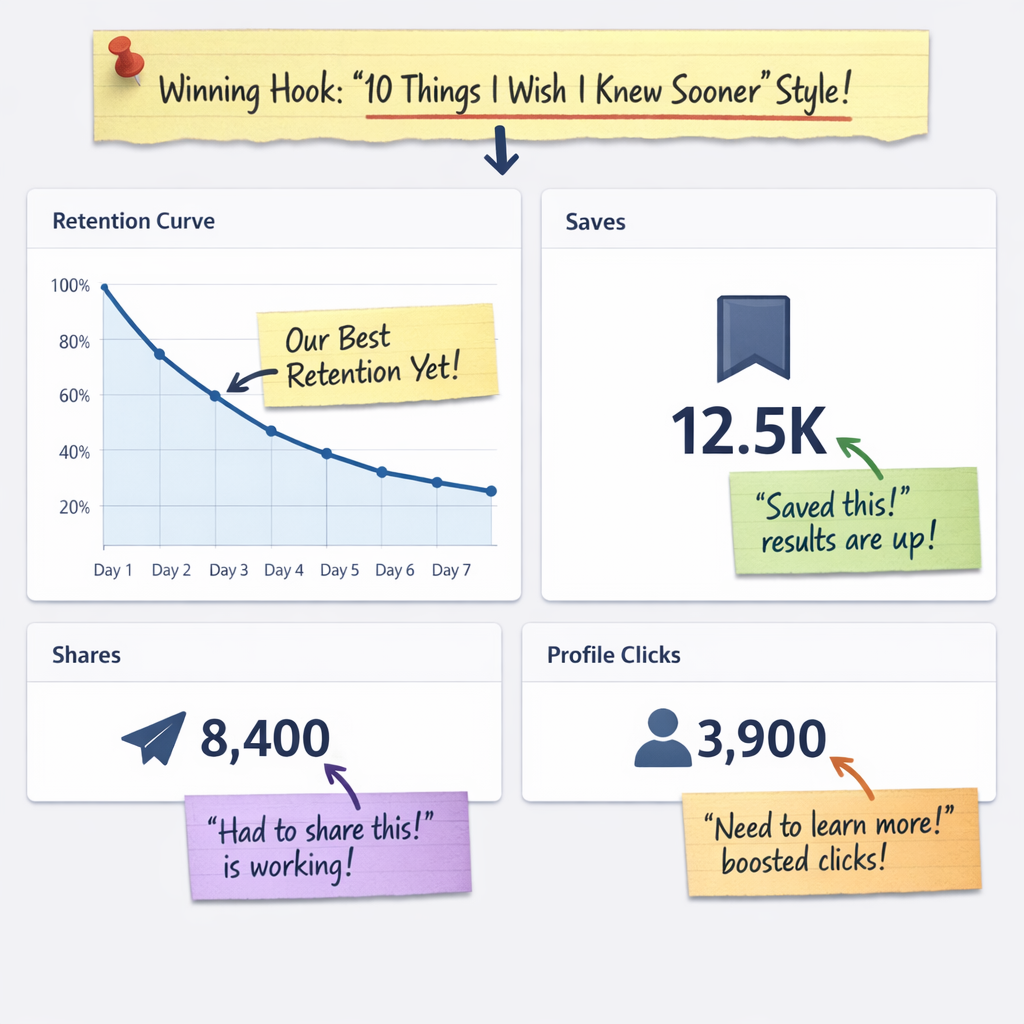
Every week, answer three questions:
- What got watched? (retention / watch time)
- What got saved/shared? (utility + identity signal)
- What got profile clicks? (curiosity + trust)
Likes are fine. They’re also the easiest signal to fake with mediocre content. Saves and shares are harder to earn. That’s why they matter.
Want a clean reference point for why different networks behave differently? Meta’s business resources and guidance on content and ads can give you a more “official” view of how they think about performance: Meta Business Help Center.
What beginners get wrong: they change the whole strategy after one “bad” post. You don’t need new strategy. You need more data and fewer emotional decisions.
If you want to compound faster, combine this weekly review with a lightweight automation layer from the internal guide on AI workflows that speed up iteration. Faster iteration = more learning per month.
Tools that help (and the ones that don’t)
Tools are leverage. Tools are also a distraction buffet.
Good tools reduce friction. Bad tools create a new hobby: configuring tools.
What’s worth using as a beginner
- A simple content calendar (even a basic planner) to commit to cadence
- A notes app for hooks and “swipe file” ideas
- A lightweight editing app you can operate half-asleep
- A mic so your content doesn’t sound like it was recorded in a washing machine
If you’re going to buy one thing, buy audio. People tolerate imperfect video. They do not tolerate crunchy, distant sound.
Second best purchase: a basic tripod + light so you stop fighting shadows like it’s your arch-nemesis.
What’s overrated: expensive cameras, complex editing suites, and “AI that promises virality.” If a tool claims it can “make you go viral,” it’s probably selling you vibes.
One more time for the people in the back: your beginner content system is not a shopping list. It’s a posting workflow with repeatable inputs and measurable outputs.
Frequently Asked Questions
How long until this workflow starts working?
If you publish consistently and review signals weekly, you’ll usually see clearer winners within 2–4 weeks. “Working” means you’ve found formats that hold attention and generate shares, not that you instantly hit a million views.
Do I need to post every day to go viral?
No. You need consistency and volume, but “every day” is optional. A sustainable posting workflow (like 3–5 posts/week) beats a short sprint followed by burnout and silence.
What metrics should beginners actually track?
Track retention (watch time or average view duration), saves/bookmarks, shares, and profile clicks. Likes are fine for morale, but they’re a weak predictor compared to whether people keep watching and pass it on.
Should I use AI tools for everything?
Use AI for speed: outlines, hook variations, repurposing, and first drafts. Don’t outsource your point of view. If your content sounds like it was generated by a polite committee, people scroll—fast.
What’s the biggest beginner mistake in content batching?
Batching ideas instead of finished posts. Real content batching ends with ready-to-publish assets: scripts, captions, thumbnails, and a scheduled queue—otherwise you’re just collecting notes and calling it productivity.
Exit strategy: your one real job
Here’s the truth: virality is a byproduct of output + iteration. Your job isn’t to “be creative.” Your job is to run the loop.
Pick a format. Batch 6 posts. Publish 3–5 per week. Review weekly. Repeat.
If you do that for 8 weeks, you’ll either (a) have winners you can scale, or (b) have enough data to pivot intelligently. Either way, you’re no longer guessing.
Bottom line: the algorithm doesn’t reward potential. It rewards shipped work.
Now go batch your next six posts. If you need motivation, borrow mine: I don’t want you becoming another “aspiring creator” with 47 drafts and zero uploads. I’ve seen that movie. It’s boring.
As an Amazon Associate, I earn from qualifying purchases.




2 Comments