Let me be blunt: running Facebook ads for affiliate offers feels like walking through a minefield while blindfolded. You’ve probably heard the horror stories—ad accounts banned overnight, thousands of dollars burned with zero conversions, or worse, making a few sales only to watch Facebook shut you down mid-campaign. I’ve been there, and I’ve got the battle scars (and the data) to prove it.
The problem isn’t that Facebook hates affiliate marketing. The problem is that 90% of affiliates approach paid advertising like they’re still spamming links in Facebook groups circa 2012. Facebook’s algorithm has evolved. Their compliance team is ruthless. And your competition? They’re getting smarter.
But here’s the good news: I’ve cracked the code on running profitable, sustainable Facebook campaigns for affiliate offers. In this guide, I’m pulling back the curtain on the exact strategies I use to generate consistent online income through social media ads without getting banned, wasting ad spend, or sacrificing my sanity.
Table of Contents
- Why Facebook Ads Are a Game-Changer for Affiliate Marketing
- The Compliance-First Approach (Or How I Stopped Worrying About Ad Bans)
- The Campaign Structure That Actually Works
- Creative Strategy: What Gets Clicks Without Screaming “Scam”
- The Bridge Page Blueprint
- Scaling Tactics the Pros Don’t Share
- FAQ: Your Burning Questions Answered
- My Top Recommended Gear
Why Facebook Ads Are a Game-Changer for Affiliate Marketing
Facebook ads remain one of the most powerful tools for affiliate marketing because of unparalleled targeting precision, massive scale, and the ability to reach people who aren’t actively searching but are perfect prospects. Unlike Google Ads where you intercept existing demand, Facebook lets you create demand through interruption marketing done right.
I’ve tested virtually every traffic source—Google, native ads, TikTok, YouTube—and Facebook consistently delivers the lowest cost per acquisition when you know what you’re doing. According to the FTC’s advertising guidelines, transparency in affiliate marketing is non-negotiable, which is why my approach prioritizes compliant, value-first campaigns.
The secret sauce? Facebook’s lookalike audiences. Once you generate even 50 conversions, you can clone your best customers at scale. No other platform comes close to this capability for digital marketing campaigns.
The Compliance-First Approach (Or How I Stopped Worrying About Ad Bans)
Here’s what nobody tells you: Facebook doesn’t actually hate affiliate offers. They hate deceptive advertising. The moment you understand this distinction, everything changes.
I follow what I call the “Bridge Page Mandate.” Never—and I mean never—direct-link from your Facebook ad to an affiliate offer. This violates Facebook’s policies on landing page quality and practically guarantees your account gets flagged.
Instead, you need a bridge page (also called a pre-sell page or landing page) that serves these functions:
- Provides genuine value – Educational content, a quiz, a free tool, or resource
- Builds micro-trust – Your brand, your story, social proof
- Warms the prospect – Pre-frames the affiliate offer as the logical next step
- Captures data – Email or retargeting pixel before sending them to the offer
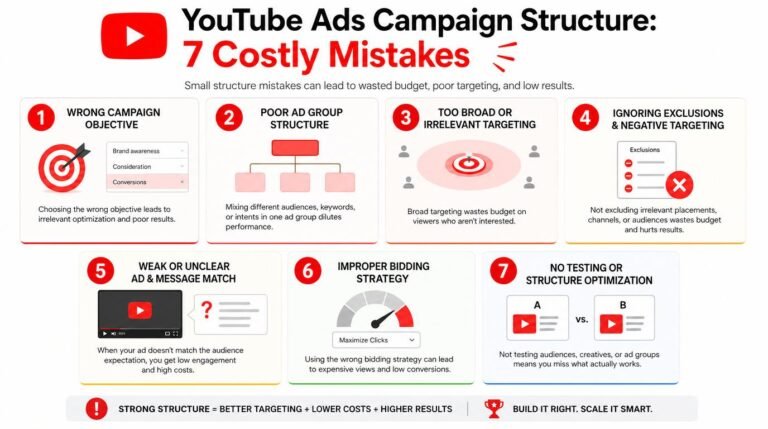
I structure my campaigns using a clean 3-layer stack approach that keeps everything organized and scalable. This campaign structure has saved me countless hours and tens of thousands in wasted ad spend.
Pro tip: Make sure your bridge page domain has a proper privacy policy, terms of service, and about page. Facebook’s review team checks for these, and missing them is a red flag.
The Campaign Structure That Actually Works
Most affiliates overcomplicate their Facebook marketing strategy. They create 47 different ad sets targeting random interests, split their budget into oblivion, and wonder why they can’t get statistically significant data.
My campaign structure is ruthlessly simple:
Campaign Level (CBO – Campaign Budget Optimization):
- Single conversion objective (usually “Purchase” or “Lead” depending on your pixel events)
- Daily budget starts at $50-100 for testing phase
- CBO lets Facebook’s algorithm distribute budget to winning ad sets
Ad Set Level:
- Ad Set 1: Broad targeting (age, gender, location only)
- Ad Set 2: Interest stacking (3-5 related interests)
- Ad Set 3: Lookalike audience (1% of your best data source)
Ad Level:
- 3 different creatives per ad set (video, carousel, single image)
- 2 copy variations testing different angles
This structure aligns perfectly with the rapid 7-day setup sprint methodology I use for all paid advertising campaigns. You can validate or kill a campaign within a week instead of bleeding money for months.
Creative Strategy: What Gets Clicks Without Screaming “Scam”
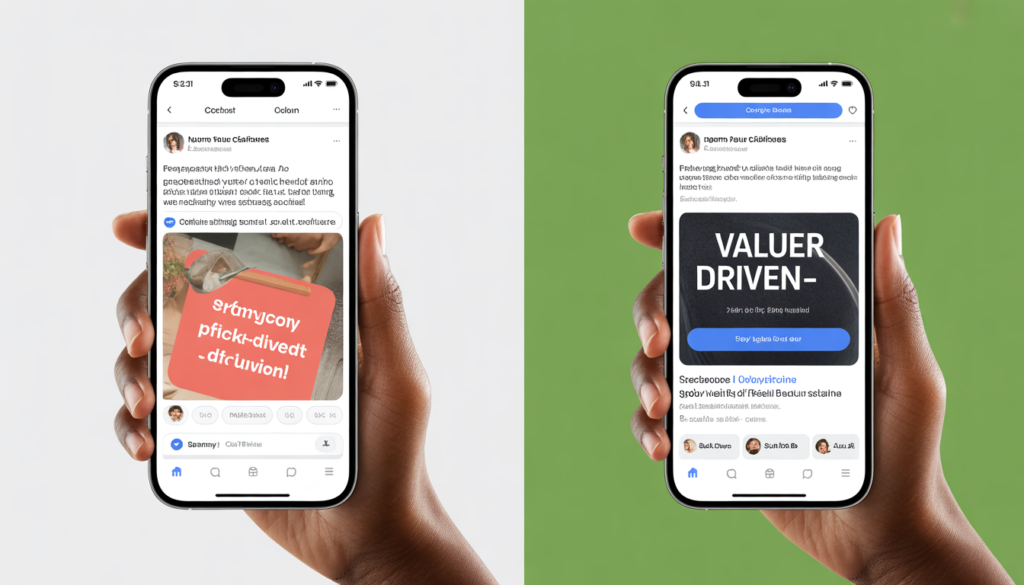
The creative is where most affiliate offers die. You’re competing against cat videos and engagement announcements, so your ad needs to stop the scroll while looking native to the platform.
Here’s what works for me in 2025:
User-Generated Content (UGC) Style Videos: These outperform polished ads by 3-4x in my testing. Shoot vertical video on your phone, keep it under 30 seconds, and lead with a pattern interrupt. Think “I spent $3,000 testing passive income methods—here’s what actually worked.”
Educational Carousels: Position yourself as the educator, not the seller. “5 Mistakes Costing You Sales” performs infinitely better than “Click Here to Make Money!”
Testimonial-Style Ads: If you have permission, feature real results from the affiliate offer. But—and this is critical—always include disclaimers. The FTC is crystal clear on testimonial requirements.
One thing I’ve learned: sophistication matters. If your audience is cold (never heard of you), lead with curiosity and education. If they’re warm (visited your site), you can be more direct about the offer. This is where retargeting setup with proper day windows becomes essential.
The Bridge Page Blueprint
Your bridge page is the linchpin of this entire strategy. Mess this up, and it doesn’t matter how good your ads are—you’ll hemorrhage money.
I follow a specific structure:
- Headline: Echo the promise from your ad (this is message match)
- Subheadline: Agitate the problem or desire
- Value Section: Deliver on the ad’s promise (free guide, video training, quiz results)
- Social Proof: Testimonials, logos, or stats
- Soft Transition: “Want to take this further?” or “Ready for the complete system?”
- CTA Button: Links to the affiliate offer (opens in same tab, properly tracked)
The concept of landing page message match isn’t optional—it’s the difference between 2% and 12% conversion rates. If your ad talks about “passive income strategies” but your landing page leads with “get rich quick,” you’ve broken the trust thread.
IMO, the best bridge pages feel like blog posts or YouTube video pages, not sales pages. You’re warming people up, not hard-selling.
Scaling Tactics the Pros Don’t Share
Expert Commentary: This video breaks down advanced Facebook scaling strategies that align perfectly with affiliate campaign optimization—worth every minute if you’re serious about growing past $1K/day in ad spend.
Once you’ve got a winning campaign (ROAS of 2.5+ sustained for at least 5 days), it’s time to scale. But here’s where most people screw up: they double their budget overnight and kill the algorithm’s learning.
Vertical Scaling (The Safe Way):
- Increase budget by 20% every 3 days
- Never increase more than 50% in a single adjustment
- Monitor frequency—if it climbs above 3.0, you’re burning out your audience
Horizontal Scaling (The Fast Way):
- Duplicate winning ad sets into new campaigns
- Test new interests and lookalikes
- Expand to new geographic markets
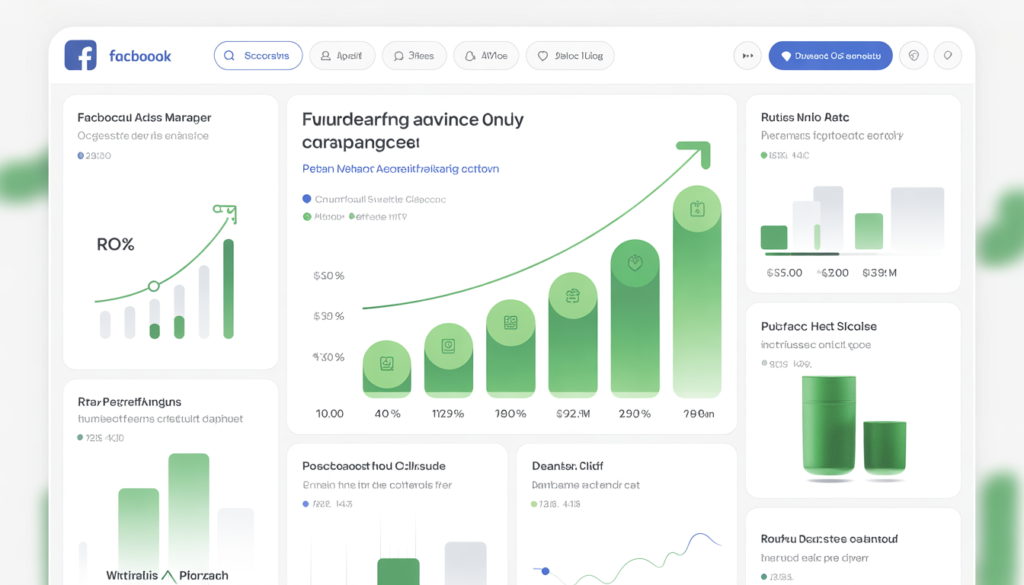
I also use what I call “safety net scaling.” For every $1,000 I add to daily spend, I create a new retargeting campaign to capture people who didn’t convert the first time. This typically adds 20-30% to overall ROAS and keeps cost per acquisition from spiking.
According to research from WordStream’s advertising benchmarks, the average Facebook ad CTR across industries is 0.90%, but with proper targeting and creative, you should be hitting 2-3% minimum.
One more thing: always keep 30% of your budget in testing mode. Markets shift, ad fatigue is real, and your winning creative will eventually die. The affiliates who win long-term are the ones who never stop testing new angles.
FAQ: Your Burning Questions Answered
Can you run Facebook ads directly to affiliate offers?
No, Facebook prohibits direct linking to affiliate offers. You must use a bridge page or landing page that provides genuine value before presenting the affiliate offer. This complies with Facebook’s advertising policies and actually improves conversion rates.
What budget do I need for affiliate marketing on Facebook?
Start with $10-20 per day for testing. I recommend a minimum $300 monthly budget to gather meaningful data and optimize campaigns. Scale up only after you’ve validated your offer and creative.
How do I avoid getting my Facebook ad account banned?
Never direct-link to affiliate offers, avoid exaggerated claims, use a business domain with proper policies, warm up new ad accounts gradually, and ensure your landing page provides real value. Always follow Facebook’s advertising policies to the letter.
What types of affiliate offers work best with Facebook ads?
High-ticket offers ($300+) in the business opportunity, health, and relationship niches tend to work best because they can support higher CPAs. Digital products with recurring commissions are ideal. Avoid anything that promises unrealistic results or makes health claims.
Should I use Facebook Pixel for tracking affiliate conversions?
Absolutely. Install the Facebook Pixel on your bridge page and, if possible, work with affiliate networks that allow server-side conversion tracking. This data feeds your optimization and lookalike audiences. Without proper tracking, you’re flying blind.
My Top Recommended Gear
After running thousands in ad spend, these are the tools I actually use every day:
1. Landing Page Builder Software – You need fast-loading, mobile-optimized bridge pages. I’ve tested dozens of builders, and the ones that load under 2 seconds make a massive difference in conversion rates.
2. Facebook Ads Spy Tools – Why reinvent the wheel? These tools let you see what’s working for competitors right now. I use them weekly to find new creative angles and offers.
3. Video Editing for Online Advertising – UGC-style video ads are crushing it. Learning basic editing (transitions, captions, hooks) has 10x’d my CTR compared to static images.
Running Facebook ads for affiliate offers isn’t some mystical dark art—it’s a systematic process of testing, compliance, and optimization. Will you lose money on your first few campaigns? Probably. I did. But the affiliates making serious online income through paid advertising aren’t lucky; they’re just willing to test, track, and iterate until they find what works.
Start with one offer, one bridge page, and the campaign structure I’ve outlined here. Give it a proper $300-500 test budget. Track everything. And remember: Facebook rewards advertisers who provide value, not those trying to game the system. 🙂
Disclaimer: This post contains affiliate links. As an Amazon Associate, I may earn a commission from qualifying purchases at no additional cost to you.