
A multi-channel social media audit sounds like busywork — until you realize you can’t actually name which of your channels is winning. You check your analytics. The numbers look fine. So why run a formal audit at all? That question stops most people cold. It feels reasonable. But it hides a mistake that quietly wastes hours every single week. Let me show you why. Not with opinions — with plain facts you already agree with.
Table of Contents
Why People Skip a Social Media Audit
Here’s the person I’m writing this for: the skeptic. They run a business or a marketing team. They post on four or five platforms. And they believe they already know how those channels are doing.
Their logic goes like this: “I can open Instagram Insights whenever I want. I can see my LinkedIn numbers. So a formal audit just adds paperwork.”
That belief rests on three shaky assumptions:
- An audit is just a fancy dashboard of vanity metrics.
- Native analytics already tell them everything.
- Audits are bloated reports nobody reads.
Each one sounds true. None of them survives a closer look. Let’s take them apart, one fact at a time.
The Facts Behind Every Social Media Audit
Forget best practices for a second. Forget what the gurus say. Let’s build from the ground up. Here are the bedrock facts. You can’t argue with any of them:
- You have a fixed amount of time each week.
- You have a fixed budget.
- Every post, video, and reply costs some of that time or money.
- Some channels give you more back than others.
- Right now, you can’t say exactly which ones — not with real numbers.
That fifth point is the crack in the wall. Sit with it for a second. You feel like you know your best channel. But feeling isn’t measuring. And you’ve never put all your channels side by side on the same scale.
Why Your Social Media Analytics Never Line Up
Here’s why that gut feeling fails you. Instagram shows you Instagram data. LinkedIn shows you LinkedIn data. TikTok shows you TikTok data. Each platform lives in its own locked box.
Worse, they don’t even count the same way. Instagram calls it “reach.” LinkedIn calls it “impressions.” One counts a video view at three seconds. Another counts it at two. It’s like comparing prices in different currencies with no exchange rate.
So when you say “Instagram is my best channel,” what are you comparing it against? Nothing solid. You’re guessing across five different measuring sticks.
This is the real problem. Your data isn’t missing. It’s scattered and mismatched. And you can’t compare things you’ve never lined up. That’s not marketing theory. That’s basic logic.

What Is a Multi-Channel Social Media Audit?
A multi-channel social media audit is the process of pulling data from every social platform you use, standardizing each metric so they measure the same thing, and comparing them on one shared scale. It turns “which channel is worth my time?” from a guess into a number you can read.
So here’s the simple truth the skeptic missed. An audit isn’t a vanity dashboard. It’s one action: pulling every channel out of its box and onto one shared measuring stick. Marketers at Sprout Social describe the same core idea — a structured review of every account at a single point in time.
That’s it. You gather the data. You standardize it. Then you compare it fairly.
Once you do that, something clicks. The question “which channel is worth my time?” stops being an opinion. It becomes a number you can read. You’re not arguing anymore. You’re just looking at math. And that changes every decision that follows.
The first time I ran this on my own accounts, I found I’d been spending three hours a week feeding a channel that brought in zero leads — while barely touching the one that brought in most of them. I’d have sworn the opposite was true. Now let’s do it.
How to Do a Social Media Audit in 6 Steps
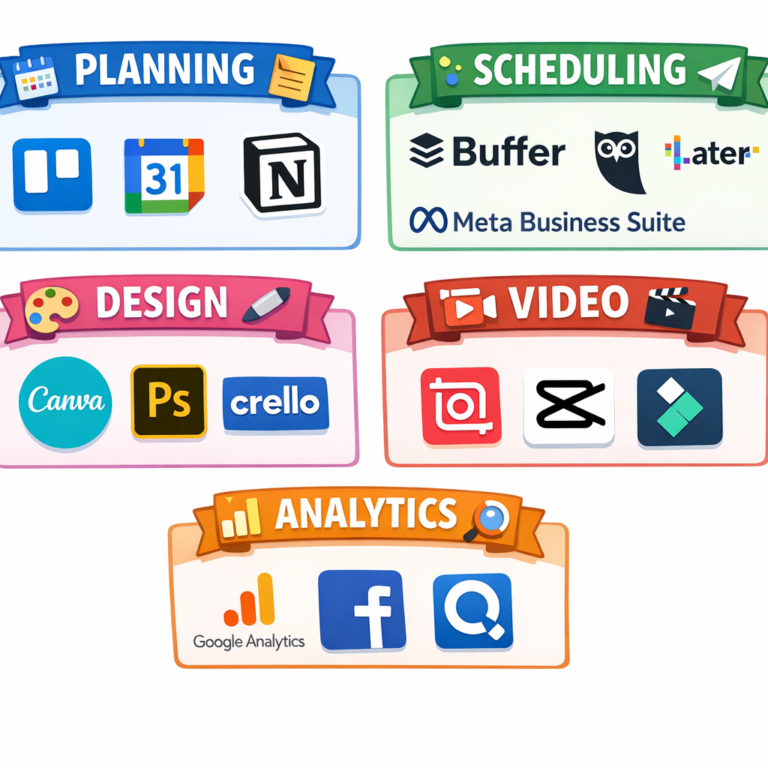
You don’t need expensive software or a paid social media audit template — though scheduling and analytics tools like Hootsuite, Buffer, and Sprout Social can speed up the data pull. A simple spreadsheet works fine. Here’s the process from start to finish.
Step 1: List Every Channel You Use
Write them all down. Instagram, TikTok, LinkedIn, Facebook, YouTube, X, Pinterest. Include the sleepy ones. A channel you post to twice a month still eats your time.
Step 2: Set a 90-Day Date Range
Use the last 90 days. That’s long enough to smooth out flukes and short enough to stay current. One viral post shouldn’t decide your whole social media strategy.
Step 3: Pull the Raw Numbers From Each Platform
Open each native social media analytics tool. Export or copy the core stats. Don’t judge them yet. Just collect them into your spreadsheet — one row per channel.
Step 4: Standardize Your Social Media Metrics
This is the step everyone skips. And it’s the whole point. Make every channel report the same things, defined the same way. For example:
- Followers
- Total posts in the period
- Total reach (or impressions — pick one and stick to it)
- Total engagements (likes, comments, shares, saves)
- Clicks to your website
- Conversions or leads, if you track them
Now every channel speaks the same language. The exchange-rate problem is gone.
Step 5: Calculate Rate Metrics, Not Just Totals
Totals lie to you. A channel with 100,000 followers “wins” on raw likes. But that doesn’t mean it’s healthy. Divide to find the truth:
- Engagement rate = engagements ÷ reach
- Click rate = clicks ÷ reach
- Follower growth rate = new followers ÷ starting followers
A small channel with a 6% engagement rate is often worth more than a big one sitting at 0.4%.
Step 6: Add a Time-Cost Column
Estimate how much time each channel takes per week. Roughly is fine. Two hours? Five? Write it down. Now you can see return against effort. This is the number the skeptic never had.
Social Media Metrics That Actually Matter
Not all numbers deserve your attention. Some feel good but tell you nothing.
Chase these — they connect to real results:
- Engagement rate. Are people actually reacting, not just scrolling past?
- Click-through to your site. Are you pulling people toward something that pays?
- Conversions. Sign-ups, sales, leads — the revenue your social presence actually drives. The whole point.
- Growth rate. Is the audience getting bigger or stalling?
- Cost in time. How many hours does this channel demand?
Be careful with these — they can fool you:
- Raw follower count. A big number that may be dead weight.
- Total likes. Nice to see. Rarely pays a bill.
- Impressions with no action. Being seen isn’t being chosen.
Here’s a real example. Say your Facebook page has 40,000 followers but a 0.3% engagement rate. Your TikTok has 4,000 followers and a 9% engagement rate. The big number is Facebook. The better channel is TikTok. That gap isn’t unusual, either — Hootsuite’s engagement-rate benchmarks routinely put average Facebook engagement near or below 1%, while tighter accounts on newer platforms clear several times that. Without the audit, you’d have bet on the wrong one.

What to Do After Your Social Media Audit
An audit is worthless if it just sits in a file. The report isn’t the goal. The decision is. This is where your numbers turn into a real multi-channel platform strategy. Once your channels sit on one scale, sort them into three buckets:
Double down. These channels give strong returns for the time they cost. Feed them more. This is where your extra hour should go — ideally through a pipeline that turns one idea into ten posts so scaling a winner doesn’t mean doubling your hours.
Fix or test. These have potential but weak results. Maybe the content is off. Maybe the timing is wrong. Maybe a recent algorithm change quietly cut your reach. Run a small experiment for 30 days, then re-check.
Cut or park. These drain hours and give almost nothing back. Be honest. Dropping a dead channel isn’t failure. It’s freeing up time for the winners.
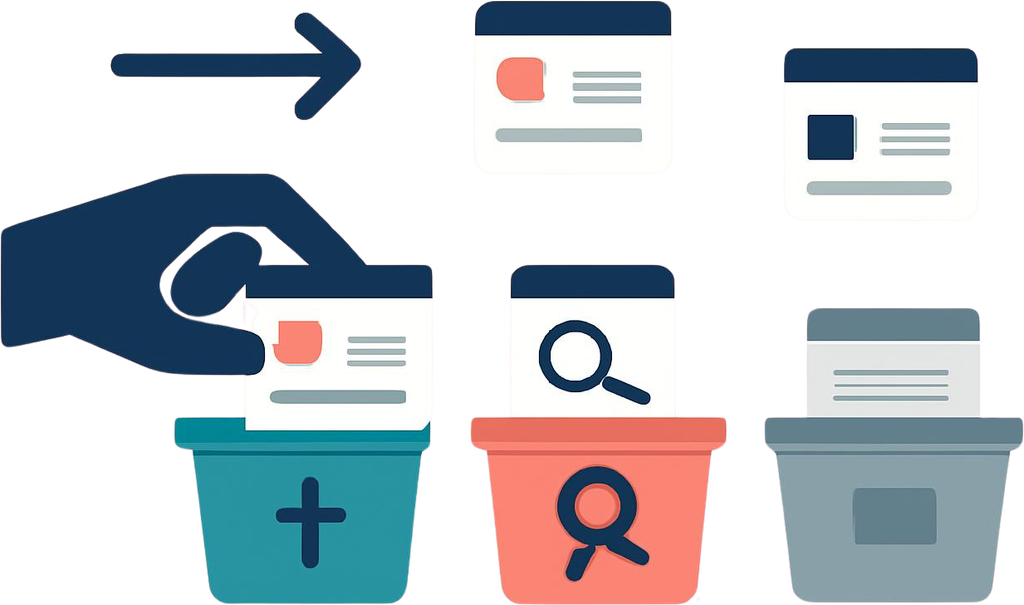
Notice what just happened. You made three clear choices. Not one of them came from a hunch. Every one came from a number you can defend. And you don’t have to take any of it on faith — every figure came straight from your own platform analytics, not from a guru’s slide deck.
That’s the difference an audit makes. You stop spreading yourself thin across everything. You start pouring your effort where it actually works.
Stop Guessing and Run Your Social Media Audit
Here’s the part nobody wants to say out loud. “I don’t need a social media audit” really means “I’m fine guessing.” And guessing is expensive — it’s why your best hour keeps landing on a channel that gives you almost nothing back.
You already own every number you need. It’s just trapped in five separate boxes that don’t talk to each other. A multi-channel social media audit is what drags them into the open so you can finally see the math.
So open a blank spreadsheet right now. List your channels, set a 90-day window, and work the six steps, one row at a time. Give it ninety minutes this week — that’s the whole price for knowing exactly where your time wins and where it leaks.
Recommended Reading & Tools
Disclosure: The links below are Amazon affiliate links. As an Amazon Associate I earn from qualifying purchases, at no extra cost to you.
Once your audit shows where to focus, these picks help you turn the findings into a sharper social media strategy:
- Social Media Marketing in 2026: The Ultimate Guidebook — A no-fluff system for turning content into customers across every platform. A natural next step after your audit tells you which channels deserve the effort.
- AI-Powered Social Media Marketing 2026 — Workflows for using AI to plan, write, and scale content on the channels you decide to double down on.
- Crushing It! by Gary Vaynerchuk — A classic on building an engaged audience and a personal brand across social platforms.
- Social media content planner & notebook — A simple offline companion for scheduling posts and tracking the metrics from your audit