
Table of Contents
- Why Platform Selection Actually Matters (More Than You Think)
- The Biggest Myth I Need to Kill Right Now
- The Audience-First Framework for Platform Selection
- Platform-by-Platform Breakdown: Where Real Conversions Happen
- The Resource Reality Check Most Gurus Skip
- Advanced Tactics: Cross-Platform Synergy That Actually Works
- Frequently Asked Questions
- My Top Recommended Gear
Why Platform Selection Actually Matters (More Than You Think)
Choosing the right social media platforms isn’t just a strategy checkbox—it’s the difference between burning your budget and building a conversion machine. Here’s the problem I see constantly: businesses spread themselves across every platform like peanut butter on too much bread, wonder why engagement tanks, then blame “the algorithm.” Sound familiar?
The real agitation? Every hour you spend creating content for the wrong platform is an hour you’re not reaching people who actually want to buy from you. I’ve watched companies waste six figures on TikTok strategies when their entire customer base lives on LinkedIn. Painful stuff.
The solution isn’t complicated, but it requires honesty about your resources, clarity about your audience, and the discipline to say “no” to shiny platforms that don’t serve your goals. That’s exactly what I’m breaking down today.
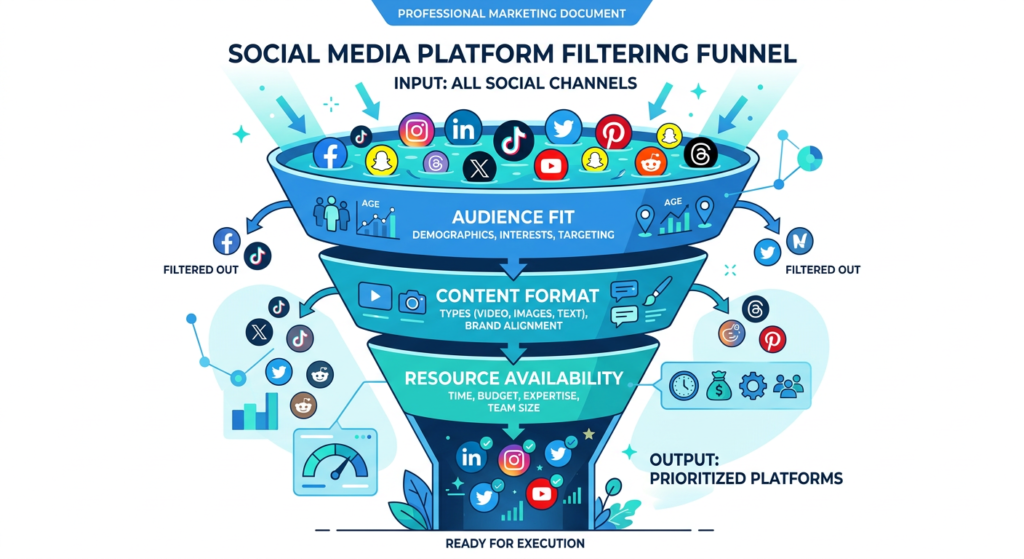
Choosing the right social media platforms requires matching your target audience demographics with platform user bases, aligning content formats with your production capabilities, and focusing resources on 2-3 platforms where your ideal customers actively engage and convert—rather than spreading thin across every network.
According to Pew Research Center’s latest social media data, platform demographics vary dramatically by age, income, and education level. Ignoring this data is basically marketing malpractice.
The Biggest Myth I Need to Kill Right Now
“You need to be everywhere your competitors are.”
No. You really don’t. IMO, this advice has caused more wasted marketing budgets than any other single piece of conventional wisdom in our industry.
Here’s what actually happens when you chase platform omnipresence: your content quality drops, your posting consistency becomes erratic, your engagement rates crater, and you end up with a bunch of zombie accounts that make your brand look abandoned.
I’ve audited hundreds of social media strategies over my career, and the pattern is crystal clear: businesses that dominate 2-3 platforms consistently outperform those with mediocre presence across 6+. Every single time.
The key is strategic platform selection based on your specific social media strategy planning—not FOMO about what others are doing.
The Audience-First Framework for Platform Selection
Before you even think about which platforms to choose, you need brutal clarity on three questions:
- Who exactly buys from you? (Age, profession, income level, interests)
- What problems do they have when they’re scrolling social media?
- What content format do they actually consume? (Video, text, images, audio)
Let me give you a real example. I worked with a B2B SaaS company selling project management software to construction firms. Their marketing team wanted to “crush it on Instagram” because they’d seen competitors posting project photos.
One problem: their actual buyers—operations managers and company owners aged 45-60—barely touched Instagram. They lived on LinkedIn and industry-specific Facebook groups. We pivoted, focused entirely on those two channels, and their demo requests increased 340% in six months.
The X (Twitter) Business Resources page has solid guidance on matching audience intent with platform behavior—worth bookmarking.
The Platform-Audience Match Matrix
Here’s my quick reference guide based on current 2024 data:
- LinkedIn: B2B, professionals 25-54, decision-makers, high-ticket services
- Instagram: B2C, lifestyle brands, visual products, ages 18-44
- TikTok: Entertainment-first, ages 16-34 (growing 35+), discovery-driven
- Facebook: Local businesses, communities, ages 35-65+, groups strategy
- YouTube: Long-form education, all ages, search-intent heavy
- Pinterest: Planning and purchasing intent, 70%+ female, home/fashion/food
Platform-by-Platform Breakdown: Where Real Conversions Happen
Let’s get specific about conversion potential, because that’s what actually pays the bills.
LinkedIn: The B2B Conversion King
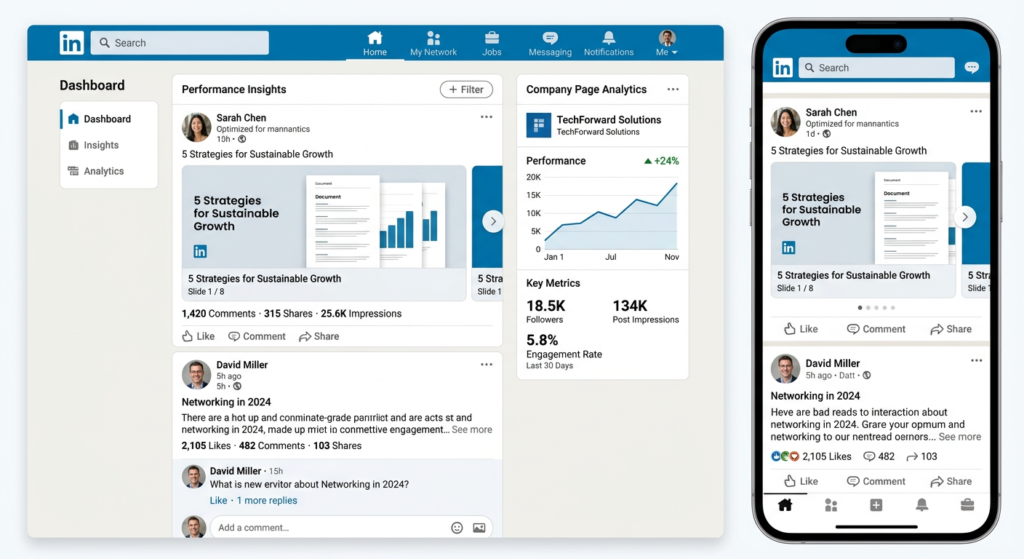
If you’re selling anything over $1,000 to businesses, LinkedIn should probably be your primary platform. The LinkedIn Marketing Solutions data shows B2B marketers see 2x higher conversion rates compared to other platforms.
My insider tip: LinkedIn’s algorithm currently rewards “native documents” (PDFs uploaded directly) and carousel posts over external links. I’ve seen document posts get 3-5x the reach of link posts. Adapt accordingly.
Instagram: Visual Commerce Engine
Instagram has matured from a photo-sharing app into a legitimate social commerce platform. If you’re selling physical products with strong visual appeal, Instagram Shopping and Reels can drive serious revenue.
The catch? You need consistent high-quality visual content. I’m talking 4-7 Reels per week minimum to see meaningful growth right now. That’s a real resource commitment—don’t underestimate it.
TikTok: The Wild Card Worth Testing
Here’s where I’ll challenge some assumptions. Yes, TikTok started as a Gen Z dance app. But the platform has evolved rapidly, and according to Statista’s demographic data, users 35+ represent the fastest-growing segment.
For a detailed breakdown on evaluating whether TikTok fits your strategy, check out this platform strategy audit guide I put together.
The Resource Reality Check Most Gurus Skip
Every platform requires specific content formats, posting frequencies, and engagement patterns. Here’s the honest breakdown of minimum viable presence:
- LinkedIn: 3-5 posts/week, daily comment engagement, 5-8 hours/week
- Instagram: 4-7 Reels + 3-5 Stories daily, 10-15 hours/week
- TikTok: 5-7 videos/week minimum, 8-12 hours/week
- Facebook: 3-5 posts/week + group participation, 6-10 hours/week
- YouTube: 1-2 quality videos/week, 15-25 hours/week
Add those up. Now look at your actual team capacity. See the problem? 🙂
This is why I constantly preach focus. Pick the platforms where your audience lives AND where you can realistically maintain quality presence. Excellence on two platforms beats mediocrity across five.
Expert Commentary: This video from HubSpot Marketing provides an excellent foundation for understanding how platform selection fits into broader social media marketing strategy—worth watching for the data-backed framework alone.
Advanced Tactics: Cross-Platform Synergy That Actually Works
Once you’ve established strong presence on your primary platforms, here’s how to create leverage across channels without doubling your workload.
Content Repurposing Hierarchy
Start with your most resource-intensive content format, then cascade down:
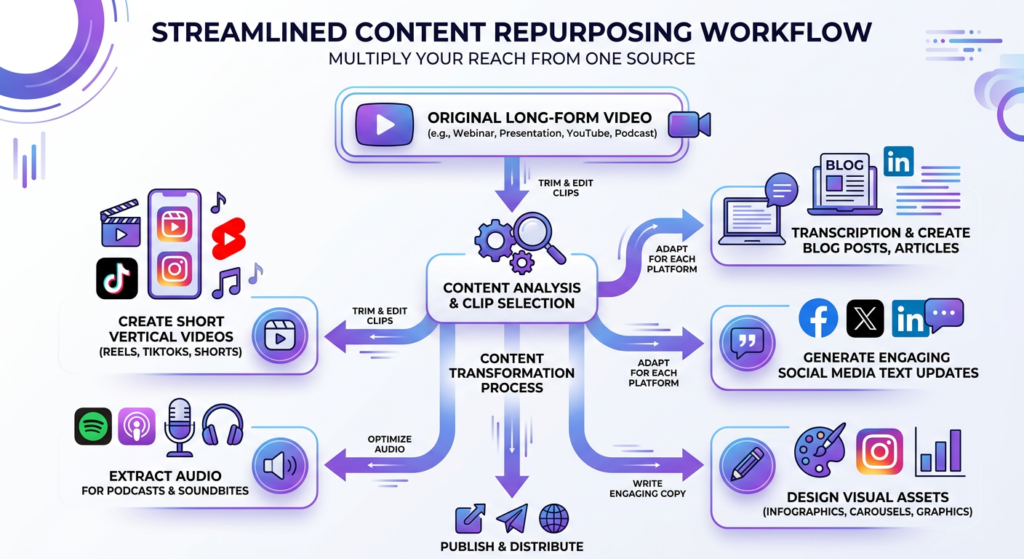
- YouTube long-form video → chop into 8-12 TikTok/Reels clips
- Podcast episode → audiogram clips + blog post + LinkedIn articles
- Long-form blog post → Twitter thread + LinkedIn carousel + Instagram carousel
I call this the “create once, distribute everywhere” model—but critically, you’re still only mastering 2-3 distribution channels, not trying to be everywhere.
Platform-Specific Conversion Paths
Each platform has different user intent. Your conversion strategy should match:
- LinkedIn: Lead magnets → email nurture → sales call
- Instagram: DM conversations → landing page → purchase
- TikTok: Link in bio → product page → impulse purchase
- YouTube: Video CTA → detailed landing page → considered purchase
For more tactical guidance on building these conversion paths, explore our social media strategy planning resources.
The 90-Day Platform Test Protocol
If you’re considering a new platform, here’s my exact testing framework:
- Days 1-30: Daily posting, pure experimentation, track what resonates
- Days 31-60: Double down on top-performing content types, refine voice
- Days 61-90: Implement conversion tracking, measure actual business impact
If you’re not seeing meaningful engagement and conversion signals by day 90, either your content strategy needs work or the platform isn’t right for your audience. Either way, you have data to make a decision.
Frequently Asked Questions
How many social media platforms should my business be on?
Most businesses should focus on 2-3 platforms maximum where their target audience is most active and engaged. Quality presence on fewer platforms consistently outperforms thin presence across many platforms. Start with one primary platform, master it, then expand strategically.
Which social media platform has the highest conversion rate?
LinkedIn typically shows the highest B2B conversion rates (2.74% average), while Instagram and Pinterest lead for B2C e-commerce conversions. However, the “best” platform depends entirely on your specific audience and offering. A fitness coach will see better Instagram conversions than a cybersecurity firm, for obvious reasons.
Should I be on TikTok if my audience is over 40?
Yes, potentially. TikTok’s fastest-growing demographic is users 35-54, with over 30% of users now falling into this age bracket. The platform has matured significantly. Test with short-form educational or entertaining video content before dismissing it based on outdated demographic assumptions.
How long should I test a new social media platform before deciding it works?
Give any new platform a minimum 90-day committed test period with consistent posting (3-5 times weekly) before evaluating results. Algorithm learning periods and audience building take time. Most businesses quit after 2-3 weeks and never give themselves a fair shot—don’t be that brand.
My Top Recommended Gear
Creating quality social media content requires decent equipment. Here’s what I actually use and recommend to clients who are serious about their content strategy:
- Rode Wireless Go II Microphone — Crystal clear audio is non-negotiable for video content. This wireless system is what I use for all my talking-head videos and podcast recordings.
- Elgato Ring Light — Proper lighting makes amateur video look professional instantly. This ring light has adjustable color temperature and works perfectly for desk setups.
- Logitech Brio 4K Webcam — If you’re doing LinkedIn video or live streaming, this webcam delivers exceptional quality without needing a full camera setup.
Disclaimer: This post contains affiliate links. As an Amazon Associate, I may earn a commission from qualifying purchases at no additional cost to you.