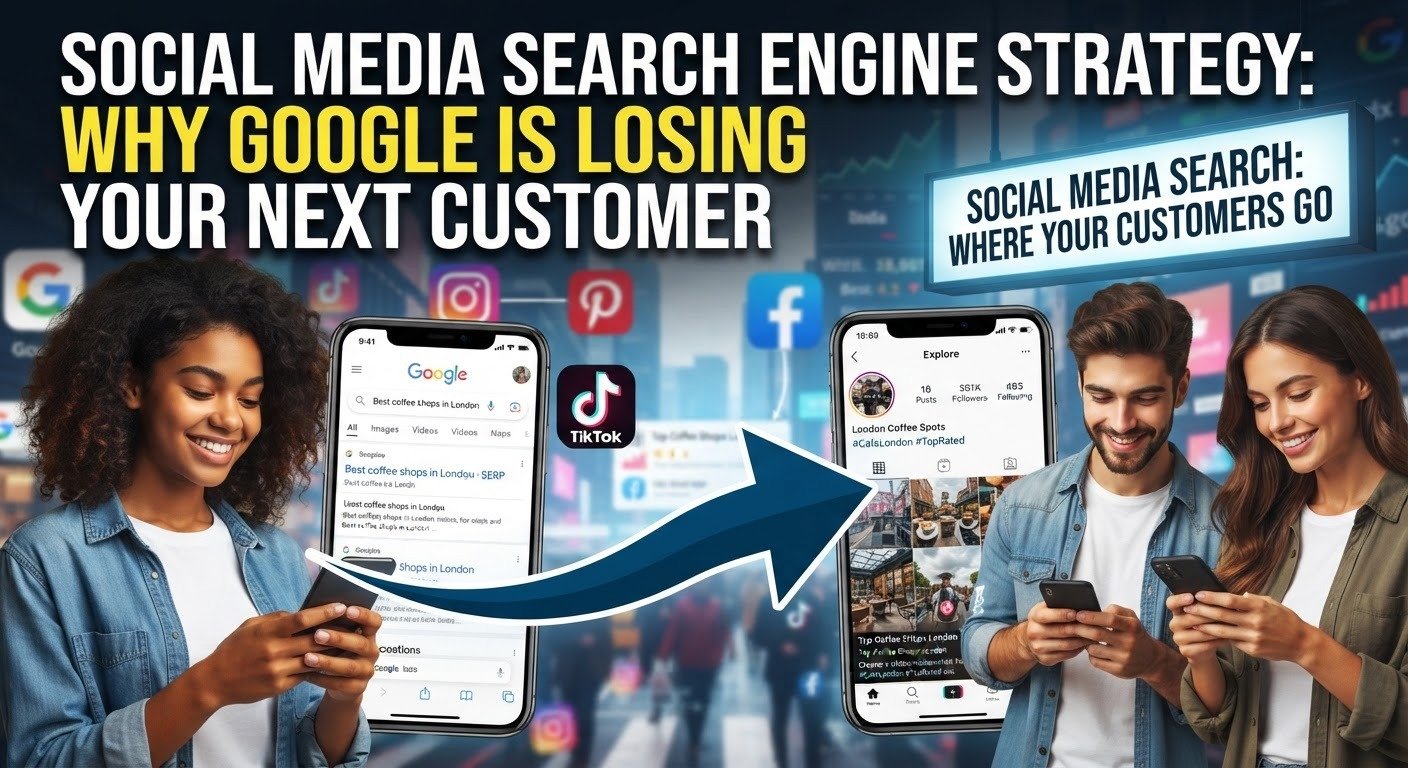
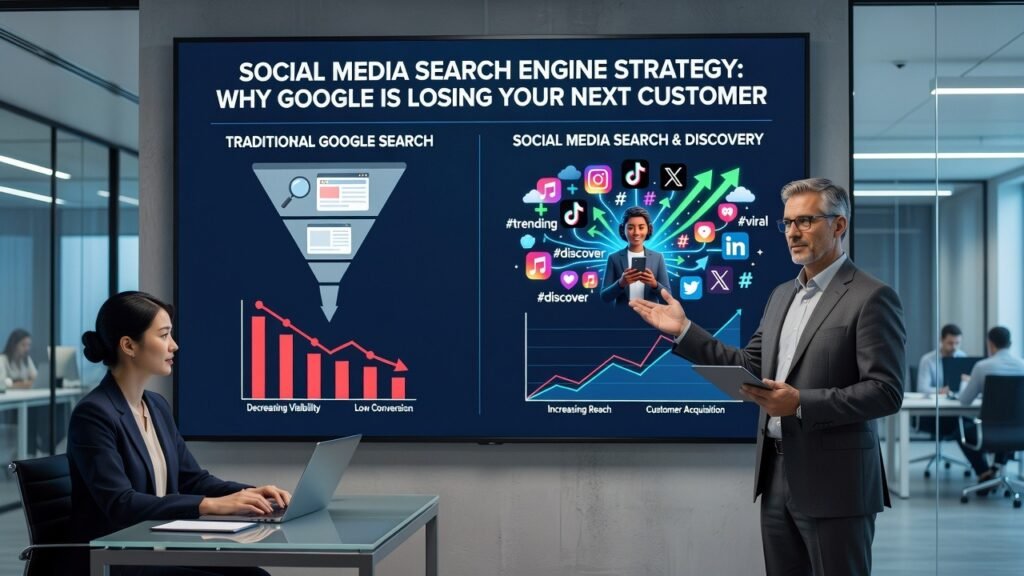
Social media is the new search engine, and your next customer is searching it right now. They didn’t open Google. They opened TikTok. They typed “best running shoes for flat feet” into an app you probably think is just for dancing teenagers. They found a competitor. Not you. This is the quiet shift breaking old marketing playbooks, and it’s why a social media search engine strategy is no longer optional. It’s where your next customer is already standing, waiting to be found. Let me show you why.
So what exactly is a social media search engine strategy? It means creating content designed to be found through in-app search on platforms like TikTok and Instagram, not just shown to followers. Instead of chasing likes, you answer the exact questions buyers type into these apps, so your business appears the moment they’re ready to act. It starts with a deliberate social media strategy and planning framework, not random posting.
Table of Contents
The Data Proving Social Media Is the New Search Engine
Let’s skip the hype and go straight to the numbers. Because the numbers are brutal.
Google’s own executives admitted it first. Back in 2022, a senior Google VP said something stunning on stage. Almost 40% of young people don’t use Google to find lunch anymore. They use TikTok or Instagram instead. That was Google. Talking about Google losing. On purpose. (TechCrunch reported the full comments here.)
It only got worse from there. A 2024 Adobe survey found that 64% of US Gen Z consumers had used TikTok as a search engine. That’s not a fringe habit. That’s the majority. And it’s spreading past Gen Z. Recent studies show roughly half of all US consumers have now used TikTok to search for something.
Here’s the part that matters for your wallet. TikTok reports that around 72% of its users discover new products and brands right on the app. People aren’t just scrolling. They’re shopping. They’re deciding.
And I don’t pad these arguments with made-up numbers. Those figures come straight from Google’s own statements, Adobe, and TikTok’s own reporting—you can look them up yourself.
So ask yourself one honest question. If half your future buyers are searching somewhere, and you’re not there, where does that leave you? Invisible.
How Google AI Overviews Are Killing Your Website Clicks
I know what the skeptic is thinking. “Fine, but Google still runs the world. My website ranks. I’m safe.”
You’re not. And this is the part that should scare you. Google is eating its own search results. In 2024 it rolled out AI Overviews. Those are the AI answers that sit at the top of the page. They answer the question so the user never clicks.
The damage is measured, not guessed. A Pew Research Center study of nearly 69,000 real searches found that clicks to websites drop sharply on searches where an AI answer appears—from 15% down to 8%.
It gets darker. In 2026, fewer than one in three Google searches still send a click to any website at all. Most searches now end with zero clicks. The user gets an answer and leaves.
Big names are bleeding. Reports estimate HubSpot lost 70 to 80% of its organic traffic. CNN dropped somewhere between 27 and 38%. Read that again. These are giants with huge SEO teams. They still got crushed.
So the “safe” channel you trusted is shrinking under your feet. The ground is moving. Betting everything on Google today is like buying beachfront property as the tide comes in. Meanwhile, social search is growing. One channel is closing its doors. The other is opening them wide. The choice makes itself.
Does Social Media Search Actually Drive Sales?
Here’s the objection I respect most. You’ve heard it. Maybe you’ve said it. “Social media is vanity. Likes don’t pay bills. I chased followers before and got nothing.”
You’re right. And that’s exactly why this changes everything.
You got burned because you were treating social media like a billboard. You posted, you shouted, you hoped. That’s broadcast. Broadcast is a gamble.
Search is different. Search is intent. When someone types “how to fix a leaky faucet” into TikTok, they have a problem. Right now. They want a solution. Right now. That’s not a bored scroller. That’s a buyer raising their hand.
This is the same reason old-school SEO worked. It caught people at the exact moment they wanted something. High intent. High value. Social search gives you that same golden moment. But with a face, a voice, and proof.
I’ve spent the last year rebuilding my own content around in-app search instead of Google, and the pattern holds every time. The videos that answer one specific question keep pulling in viewers—and buyers—months after I hit post.
Think about how you actually decide things. You don’t want ten blue links. You want to see a real person hold the product. Show it working. Say “here’s what nobody tells you.” That’s why people trust it. It feels like a friend, not an ad—which is exactly why the low production content trend of 2026 is beating polished, expensive brand videos on trust and watch time.
So stop measuring followers. Start measuring who finds you when they’re ready to act. That’s not vanity. That’s a pipeline.
Why a Social Media Search Engine Strategy Beats a Billboard
Let me kill the biggest myth. The one that keeps smart people out. “Social media content disappears in a day. It’s a treadmill. SEO builds something lasting.”
Half true. And the true half is on my side now.
A post you share to followers does fade fast. But a post built for search behaves completely differently. It’s a searchable asset.
Here’s the magic. When you make a video answering a real question, the app keeps it. Someone searches that question three months later. Your video shows up. You made it once. It works forever. That’s not a treadmill. That’s compounding. It’s the exact quality you loved about ranking a blog post on Google. Except now it lives where people are actually looking.
Call it social media SEO if you want—the mechanics are the same ones you already know, just pointed at a new search bar. And a social media search engine strategy stacks a second win on top. Your content can surface in more than one place. Google now pulls short videos and community posts right into its results. So a single TikTok can get found inside TikTok’s search. Then get found again on Google. One asset. Two front doors. This is where a multi-channel platform strategy and audit turns one video into reach across several search surfaces.
You’re not choosing between platforms. You’re building content that shows up everywhere your customer might type a question. That’s leverage the old billboard model never gave you.
The people winning right now understood this early. They stopped making content to be seen. They started making content to be found.
How to Build a Social Media Search Engine Strategy Step by Step
Skeptics hate vague advice. So here’s the concrete version. No jargon.
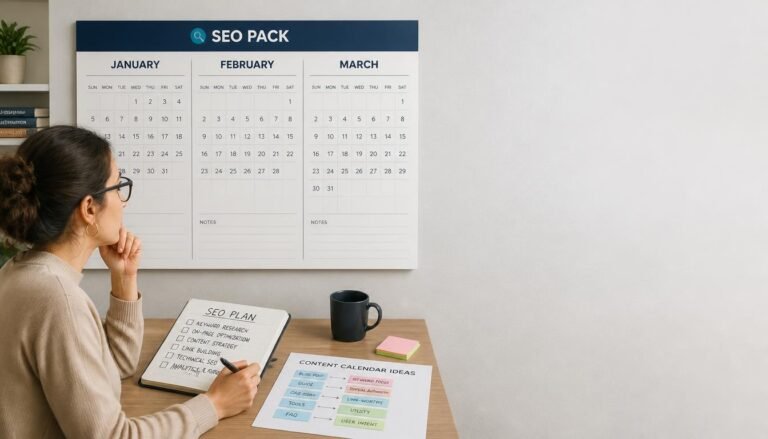
Stop guessing what to post. Start with what people search. Find the questions. Type your topic into the TikTok or Instagram search bar. Watch what auto-fills. Those are real searches from real people. That’s your content list, handed to you free.
Answer one question per video. Not your life story. One question, one clear answer. “Best budget mattress for back pain.” Boom. Make it. Move on. If producing at that pace sounds impossible, viral content and AI workflows let you script and caption ten times faster without sounding robotic.
Say the keywords out loud. This is the core of TikTok SEO. These apps read your captions, your on-screen text, and even your spoken words. Put the exact search phrase in all three. That’s how you rank—and understanding how the algorithm decides reach is what separates videos that get found from videos that vanish.
Lead with the answer. Don’t tease. The searcher wants help, not a mystery. Give value in the first three seconds. On Instagram especially, watch time is now the ranking signal that rules your reach, so a weak opening kills you before the search even counts.
Repeat the winners. When one video gets found again and again, make five more like it. Follow the demand.
Notice what’s missing here. Viral dances. Trending sounds. Lucky breaks. You don’t need to go viral. You need to get found. Those are two totally different games. Search is the calmer, steadier, more reliable one.
This is a system, not a gamble. And systems are what serious businesses run on. If you want the full version, here’s the 2026 social media marketing system for strategy, content, and ROI.
Why Marketers Resist TikTok as a Search Engine
Let’s be honest about what’s really going on. Because the numbers alone rarely change a mind.
The resistance isn’t about data. It’s about identity. You built your skill on the old map. You learned Google. You learned keywords and backlinks. You got good at it. That knowledge felt like solid ground. Admitting the map changed feels like admitting your skills are out of date. Nobody wants that. It stings.
So the mind looks for a reason to dismiss the new thing. “It’s a fad.” “It’s for kids.” “It won’t last.” Those aren’t conclusions. They’re comfort.
But here’s the truth every real believer knows. The people who win the next decade aren’t the ones with the most experience. They’re the ones willing to look foolish for a little while. The first businesses on Google looked silly too. Then they owned their markets.
You already have the hard part. You understand search intent. You understand catching people at the right moment. You’ve done it for years. You’re not learning a new skill. You’re moving a skill you already have to where the people went. That’s not starting over. That’s a head start most of your competitors are too proud to take.
Start Getting Found on TikTok and Instagram Search Today
Search didn’t die. It moved. Your customers are still typing questions every single day—they just moved the search bar to an app while you weren’t looking. Keep pouring money into a Google page that leaks clicks every month if you want. Or build a social media search engine strategy and go stand where your buyers are already raising their hands. Not sure which app deserves your effort first? Run a real platform audit for business in 2026 before you commit. The businesses that move now will own their space before the crowd shows up. Everyone else will pay triple to catch up later.
So here’s your move. Open TikTok. Type the one question your best customer always asks you. Look at who shows up. If it’s not you, congratulations—you just found the first video you need to make. Go make it.