Table of Contents
Stop Picking Platforms by Gut Feeling
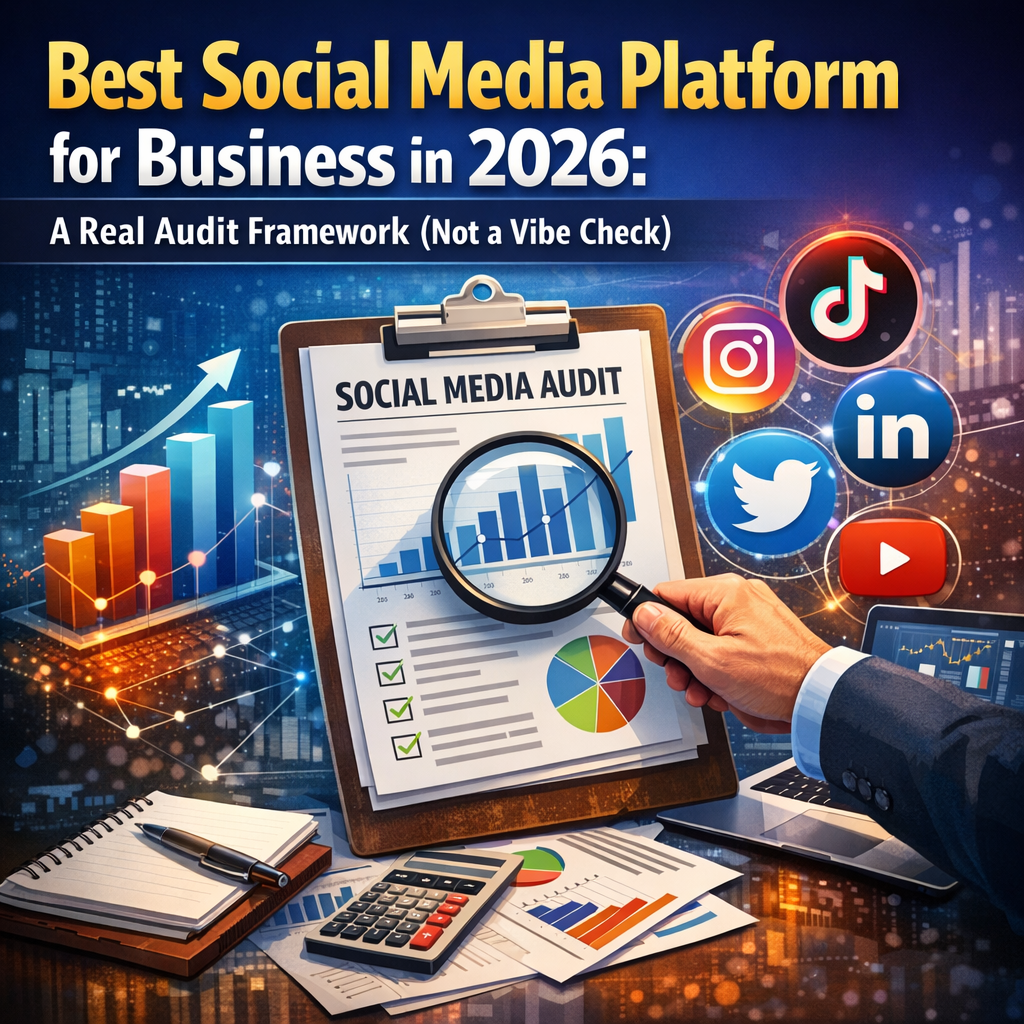
Best social media platform for business in 2026 — that’s the search every marketer runs, and most stop at the wrong question. “Should I be on LinkedIn, TikTok, or Instagram?” isn’t it. The real question is which platform’s numbers actually work for your business, and here’s the answer nobody wants: it depends on numbers you probably haven’t looked at yet.
Most brands pick their best social media platform for business in 2026 the same way they picked one in 2019 — based on where a competitor posts, where the founder personally likes scrolling, or where an agency pitched them last. That’s not a strategy. That’s a coin flip with extra steps.
The data this year is unusually clear about who wins where. Meta is pulling a 4.2x average ROAS with the most sophisticated targeting stack in digital advertising. TikTok trails on raw ROAS at roughly 2.8x but wins on cost, with CPMs as low as $3.50–$9.16 and in-app checkout converting 35–55% higher than off-platform funnels. LinkedIn is the most expensive click on the internet at $6–12 per click — and still the only platform that reliably converts B2B pipeline. None of these numbers tell you what to do. They tell you what to measure before you decide.
The Audit Framework: Score, Don’t Guess
Run this scoring pass before you commit another quarter of content to a platform out of habit.
1. Audience-Format Fit (0–10)
Does your buyer actually consume the format this platform rewards? B2B software buyers are not swiping Reels between meetings — they’re reading LinkedIn posts on a Tuesday morning. Consumer impulse buyers are exactly the opposite. If your product needs a considered, multi-touch sale, weight LinkedIn and long-form content higher. If it’s an impulse buy under $50, TikTok’s discovery engine and in-app checkout will out-convert everything else.
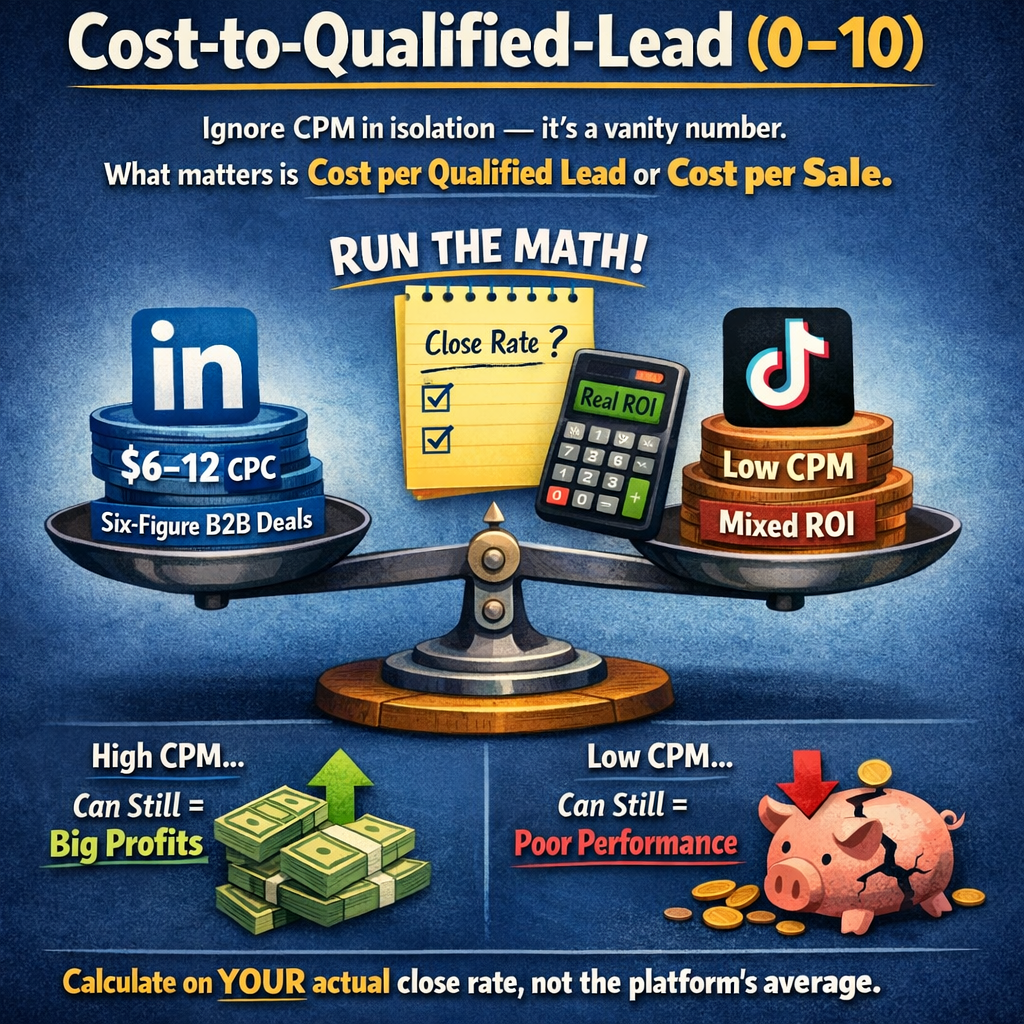
2. Cost-to-Qualified-Lead (0–10)
Ignore CPM in isolation — it’s a vanity number. What matters is cost per qualified lead or cost per sale. LinkedIn’s $6–12 CPC looks brutal until you realize a single closed B2B deal can be worth six figures. TikTok’s cheap CPM looks great until you calculate that 51% of small businesses report positive ROI, meaning roughly half don’t. Run the math on your actual close rate, not the platform’s average.
3. Algorithmic Ceiling (0–10)
Every platform now rewards depth over breadth. Data from Q1 2026 shows 94% of successful creators and brands focused on just one or two primary platforms — spreading thin across five consistently underperformed a focused strategy on two. Score each platform on how much runway you realistically have to go deep, not how many boxes you can check.
4. Production Reality (0–10)
Be honest about what your team can sustainably produce. TikTok and Reels demand a constant stream of native, platform-first video. LinkedIn rewards well-written text and a willingness to have opinions in public. If your team can’t produce one of these formats without burning out by week three, that platform’s score drops regardless of its ROI potential. The right social media marketing tools and software can close some of that gap, but they won’t fix a format mismatch on their own.
Add up the four scores per platform. Whatever comes out on top is your primary. Whatever’s second becomes your secondary — not a third, fourth, and fifth channel you’re mediocre on everywhere.
The Rule of Two
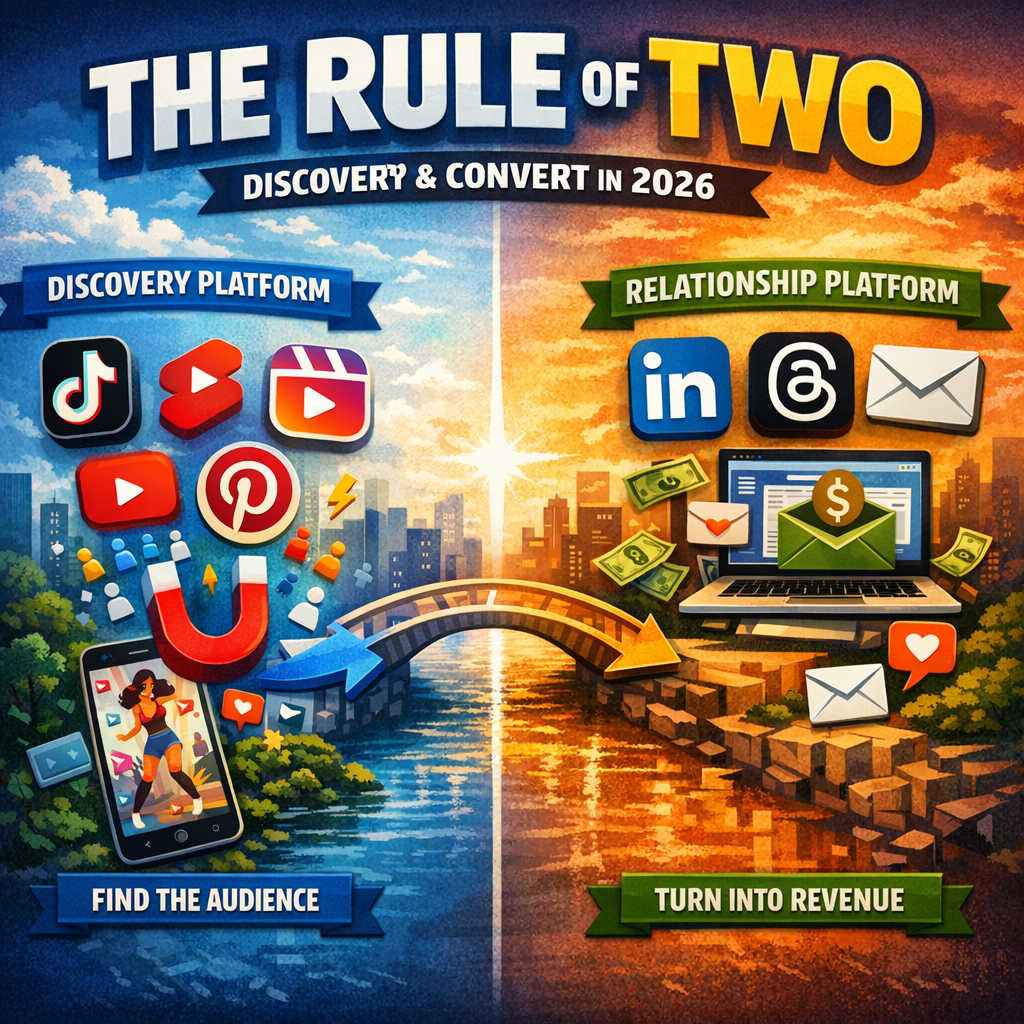
The framework that’s actually holding up in 2026: pick one discovery platform and one relationship platform. Discovery platforms — TikTok, Reels, Shorts, Pinterest — build the audience. Relationship platforms — LinkedIn, Threads, email — convert it. You don’t need to win on five platforms. You need one that finds people and one that keeps them.
This is also why “best platform” is the wrong question. The right question is: which platform finds my audience, and which platform turns that audience into revenue? Sometimes that’s the same platform (TikTok’s in-app checkout is closing that gap fast). Usually it’s two.
What This Looks Like by Business Type
B2C brands: TikTok is winning discovery-stage engagement, with e-commerce accounts seeing engagement rates around 4.5% — well above Instagram’s average. Pair it with Instagram for retargeting warm traffic that’s already seen your product.
B2B businesses: LinkedIn isn’t optional if your buyer is a decision-maker. SaaS companies are seeing engagement around 2.8% on LinkedIn specifically because the platform’s algorithm now rewards genuine expertise over polished corporate posting. Pair it with a relationship channel like email or a niche community, not another discovery platform. For most B2B teams, that pairing is the closest thing to a best social media platform for business in 2026 strategy you’ll find.
A Worked Example
Take a mid-size DTC skincare brand. Audience-format fit: consumer, impulse-adjacent purchase, visual product — TikTok and Instagram score 8-9, LinkedIn scores 2. Cost-to-qualified-lead: TikTok’s cheap CPM plus in-app checkout wins here, scoring 8 against Instagram’s 6. Algorithmic ceiling: both discovery platforms still have room to grow for this brand, scoring 7-8. Production reality: the team has one person who can shoot vertical video three times a week but no one writing long-form — TikTok scores 8, LinkedIn scores 1 by default.
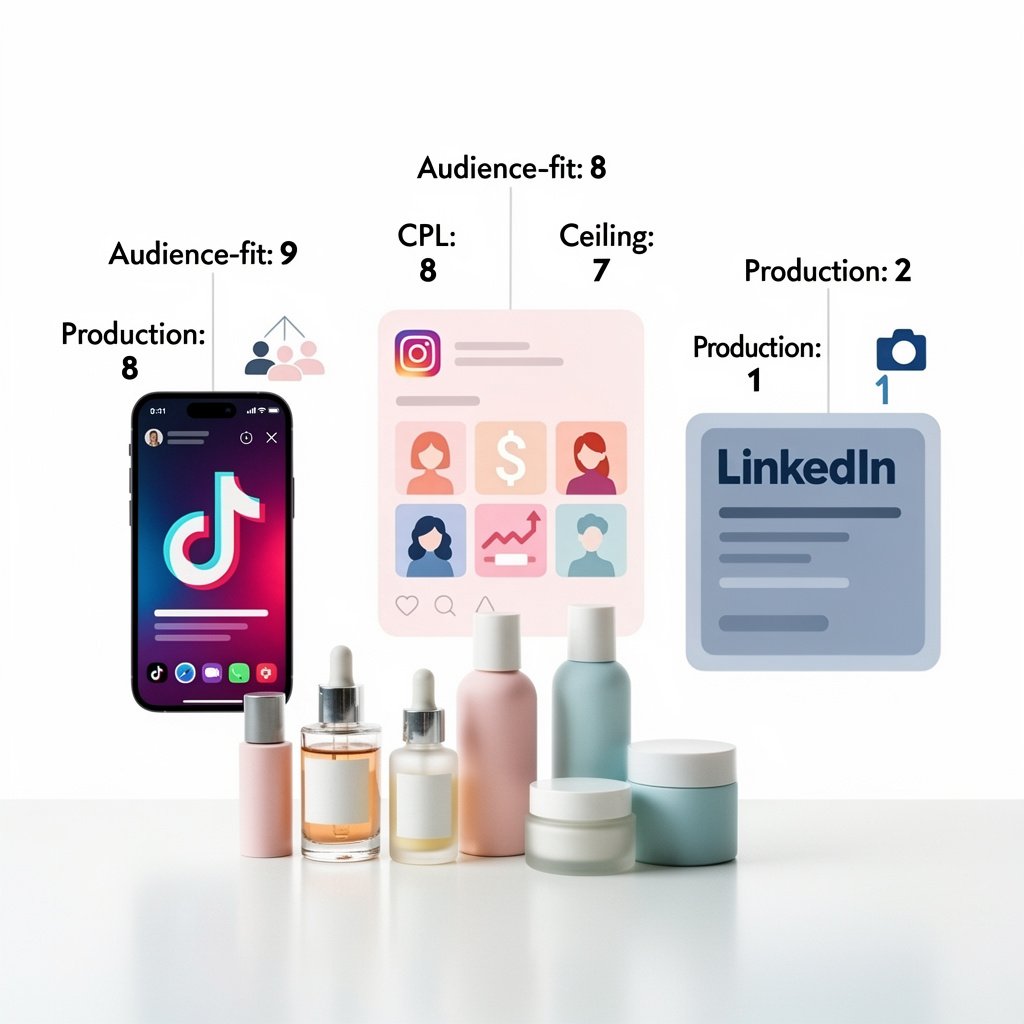
Total: TikTok wins clearly as the discovery platform. Instagram becomes the relationship layer, retargeting the audience TikTok builds and running Stories for retention. LinkedIn isn’t dropped forever — it’s parked until the brand launches a B2B wholesale line that actually needs it. That combination is effectively the best social media platform for business in 2026 for a brand like this.
Now flip it: a boutique B2B consulting firm selling six-figure contracts. Audience-format fit flips almost entirely — LinkedIn scores 9, TikTok scores 2, because the buyer isn’t discovering consultants through short-form video. Cost-to-qualified-lead favors LinkedIn despite the higher CPC, because one closed contract covers a year of ad spend. This firm should be nowhere near TikTok in 2026, no matter how much a junior team member wants to “try going viral.”
That’s the whole exercise. Score it, don’t feel it.
Run the Audit Quarterly, Not Once
A platform that scored well in Q1 can drift by Q3 — algorithms change, CPMs shift, and your own production capacity changes with your team. Treat this scoring framework as a quarterly check-in, with lightweight monthly benchmarking (engagement rate, cost per lead, saves and shares) in between to catch drift before it costs you a quarter of wasted budget.
Before You Post Again
Pull up your platform mix right now and run this scoring pass against your actual numbers — not the industry benchmark, your numbers. If a platform you’re actively posting on scores in the bottom half across all four categories, that’s your signal to either fix production, shift budget, or stop. Most brands are quietly wasting a third of their content calendar on a platform that never had a real shot at their audience. This audit is how you find out which one, before the next quarter proves it the expensive way. There’s no universal best social media platform for business in 2026 — only the one your numbers actually support.