
You copied a viral hook word for word, and yours still died at 300 views. You did everything right. You found a Short with millions of views. You watched it eight times. You noted the punchy on-screen text, the fast zoom in the first half-second, the trending sound sitting under it. You rebuilt yours to match — same beat, same energy, same opening line structure. You hit post feeling something you don’t feel often anymore: quiet confidence.
Then it stalled at 300 views. And the worst part wasn’t the number. It was the thought that followed it — the one you’ve had before: I did exactly what they did. So why did mine flop?
If you want the full picture of what actually drives short-form reach, our guide to how the YouTube Shorts algorithm really works breaks down the mechanics most creators never see.
Table of Contents
The mistake most creators make when copying viral Shorts
Here’s the loop, and you already know it, because you’ve lived it. A video blows up. You reverse-engineer the open. You copy the visible parts — the hook line, the cut, the pattern interrupt, the caption placement. You post your version. Nothing.
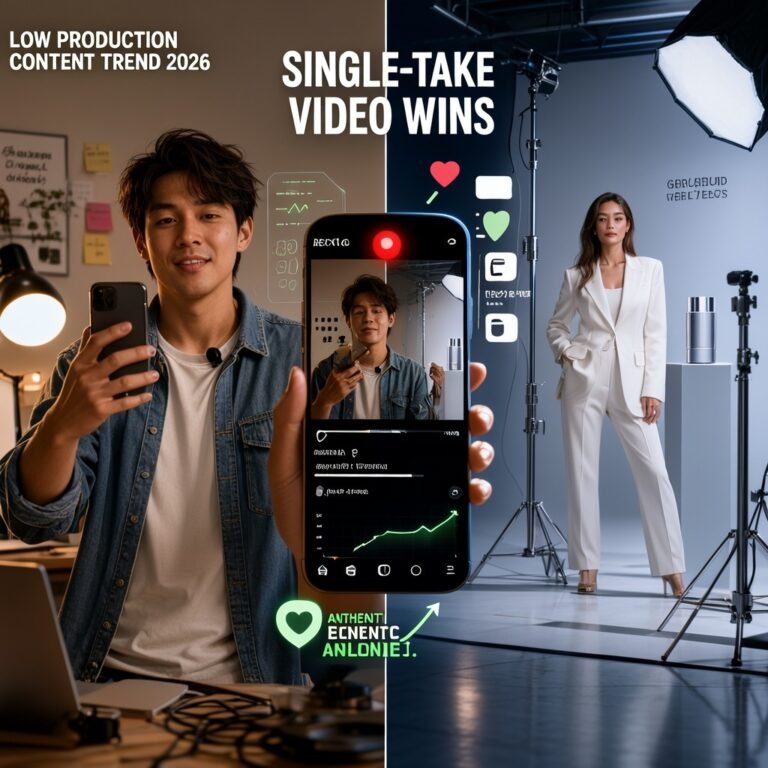
Then, a few days later, you see a completely different creator break every rule you just followed. No fast cut. No bold claim. They just start talking, mid-sentence, in bad lighting — and it does two million.
So now you’re not just discouraged. You’re confused. The rules worked for them and not for you, and then the opposite of the rules worked for someone else. That’s the part that quietly eats at you, because it starts to feel like the difference isn’t the hook at all. It’s them. Something they have that you don’t. Charisma. Luck. An account that’s already big enough that the algorithm forgives them.
That belief is comfortable, in a bleak way. If it’s all invisible and out of reach, at least it’s not your fault. But it’s also wrong, and it’s the exact thing keeping you stuck. After analyzing hundreds of viral Shorts across niches, I can tell you the pattern is real — and it has nothing to do with luck. Research from Wistia’s State of Video report shows viewer retention is decided in the first few seconds, long before production quality registers.

What a viral hook actually copies (and what you missed)
When you rebuilt that viral open, you copied the shape of the hook. The zoom, the text, the timing. What you couldn’t see — because it doesn’t show up on screen — is the job the hook was doing.
Why does copying a viral hook fail even when it’s done word for word?
A copied viral hook fails because you copy its form, not its function. Every hook that works opens a curiosity gap the viewer needs closed in the first second. The zoom, text, and sound are only delivery. Copy the surface without that underlying tension, and the video looks like a hook but doesn’t work like one.
Every hook that works is doing one specific thing in the first second: it’s opening a gap the viewer needs closed. It’s making a promise, raising a question, showing an unresolved image, or setting up a payoff that hasn’t landed yet.
The fast zoom didn’t stop the swipe. The zoom drew your eye to a line that created a reason to stay. You copied the zoom. You didn’t copy the reason.
That’s why the format felt right and the video died anyway. You had the delivery of a hook with none of the tension underneath it. It looked like a hook. It didn’t work like one, because there was nothing in it the viewer urgently needed the answer to.
And here’s the flip side — the thing that explains the “no rules” creator who blew up in bad lighting. They didn’t need the zoom because their first sentence did the whole job. They opened a gap so strong that presentation didn’t matter. Same function. Completely different form.
That’s the whole game, and almost nobody tells you this part: the surface changes constantly. The function underneath never does.
This idea maps directly onto the psychology of the curiosity gap — a concept George Loewenstein first defined in his research on the information gap theory of curiosity, which explains exactly why an unresolved question keeps a viewer watching.
If you’re still building your foundation, pair this with our post on writing scroll-stopping social media captions — the same gap principle carries over.
Why studying viral videos keeps failing you
Once you see it this way, a frustrating thing becomes obvious. All that time you spent studying viral Shorts — you were studying the wrong layer. You were cataloguing what things looked like. Text on screen. Jump cuts. A specific trending audio. Those are the most visible parts, so they’re the parts you noticed and the parts you copied.
But the visible layer is exactly the layer that doesn’t transfer. A trending sound is trending for a week. A zoom feels fresh until every creator uses it and viewers go numb to it. The specific line that hooked millions was hooking them because it fit that creator’s topic and audience — pull it into your niche and it lands like a costume that doesn’t fit.
So you copied the parts most likely to expire, and skipped the part that would’ve actually carried over. That’s not a talent gap. That’s a targeting problem. You were aiming your attention at the shiny stuff.
Watch: For a visual breakdown of how top creators structure their opening seconds, this video is worth your time:

(How to Make a Viral Hook — video walkthrough)
The question that changes how you write a hook
Next time a Short stops your thumb, don’t ask what did they do at the start? Ask: what did that opening make me need to know?
Sit with that for a second, because it reframes the whole thing. The zoom didn’t make you stay. Something made you curious, uneasy, or unresolved — and the zoom just pointed you at it. Find that. Name it out loud if you have to.
- Did they promise a result and hide the method?
- Did they show you an ending and make you wonder how it started?
- Did they say something you disagreed with, so you stayed to argue?
- Did they start mid-action, so your brain wanted the context?
That is the thing worth stealing. Not the shot. The gap. Because a gap is portable. It works in your niche, in your voice, in your lighting, without a trending sound. You can build the same tension around your own topic — which is the one thing a copied template can never give you, since it was built around someone else’s.

How to write a viral hook for your next Short
Before you record, look at your opening and ask one blunt question: In the first second, what does the viewer suddenly need the answer to — and am I making them wait for it?
If you can’t answer that, no zoom will save the video. You don’t have a hook yet. You have a nice-looking open with nothing pulling the viewer forward.
And if you can answer it — if there’s a real gap, a real reason to stay — you’ll notice the presentation matters way less than you thought. You can start plain. You can skip the trend. The tension does the work.
Once your hooks land consistently, the next lever is distribution — our breakdown of the best times to post Shorts and Reels helps you get those improved videos in front of more people.

Gear that helps you nail the hook (and everything after it)
The gap does the heavy lifting — but clean audio and steady framing keep viewers past the first second once you’ve earned their attention. A few tools worth having on the desk:
- Rode Wireless GO II Dual Channel Wireless Microphone System — crisp, clear voice capture so your hook lands instead of getting lost in room noise.
- UBeesize 10″ Ring Light with Tripod Stand and Phone Holder — flattering, consistent lighting for talking-head Shorts.
- DJI Osmo Mobile 6 Smartphone Gimbal Stabilizer — smooth movement for mid-action opens that pull viewers in.
- Sony ZV-1 Digital Camera for Content Creators and Vloggers — a step up when you’re ready to sharpen production without losing portability.
(As an Amazon Associate, purchases through these links may earn a commission at no extra cost to you.)
Frequently asked questions about viral hooks
Why did my copied viral hook get only 300 views?
Because you copied the visible form — the zoom, text, and sound — not the function underneath. A viral hook works by opening a curiosity gap the viewer needs closed. Without that tension, your video looks like a hook but gives no reason to keep watching.
What makes a hook actually go viral?
A gap the viewer can’t leave unresolved. That means a promise with a hidden method, an ending with a missing start, a claim worth arguing with, or an action with no context. The presentation only points attention toward that gap.
Do I need a trending sound to make a Short go viral?
No. Trending sounds expire in about a week and only ever supported the hook — they never replaced it. A strong curiosity gap works in any niche, in your own voice, with plain lighting and no trend attached.
How do I find the “gap” in a video that hooked me?
Ask what the opening made you need to know rather than what it looked like. Name the exact question, promise, or unresolved image that stopped your thumb. That question — not the shot — is the thing worth rebuilding for your own topic.
Does bad lighting hurt a Short’s chances of going viral?
Not if the hook is strong. Creators blow up in bad lighting all the time because their first sentence opens a gap so compelling that production stops mattering. Fix the hook first; polish the presentation second.
Stop chasing the look of the videos that win. A copied viral hook will keep dying at 300 views because it carries someone else’s tension, not yours. The creators you’ve been envying aren’t hiding